Iranian Revolutionary Guards spokesman Hossein Mohibi said his country would make significant changes to its defensive and offensive operations in the event of a new attack, as tensions between the United States and Iran continued.

Speaking on a television program on Sunday evening, Mohibi said Iran would enter the field with new weapons and capabilities. He said the world would be surprised in such a situation.
"If a new attack takes place, we will change our weapons and the geography of the war. We have identified new targets that have not been attacked before."
Mohibi said the targets identified by Iran differed from its previous targets. The Revolutionary Guards spokesman said his country was prepared for a prolonged war and argued that the conflict consisted of different stages.
Mohibi said the Revolutionary Guards had previously made preparations for war and noted that preparations had now been increased. He said the war had not ended but was continuing through different stages.
Mohibi also said the Revolutionary Guards had not communicated with the United States and that Iran's armed forces were not conducting diplomatic contacts either. He said the army's primary duty was to defend the country.
The Iranian Revolutionary Guards spokesman argued that US dominance in the region had ended and that Tehran, not Washington, was shaping the new regional order.
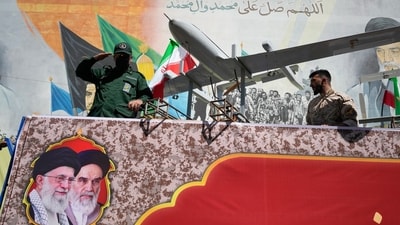
Tensions around the Strait of Hormuz
Mohibi's remarks came as tensions between Iran and the United States rose over the Strait of Hormuz. The dispute between the two countries continued over the strategic waterway through which roughly one-fifth of global oil consumption passed before the war.
The United States and Israel launched wide-ranging attacks on February 28 targeting government buildings, military facilities, missile infrastructure and air-defense systems in Iran. Iran responded with missile and drone attacks against Israel and US bases in the region.
The fighting stopped with a ceasefire in April. In June, an agreement was signed with the aim of reaching a final peace deal within 60 days, but the agreement collapsed weeks later.
Efforts to end the conflict continue under the mediation of Pakistan and Qatar.























