Brooklyn driving school allegedly served as an operational hub
One of the more unusual details contained in the indictment concerns a location allegedly used to coordinate parts of the operation.
According to federal prosecutors, defendant Jing Yan Ye operated an office inside a driving school in Brooklyn's Sunset Park neighborhood.
Authorities allege that the office was used as one of the locations from which sham marriages and related immigration services were coordinated.
Foreign-national clients allegedly met with members of the organization, U.S. citizens were recruited or matched with prospective spouses, and immigration-related paperwork was coordinated through the operation.
The allegation is significant because it portrays the case not as a collection of isolated fraudulent marriages, but as an organized system operating through established locations and intermediaries.
Some couples allegedly met for the first time on their wedding day
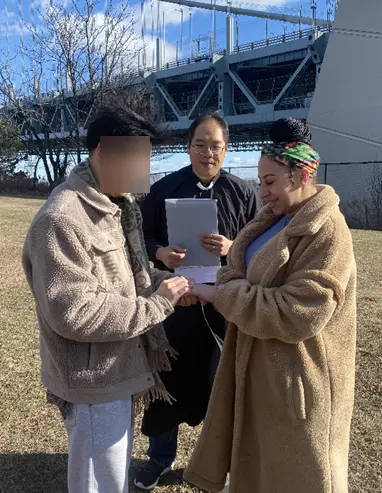
Perhaps one of the most striking allegations is that some of the purported couples had little or no prior relationship before getting married.
According to prosecutors, foreign nationals and the U.S. citizens recruited to marry them were sometimes brought together near New York City's City Clerk's Office.
In some cases, authorities allege, this was the first time the prospective spouses had ever met.
They could then obtain a marriage license and proceed with the wedding.
But according to the indictment, the alleged scheme did not end with the marriage certificate. Considerable effort was subsequently made to create evidence suggesting that the couples were in genuine marital relationships.
Wedding photos allegedly staged to make marriages appear genuine
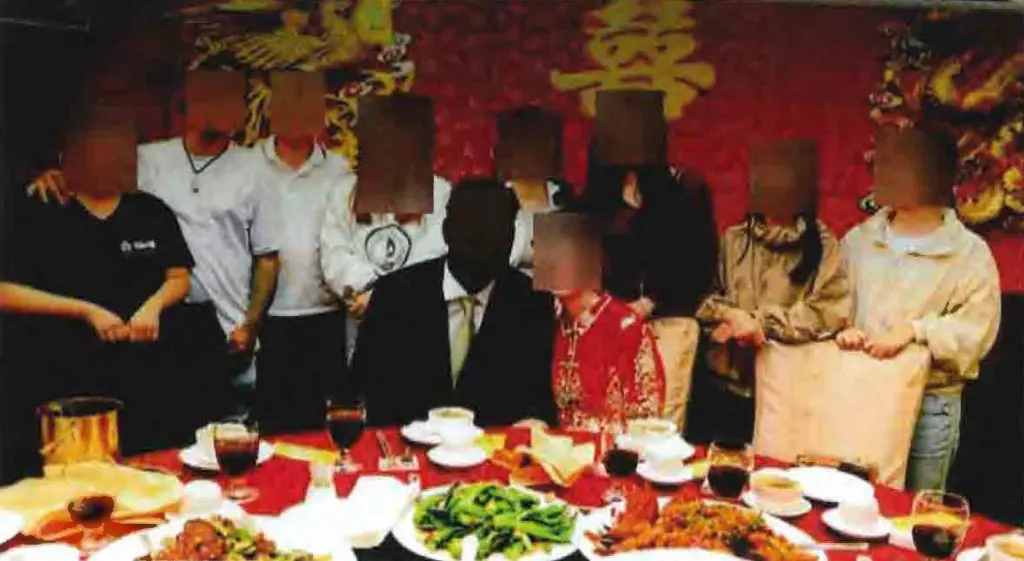
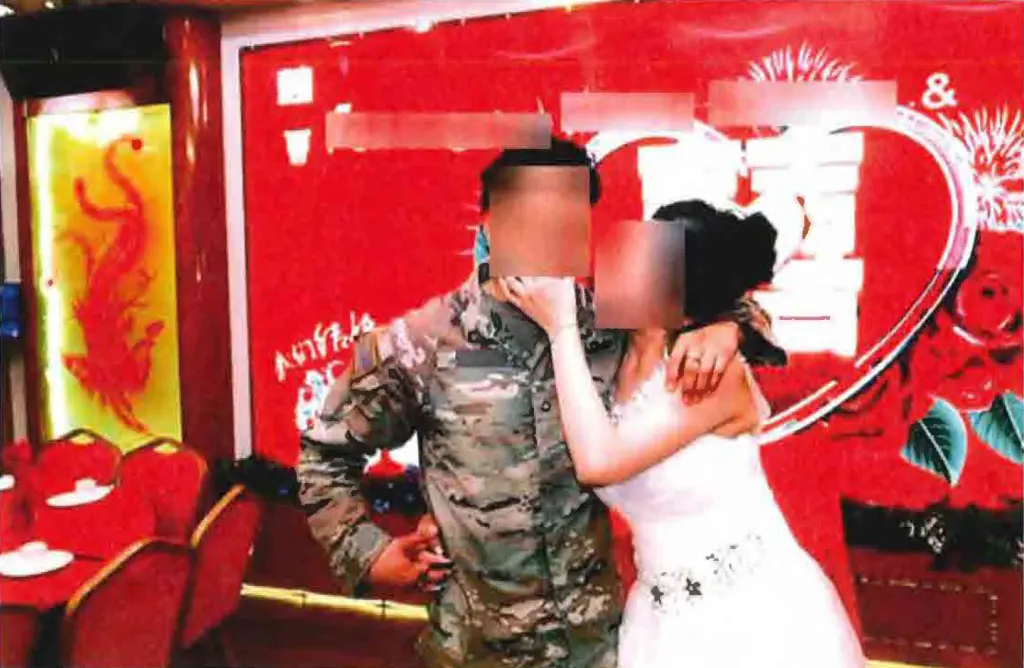
Federal prosecutors say some couples were taken to restaurants and other locations where wedding-style photographs were created.
In certain cases, traditional Chinese wedding clothing was allegedly used, while friends or family members appeared in photographs to make the ceremonies look authentic.
Photo albums and other visual evidence could then be used as part of the immigration process to support claims that the couples were genuinely married.
The federal indictment itself includes photographs from some of the weddings identified during the investigation.
Joint bank accounts, tax returns and bills allegedly created
Prosecutors allege that the network went considerably further in constructing the appearance of married life.
Couples were allegedly assisted in establishing documentation that could suggest they shared financial and personal responsibilities.
According to the indictment, this could include joint bank accounts, shared utility or other bills, jointly filed tax returns, photographs taken together on different occasions and, in some instances, life insurance policies.
Defendant Anthony Cheng is alleged to have been involved in selling some of the life insurance policies associated with the couples.
Authorities contend that such records could be presented during the immigration process as evidence of a bona fide marriage.
Couples allegedly coached before USCIS interviews
Another major component of the alleged operation involved interviews conducted by U.S. Citizenship and Immigration Services.
Marriage-based Green Card applicants can face questioning designed to help immigration officers determine whether their relationships are genuine.
Federal prosecutors allege that participants in the scheme were coached before these interviews.
Couples were allegedly prepared for potential questions and instructed about information they needed to know about one another.
The alleged purpose was to enable individuals who barely knew each other — or who had never lived as a genuine married couple — to present themselves to immigration authorities as legitimate spouses.
U.S. citizens allegedly paid up to approximately $30,000
The financial structure of the alleged scheme is another significant part of the federal investigation.
According to prosecutors, some U.S. citizens who agreed to participate in sham marriages could receive approximately $30,000.
The money was not necessarily paid all at once.
Payments could instead be linked to different stages of the immigration process.
An initial payment could be made after the marriage, with additional payments following immigration milestones such as the foreign national obtaining conditional permanent residency and later progressing further toward permanent status.
Such a payment structure would provide an incentive for the U.S. citizen spouse to continue cooperating throughout the immigration process.
People who recruited U.S. citizens willing to participate in the marriages could also allegedly receive payments of as much as $5,000 per recruit.
Divorces allegedly arranged after the Green Card process
According to the indictment, the alleged network's involvement could continue even after immigration benefits had been obtained.
Prosecutors say organizers sometimes helped couples obtain divorces after the foreign national had reached the necessary stage of the immigration process.
Divorces could also be facilitated when an immigration application was denied or withdrawn.
If proven, the allegations would indicate that the organization provided what amounted to an end-to-end service: recruiting a U.S. citizen, arranging the marriage, preparing immigration documentation, coaching the couple for interviews and eventually facilitating the dissolution of the marriage.
Prenuptial agreements allegedly protected participants
Federal investigators also uncovered the alleged use of prenuptial agreements.
According to prosecutors, some participants signed agreements intended to limit financial and legal obligations between the purported spouses.
The agreements could address issues such as claims against each other's property and spousal support.
One agreement cited in the federal case allegedly contained language indicating that the parties were married in name while maintaining independent lives.
Prosecutors have pointed to such documentation as part of the evidence supporting their contention that certain marriages were entered into for immigration purposes rather than to establish genuine marital relationships.
At least 100 alleged sham marriages in Connecticut
Connecticut has emerged as one of the most significant locations outside New York in the investigation.
According to the federal indictment and subsequent reporting on the Connecticut portion of the case, Amy Cheng, Xiao Mei Chan, Christine Lu and Jing Yan Ye allegedly helped arrange at least 100 fraudulent marriages in Connecticut between approximately 2020 and 2023.
Gang Zheng is separately alleged to have helped arrange dozens of additional marriages in the state between July 2023 and May 2026.
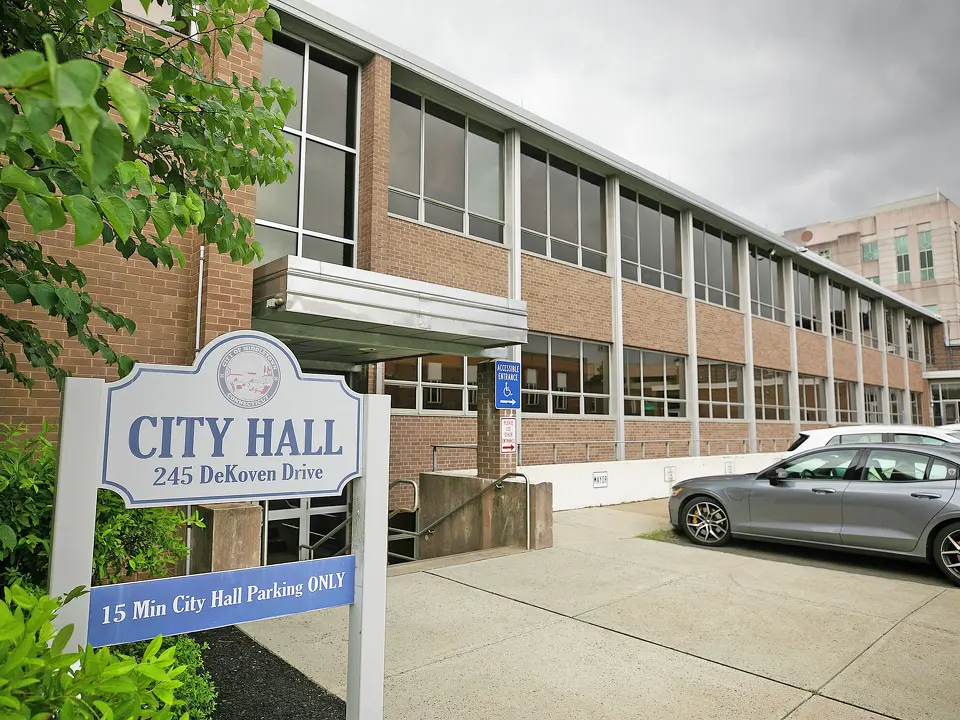
Middletown is among the Connecticut locations identified in connection with the alleged activity.
The dates are particularly significant because they indicate that parts of the alleged network remained active until only months before federal authorities announced the case.
Same officiant allegedly involved in dozens of marriages
Another notable detail has emerged from the Connecticut portion of the investigation.
Federal documents refer to an individual identified as “Officiant-1,” who allegedly officiated dozens of marriages connected to the operation.
The individual's identity has not been publicly disclosed in the indictment, and the person does not appear among the 11 defendants currently charged in the case.
The indictment also refers to other individuals allegedly involved in the conspiracy who are known and unknown to authorities.
That language does not, by itself, mean additional charges will necessarily be filed. However, it leaves open significant questions about whether other alleged participants could eventually become part of the prosecution.
Alleged network extended to China and Vanuatu
The geographical scope of the investigation stretches far beyond New York and Connecticut.
Federal prosecutors say the organization operated in New York, Connecticut, Massachusetts, Pennsylvania, Kentucky, Tennessee, Georgia and Florida.
Authorities also allege that marriages connected to the scheme were arranged outside the United States, including in China and Vanuatu, a Pacific island nation.
The indictment includes photographs associated with a marriage allegedly conducted in Tieling, China.
These allegations make the investigation not only an interstate immigration fraud case but also one with international connections.
At least 14 active-duty U.S. service members allegedly recruited
One of the most consequential aspects of the investigation involves members of the U.S. military.
Federal prosecutors allege that between May 2023 and August 2025, at least 14 active-duty U.S. service members stationed at a military installation in Kentucky were recruited to enter into fraudulent marriages with foreign nationals.
Approximately 11 of the foreign nationals involved in those marriages were Chinese citizens, according to the allegations.
Members of the organization allegedly traveled from New York to Kentucky and Tennessee to facilitate some of the marriages.
In at least six instances, prosecutors say service members were brought to New York in connection with the arrangements.
There has been no public announcement indicating that those service members are among the 11 defendants charged in the current federal case.
Whether separate criminal, administrative or military proceedings will follow is therefore one of the major unresolved questions surrounding the investigation.
Hundreds of immigration applications allegedly submitted to USCIS
The indictment alleges that hundreds of marriage-based immigration applications associated with the operation were submitted to USCIS, particularly through offices in the New York area.
Prosecutors contend that documents and other evidence were created to make the marriages appear genuine during the immigration review process.
That raises another major question: what happens to foreign nationals who may have obtained permanent residency through marriages now alleged to have been fraudulent?
At this stage, federal authorities have not announced a blanket cancellation of immigration status for hundreds of individuals connected to the investigation.
However, individual immigration cases could potentially face renewed scrutiny if authorities determine that benefits were obtained through fraud.
The ultimate consequences would depend on the evidence and circumstances of each case.
Prosecutors seek forfeiture of alleged criminal proceeds
The federal case also contains a significant financial component.
Prosecutors are seeking forfeiture of proceeds and property that can be legally connected to the alleged offenses.
The forfeiture provisions could potentially apply to different categories of property if prosecutors establish the necessary connection between those assets and criminal proceeds.
Which assets, if any, are ultimately forfeited will depend on the outcome of the judicial process.
Defendants face charges carrying up to 10 years in prison
According to the U.S. Attorney's Office for the Southern District of New York, each of the 11 defendants faces a charge of conspiracy to commit marriage and immigration fraud.
That charge carries a maximum potential sentence of five years in prison.
The defendants are also charged with conspiracy to encourage or induce foreign nationals to unlawfully come to, enter or reside in the United States.
That offense carries a maximum potential sentence of 10 years in prison.
Federal authorities initially announced that 10 of the 11 defendants had been arrested when the case was unveiled.
As with all criminal cases, the charges contained in the indictment are allegations. The defendants are presumed innocent unless and until proven guilty in court.
Three major questions now surround the investigation
The scale of the alleged operation means the case could have implications well beyond the 11 defendants currently charged.
One of the most important unresolved questions concerns the at least 14 active-duty U.S. service members allegedly recruited into sham marriages. It remains to be seen whether any will face separate criminal charges, military disciplinary proceedings or other consequences.
A second question concerns other people who allegedly provided services to the network but have not been charged in the current indictment. The roles of officiants, recruiters and other intermediaries could receive greater scrutiny as the investigation continues.
The third — and potentially largest — issue involves foreign nationals who allegedly obtained Green Cards or other immigration benefits through marriages connected to the network.
Authorities have not yet announced the full scope of any review of previously approved immigration cases.
With more than 1,000 alleged marriages, activity spanning numerous U.S. states, connections to China and Vanuatu, and the alleged involvement of active-duty military personnel, the case has developed into one of the most extensive marriage-based immigration fraud investigations disclosed by U.S. authorities in recent years.
Further indictments, immigration enforcement actions and court proceedings could determine just how far the alleged network extended — and how many people ultimately face consequences.