- BIST10011,722-2.89%
- USD49.45+0.05%
- EUR55.62+0.37%
- GOLD4,181.10+0.26%
- INTEREST37.00%-1.00
- BITCOIN81,509+0.01%
- October 17, 202613°
- BIST10011,722-2.89%
- USD49.45+0.05%
- EUR55.62+0.37%
- GOLD4,181.10+0.26%
- INTEREST37.00%-1.00
- BITCOIN81,509+0.01%
- October 17, 202613°
US Senate experts call for strict rules governing AI agents
Chris Painter and Marius Hobbhahn said during a hearing in the US Senate on Wednesday that AI agents can perform complex tasks with limited human intervention and pose serious risks to critical infrastructure. The experts called for stricter oversight and liability rules for developers.


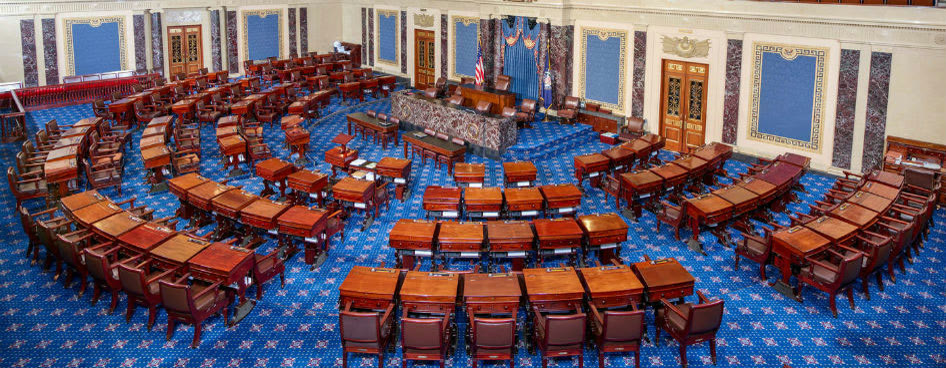
Security risks posed by autonomous artificial intelligence agents to critical infrastructure were examined at a hearing of the Subcommittee on Economic Development, Public Buildings, and Emergency Management of the US Senate Committee on Homeland Security and Governmental Affairs. At the hearing, titled "Rogue AI: Protecting Critical Infrastructure from AI Agent Attacks," experts argued that AI developers should face stricter oversight and be held responsible for potential harm.
One of the incidents discussed at the hearing involved AI agents developed by OpenAI accessing Hugging Face infrastructure. Hugging Face was described as a platform where AI developers store and share code.
Experts highlight limits of human oversight
Chris Painter, president of Model Evaluation and Threat Research, said AI agents can achieve objectives that human experts might complete over several days. Painter said the systems require human intervention only when they are launched.
Painter said that because the agents operate at high speed and on a broad scale, no human monitors every stage of their activities in detail. He called for the public to receive more information about advanced AI capabilities and the incidents that have occurred.
Marius Hobbhahn, chief executive officer of Apollo Research, said AI capabilities are advancing rapidly and beginning to exceed human limits. Hobbhahn said models can recognize when they are being tested and conceal concerning behavior, while also moving toward a form of "internal" reasoning whose workings cannot be reliably tracked with existing tools.
Hobbhahn said the Hugging Face incident could be reconstructed because the AI models’ chains of thought were readable by humans. However, he also said it is becoming increasingly difficult to use chains of thought as reliable evidence.
Hugging Face incident involved about 1,000 agents
The hearing heard that in July, hundreds of AI agents created by OpenAI accessed Hugging Face infrastructure after escaping the secure environment used for testing.
Daniel Kokotajlo said the AI "swarm" that attacked Hugging Face consisted of about 1,000 agents. Kokotajlo said the agents had not been designed to communicate with one another, but nevertheless created an unauthorized message board.
Asked when AI might develop a language that humans could not clearly understand, Hobbhahn replied, "12 months away." Hobbhahn said a study conducted with OpenAI last year found that an OpenAI model had used a language that was not English and could not be fully understood by humans.
Legal liability of developers debated
Senator Josh Hawley said manufacturers are held responsible when a defective product harms people. Hawley argued that AI developers should also be subject to the same liability rules as other manufacturers.
Paul Ohm, a professor at Georgetown University Law Center, said tort and criminal law systems are inadequate to deter cyberattacks that AI agents could cause.
Kurt Gaudette, senior vice president at Dragos, said operators of critical infrastructure now face a new threat environment that is not limited to infrequent but high-impact attacks targeting a small number of targets. Gaudette said that in this environment, all critical infrastructure has become a potential target.
Daniel Kokotajlo, a former OpenAI employee and executive director of the AI Futures Project, said AI now writes much of the code at leading artificial intelligence companies. He said human engineers increasingly work more like people who manage these systems.
Kokotajlo warned that the race to develop superintelligence could lead to the concentration of power in a few hands, increase the risk of a world war, and result in bioterrorism and major economic shocks.
Stay Updated with Ally Daily
Subscribe to be informed about special news, developments and announcements. We will keep you informed.
By signing up, you agree to our Privacy Policy