- BIST10011,430-2.49%
- USD49.45+0.05%
- EUR55.62+0.37%
- GOLD4,160.000.00%
- INTEREST37.00%-1.00
- BITCOIN82,001-0.01%
- October 20, 202614°
- BIST10011,430-2.49%
- USD49.45+0.05%
- EUR55.62+0.37%
- GOLD4,160.000.00%
- INTEREST37.00%-1.00
- BITCOIN82,001-0.01%
- October 20, 202614°
VAR decisions continue to spark controversy at the 2026 World Cup
A missed penalty in the England-Ghana match, a disallowed Brazil goal, and VAR calls in the Germany-Ecuador game have drawn major backlash. FIFA Referees Committee Chairman Pierluigi Collina's policy of minimal intervention is creating implementation difficulties.


With the start of the 2026 FIFA World Cup, Video Assistant Referee (VAR) applications have once again taken center stage in football's agenda. Decisions made or not made in critical matches played over the past week, in particular, have caused serious confusion among fans, players, and pundits.
The incidents seen in the tournament so far highlight the uncertainty over when the technology will be used and according to which criteria decisions are made.
Penalty appeal in the England-Ghana match
The first major controversy erupted in the goalless draw between Ghana and England. Ghana head coach Carlos Queiroz strongly criticized the failure to award a penalty after his player Prince Kwabena Adu went down following a challenge by English defender Ezri Konsa. Queiroz expressed his distrust of the technology by saying, "VAR went for a coffee." Many commentators argued that the incident should have at least been reviewed by the referee at the pitchside monitor.
Brazil's disallowed goal
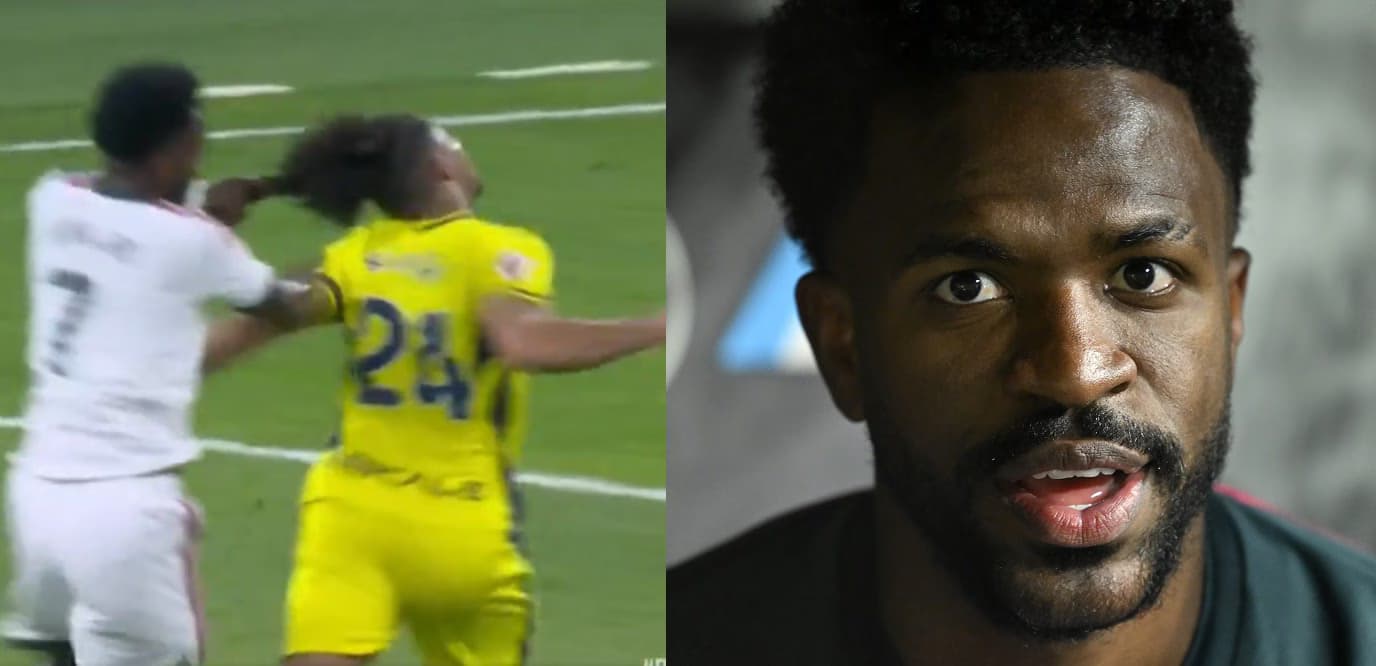
A day later, in the match where Brazil defeated Scotland 3-0, a goal by Vinicius Junior was disallowed by VAR due to a foul on Jack Hendry. Former assistant referee Darren Cann, speaking on BBC's Match of the Day program, said, "There was slight contact before the ball arrived, but in my opinion it was not at the level of a foul." This decision was criticized for contradicting the lenient stance taken the previous day.
Double standard in the Germany-Ecuador match
The peak of the controversy came in the match where Germany lost 2-1 to Ecuador. A goal scored by Leroy Sane was allowed to stand despite teammate Aleksandar Pavlovic making a high-foot challenge on an opponent's head. Former England goalkeeper Joe Hart, commenting on the same program, said, "If any player watches this position, they'd immediately call it a dangerous play. The decision was absolutely wrong."
Early in the second half, a penalty was awarded in Germany's favor after Kai Havertz went down. However, this time VAR intervened, spotting a foul by Sane on Pedro Vite at the start of the move, and the penalty was overturned. The fact that a high boot went unpunished in one instance, yet a similar level of physicality nullified a penalty in the other, clearly exposed the inconsistency in VAR application.
Comparison with the Premier League and Champions League
Interestingly, statistics show that the frequency of VAR intervention in the World Cup is not very different from the Premier League. Last season, the average number of VAR interventions per match in the Premier League was 0.29, while in the World Cup, this figure has so far been 0.28. Instances where the referee went to the monitor to review a position stood at 0.15 in the league and 0.17 in the World Cup.
In contrast, the UEFA Champions League adopts a much more interventionist approach. In that tournament, the average VAR intervention rate per match reaches 0.47, and pitchside monitor reviews are at a notably high 0.36. UEFA's stricter interpretation on handball, in particular, and its narrowing of the scope for personal discretion are seen as the most important factors explaining this difference.
Collina's philosophy of minimal intervention
FIFA Referees Committee Chairman Pierluigi Collina argues that the aim in the World Cup is to keep the game fast and flowing, and that not every contact should be considered a foul. Accordingly, the principle of a "clear and obvious error" is being strictly adhered to. However, as the quality of on-field decisions declines, maintaining the policy of minimal intervention becomes difficult and controversies grow.
Have the big teams been unaffected so far?
Despite all the noise, it cannot be said that VAR has directly harmed the major favorites so far. Apart from Brazil's disallowed goal and Germany's penalty that was given and then overturned, there have been no prominent injustices. In fact, in the France-Senegal match, although the VAR official recommended a penalty after Sadio Mane's challenge on Kylian Mbappe, the on-field referee refused this recommendation, making a notable decision.
Collina's biggest test, working with 30 VAR officials at the operations center in Dallas, will be to restore the reliability of the technology in the remaining matches. The validity of the motto "Less intervention, more benefit" will continue to depend on the accuracy of the initial decisions made on the pitch.
Stay Updated with Ally Daily
Subscribe to be informed about special news, developments and announcements. We will keep you informed.
By signing up, you agree to our Privacy Policy