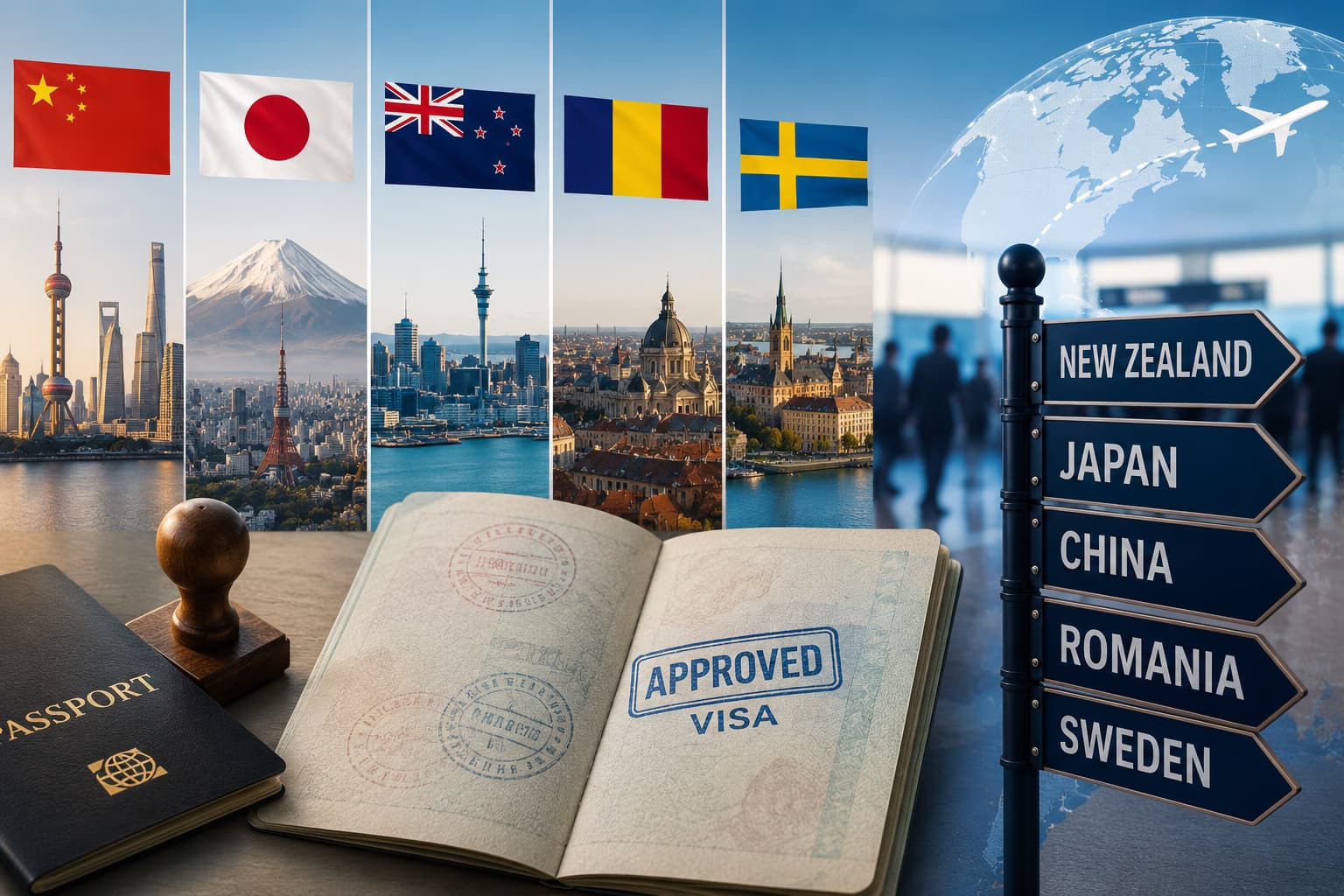
Immigration and work visa rules are continuing to evolve across several major destinations for international workers, with new developments reported in China, Japan, New Zealand, Romania and Sweden.
The latest international immigration update, published on August 13, 2026, brings together recent changes and procedural developments affecting foreign nationals, skilled migrants and companies employing international workers across the Asia-Pacific and European regions.
The developments do not represent a single coordinated immigration policy. Instead, each country has introduced or clarified its own rules and procedures as governments continue to adjust their immigration systems and foreign worker policies.
New Zealand Clarifies Skilled Migrant Immigration Rules
New Zealand is among the countries where more detailed guidance has been provided for skilled migrants.
Immigration New Zealand has clarified documentation requirements connected to new Skilled Migrant Category pathways, including how applicants may demonstrate overseas work experience.
In certain circumstances where tax records are unavailable, applicants seeking to prove employment experience gained outside New Zealand may be able to provide a certificate of service from a former employer alongside other supporting evidence.
However, this alternative documentation option applies specifically to overseas employment experience and cannot be used in the same way to establish work experience claimed to have been gained in New Zealand.
Authorities have also clarified that experience gained through self-employment will not qualify as acceptable work experience under the relevant new pathways.
Further guidance has been provided on wage thresholds and the calculation of qualifying skilled work experience, making the changes particularly important for foreign professionals considering New Zealand as a destination for long-term employment and residence.
China and Japan Update Immigration Procedures
China and Japan are also included among the countries with recent immigration developments affecting international employees and cross-border workforce mobility.
The updates involve procedures relevant to foreign nationals working or relocating internationally, making compliance with current immigration requirements increasingly important for both employers and employees.
Foreign workers planning to move to either country should therefore verify the latest visa, employment and residence requirements before beginning their immigration process.

Romania and Sweden See Immigration Developments
Changes and procedural developments have also been reported in Romania and Sweden, two European Union countries that employ significant numbers of foreign nationals.
The latest updates concern immigration processes relevant to international employees and the companies responsible for sponsoring or managing foreign workers.
Across Europe, governments have increasingly been balancing demand for skilled international workers with tighter immigration compliance and documentation requirements.
Romania and Sweden's latest developments form part of this broader shift in European labour migration policy.

Immigration Rules Continue to Change Worldwide
The five-country update comes amid a wider transformation of global immigration systems in 2026.
Governments around the world have been revising work visa requirements, residence permit procedures, skilled migration programmes and rules governing the employment of foreign nationals.
For international workers, these changes make it increasingly important to check the latest official immigration requirements before submitting a visa, work permit or residence application.
Employers hiring workers internationally must also pay closer attention to compliance requirements, as procedural changes can affect visa processing, employee relocation and the legal employment of foreign nationals.
Further immigration policy changes are expected as countries continue to balance labour shortages, economic priorities and immigration controls throughout 2026.