- BIST10011,165+0.13%
- USD49.79+0.05%
- EUR55.52-0.41%
- GOLD4,040.90-0.26%
- INTEREST36.00%-1.00
- BITCOIN80,159-1.36%
- October 29, 20269°
- BIST10011,165+0.13%
- USD49.79+0.05%
- EUR55.52-0.41%
- GOLD4,040.90-0.26%
- INTEREST36.00%-1.00
- BITCOIN80,159-1.36%
- October 29, 20269°
Israel count nears end with Netanyahu bloc at 53 seats, short of majority
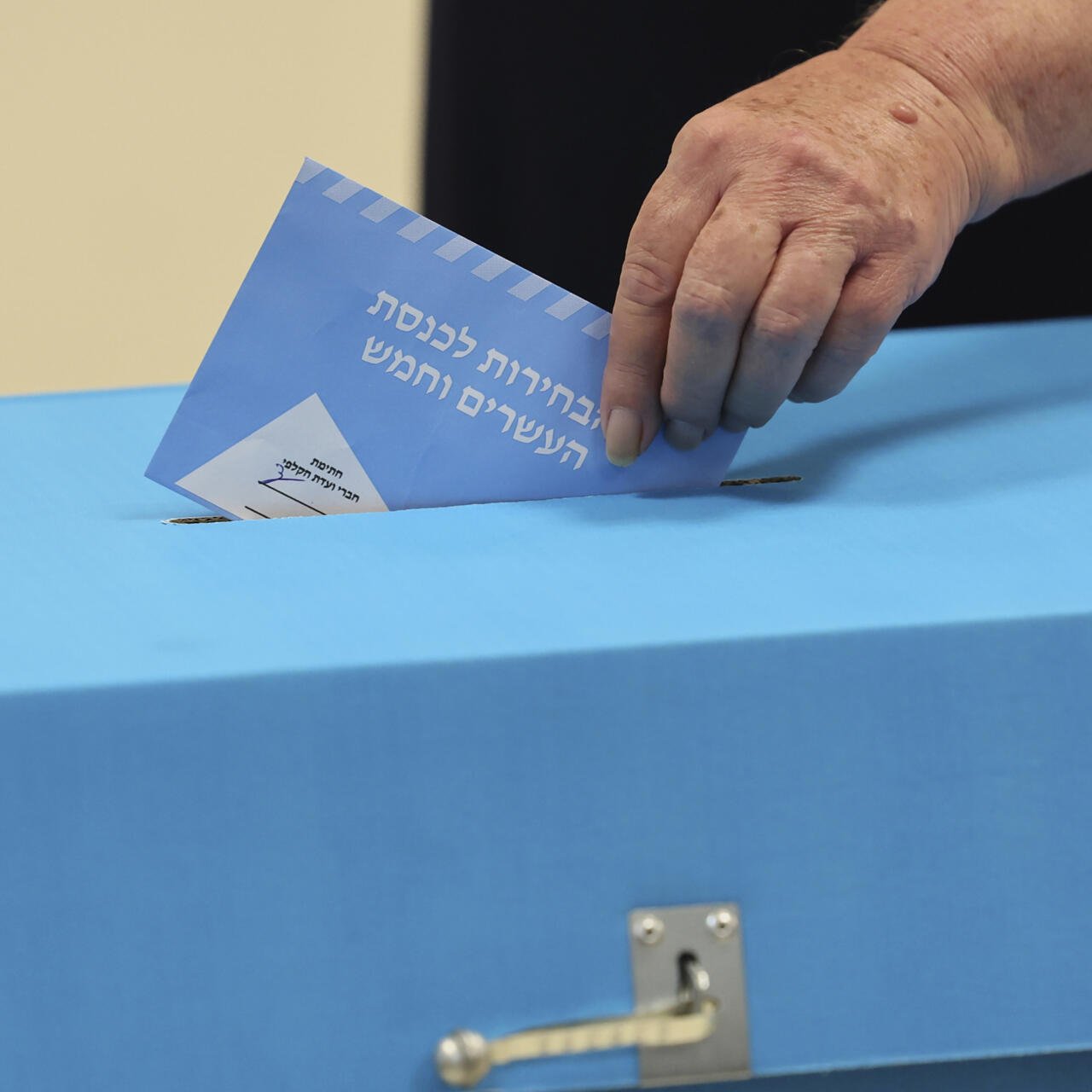
With 98.82% of ballots counted in Israel's Oct. 27 election, Prime Minister Benjamin Netanyahu's bloc holds 53 of the Knesset's 120 seats, Gadi Eisenkot's change bloc 48 and Arab parties a record 19, leaving no side with the 61 seats needed to govern.
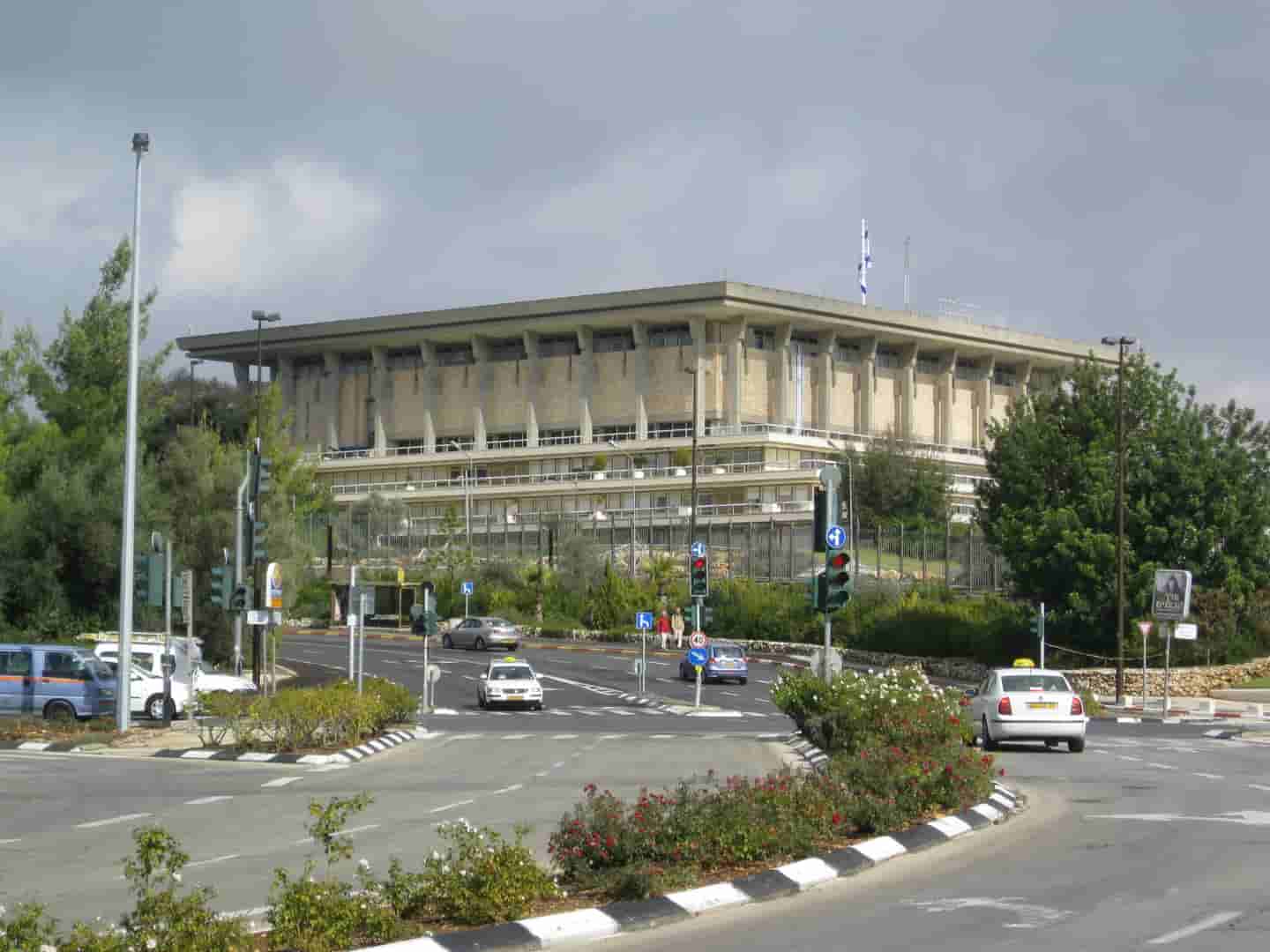
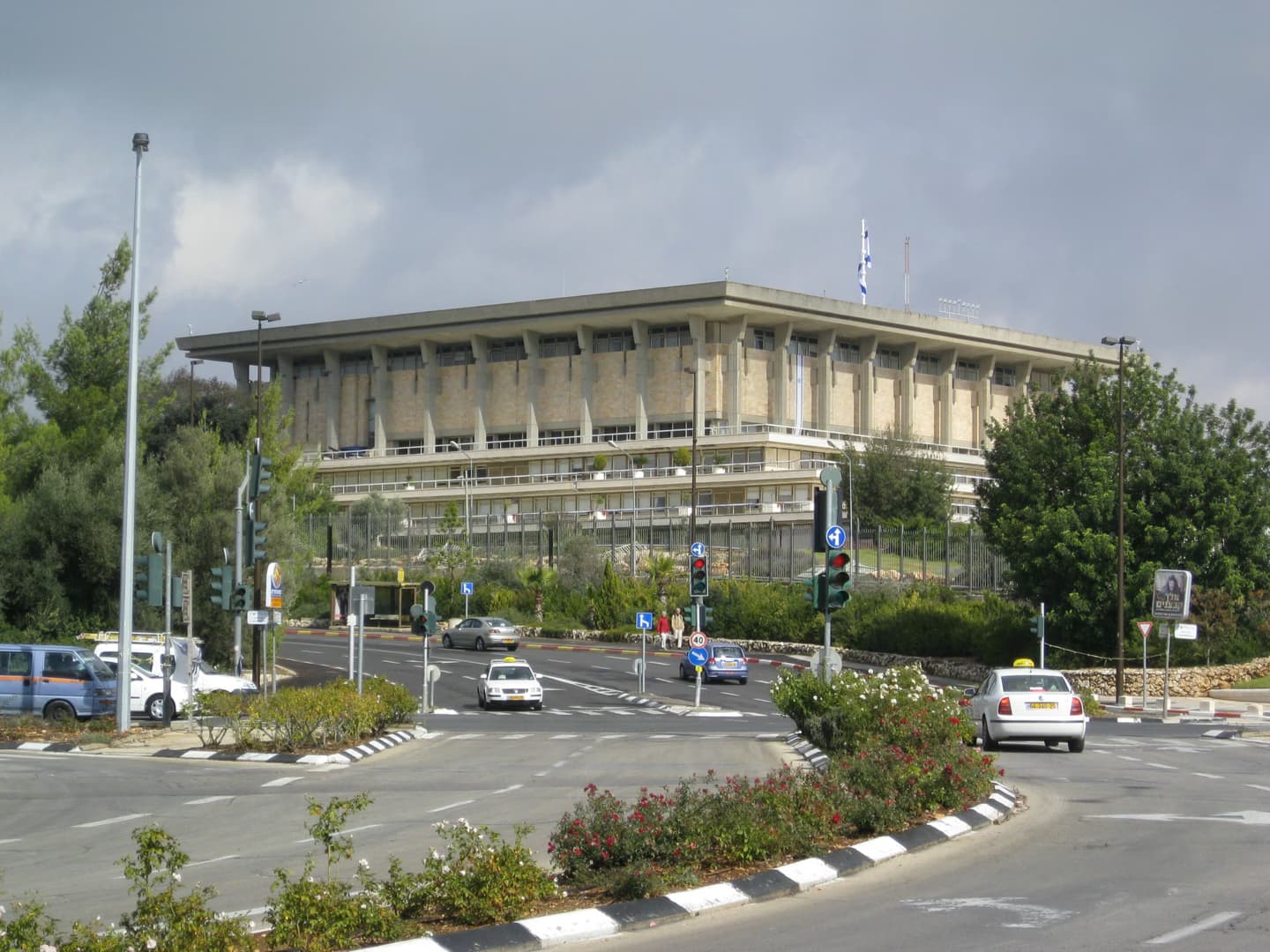
Israel's election remained deadlocked on Thursday as the count neared its end. With 98.82% of ballots tallied, Prime Minister Benjamin Netanyahu's right-wing and religious bloc held 53 seats, eight short of the 61 needed for a majority in the 120-seat Knesset.
The change bloc led by former military chief Gadi Eisenkot stood at 48 seats, while Arab parties won 19, their best result ever.
Likud remains the largest party
- Likud (Benjamin Netanyahu): 26 seats, Netanyahu;
- Yashar! (Gadi Eisenkot): 21 seats, Change;
- Joint List (Yousef Jabareen): 13 seats, Arab parties;
- Beyachad (Naftali Bennett): 12 seats, Change;
- Democrats (Yair Golan): 8 seats, Change;
- Yisrael Beytenu (Avigdor Liberman): 7 seats, Change;
- United Torah Judaism: 7 seats, Netanyahu;
- Shas (Aryeh Deri): 7 seats, Netanyahu;
- Otzma Yehudit (Itamar Ben-Gvir): 7 seats, Netanyahu;
- Ra'am (Mansour Abbas): 6 seats, Arab parties;
- Religious Zionism (Bezalel Smotrich): 6 seats, Netanyahu.
Party totals are based on the latest count and could shift slightly once more than 500,000 double-envelope ballots cast by soldiers, police officers, diplomats and others are counted. Final results are expected Thursday evening. Turnout reached 77.7%, the highest in more than two decades.
Paths to 61 seats
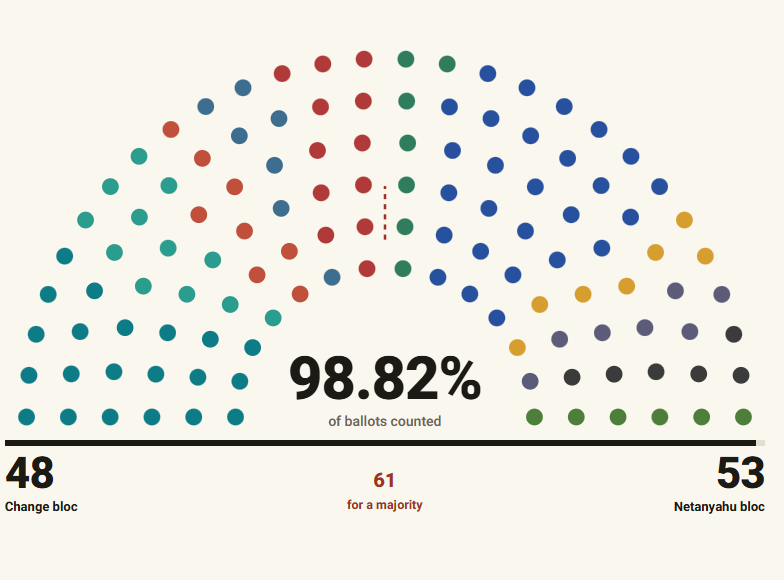
- Netanyahu bloc (Likud, Shas, UTJ, Otzma Yehudit, Religious Zionism): 53;
- Change bloc (Yashar!, Beyachad, Democrats, Yisrael Beytenu): 48;
- Arab parties (Joint List, Ra'am): 19;
- Needed for a majority: 61.
Eisenkot's bloc and the Arab parties together hold 67 seats, but it is far from certain that they would agree to govern together. Eisenkot has said he wants a "Zionist government" committed to universal military service, while Joint List leader Yousef Jabareen said his party is ready to help remove the Netanyahu-led government.
Trump weighs in
President Donald Trump told Axios he had heard that his endorsement of Netanyahu "made a big difference" and said he would "take a look" at efforts to form a Netanyahu-led unity government. Sources say Trump does not want far-right ministers Itamar Ben-Gvir and, likely, Bezalel Smotrich in Netanyahu's next cabinet.
Netanyahu urged "the Zionist majority" to "come to its senses and unite," while Eisenkot declared that "the public chose change" and called on him to step down. With neither side able to form a government quickly, Israel is likely to remain under a caretaker government during coalition talks.
Stay Updated with Ally Daily
Subscribe to be informed about special news, developments and announcements. We will keep you informed.
By signing up, you agree to our Privacy Policy