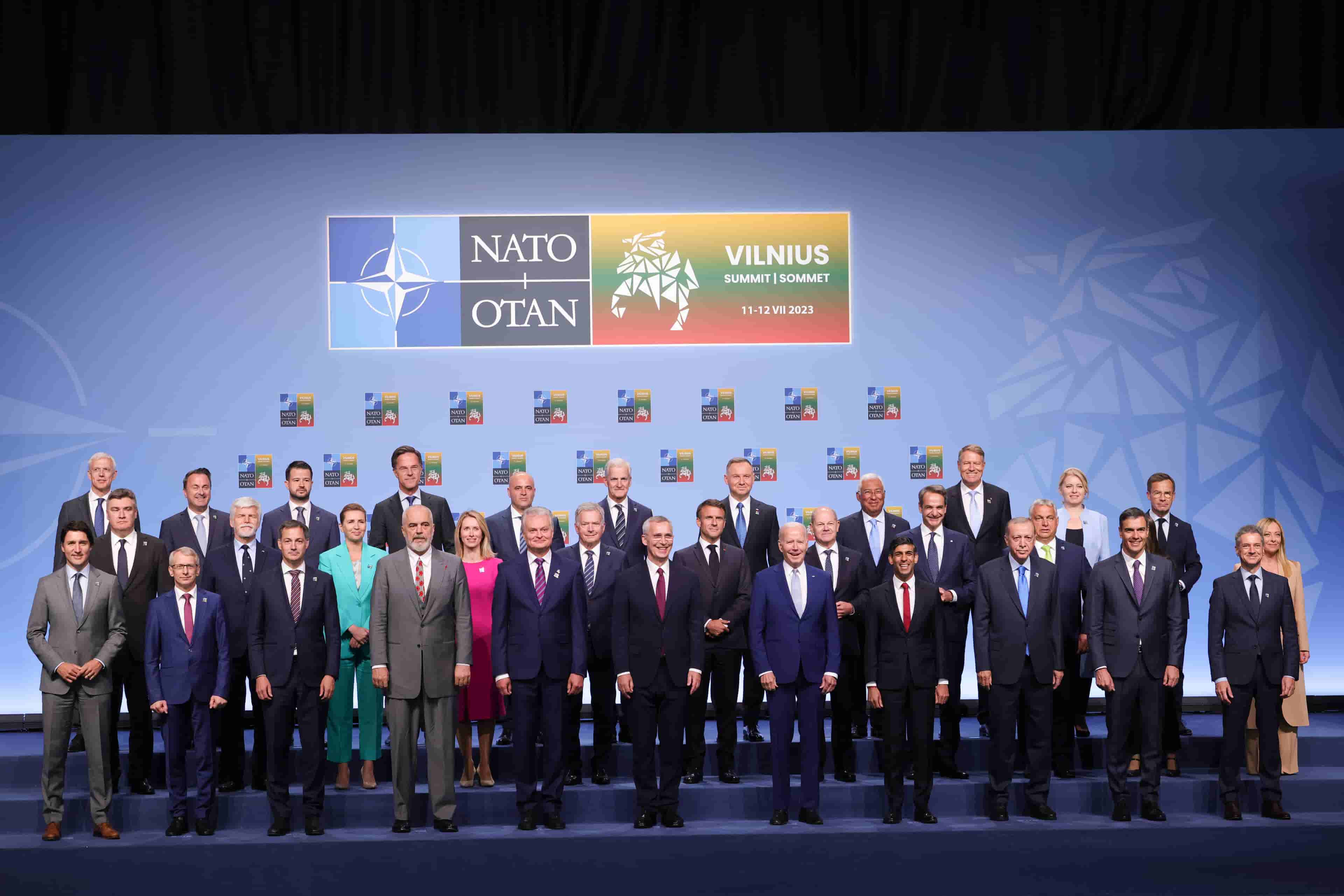
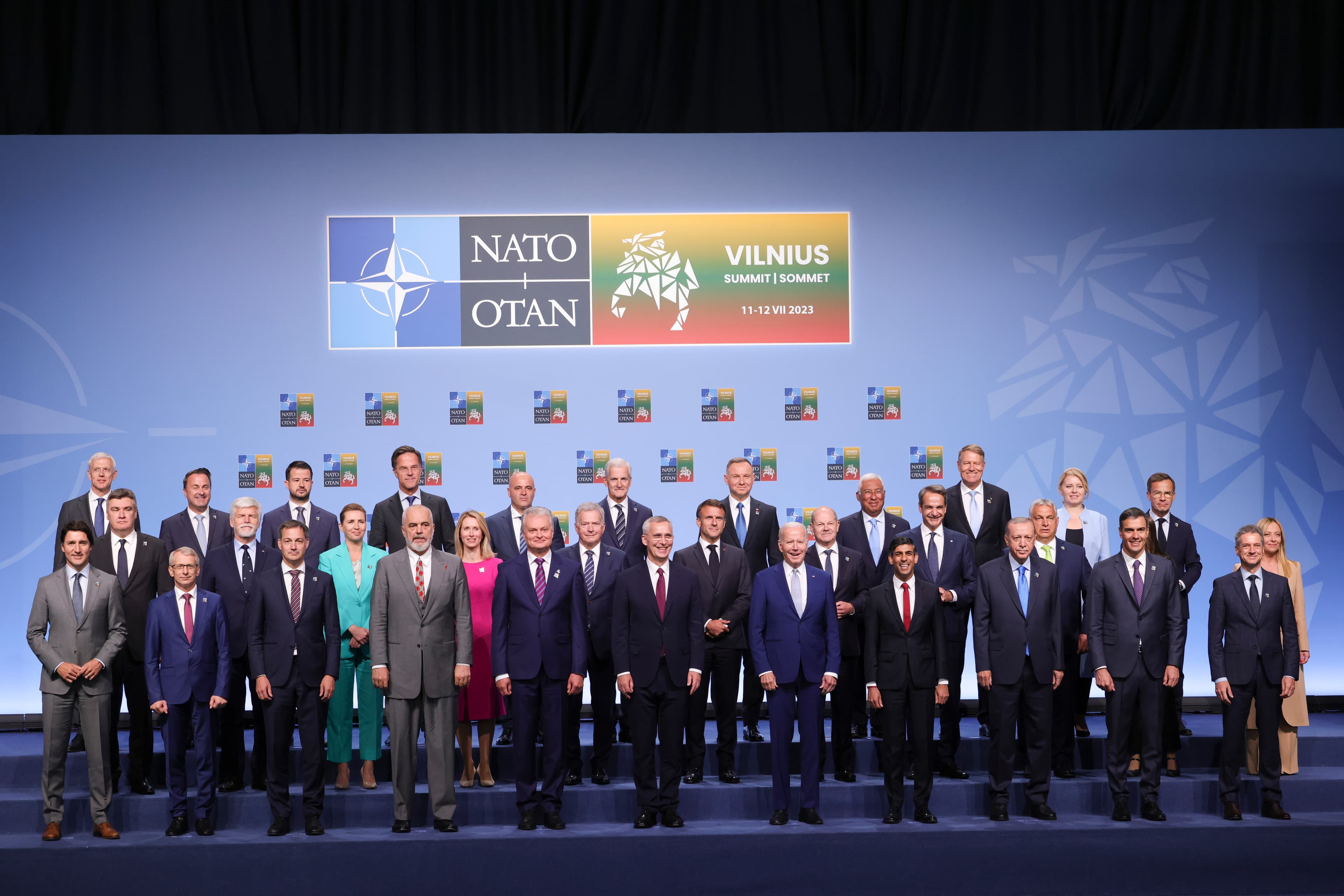
Turkey is hosting the 36th NATO Summit on July 7-8, 2026. The heads of state and government of the 32-member alliance will gather at the Beştepe Presidential Complex in Ankara. NATO Secretary General Mark Rutte will chair the summit, with President Recep Tayyip Erdoğan serving as host. This will be Turkey's second NATO summit, following the 2004 Istanbul Summit.
The summit's most notable guest will be Ukrainian President Volodymyr Zelenskyy, while U.S. President Donald Trump will also attend. The agenda centers on implementing the defense spending decisions taken at the 2025 The Hague Summit, boosting defense industry production, and sustaining support for Ukraine.

Day-by-day program
According to the official calendar released by NATO, the summit will conclude with the main leaders' session on July 8, following a day of preparatory and forum events.
Monday, July 6
- 16:45 — Secretary General Mark Rutte's pre-summit press conference (International Media Center)
Tuesday, July 7: Defense Industry Forum and Welcoming Ceremonies
- 10:00 — High-level announcements at the NATO Defense Industry Forum (ATO Congresium)
- 12:45 — Rutte's opening speech at the Forum; Vice President Cevdet Yılmaz and Minister of National Defense Yaşar Güler also attend
- 14:00 — Joint statement by Rutte and Ukrainian President Zelenskyy
- 17:00 — Meeting of foreign ministers with Istanbul Cooperation Initiative (ICI) partners
- 17:30 — Defense ministers' reception
- 18:30 — Dinner for heads of state and government with spouses
- 19:45 — NATO-Ukraine Council working dinner (at foreign ministers' level)
- 20:15 — North Atlantic Council working dinner (at defense ministers' level)
Wednesday, July 8: Main Summit Session
- 08:00 — Secretary General's doorstep statement
- 08:15 — Doorstep statements by allied heads of state and government
- 10:45 — Welcoming ceremony for leaders
- 11:00 — Official family photo
- 11:15 — Meeting of the North Atlantic Council at the level of heads of state and government (main summit session)
- 15:00 — Secretary General's closing press conference
NATO stated in its published program that times and content may change.
Main topics on the table
Secretary General Rutte describes the Ankara summit as being more about implementing the decisions taken in The Hague than setting new targets. At the heart of the summit is the allies' commitment to allocate 5 percent of their gross domestic product to defense and security spending by 2035. This ratio is split into at least 3.5 percent for core defense and 1.5 percent for broader security investment; the balance is planned to be reviewed in 2029.
Increasing defense industry production is one of the summit's prominent themes. The NATO Defense Industry Forum on July 7 is being promoted as the alliance's most comprehensive industrial gathering to date, aiming to turn commitments into actual production.

Support for Ukraine is also high on the agenda. European allies and Canada are expected to commit around 70 billion euros (80 billion dollars) in military aid for 2026, and at least an equivalent amount for 2027. However, it is noted that this package largely consists of existing programs brought together, and that the United States remains outside the program. Allies are expected to reaffirm Ukraine's irreversible path to membership without providing a new timeline.
In the draft declaration the alliance is working on, Russia is defined as a long-term threat to Euro-Atlantic security. Leaders are expected to reiterate the collective defense commitment under Article 5, emphasizing that an attack on one is an attack on all.

Who is attending
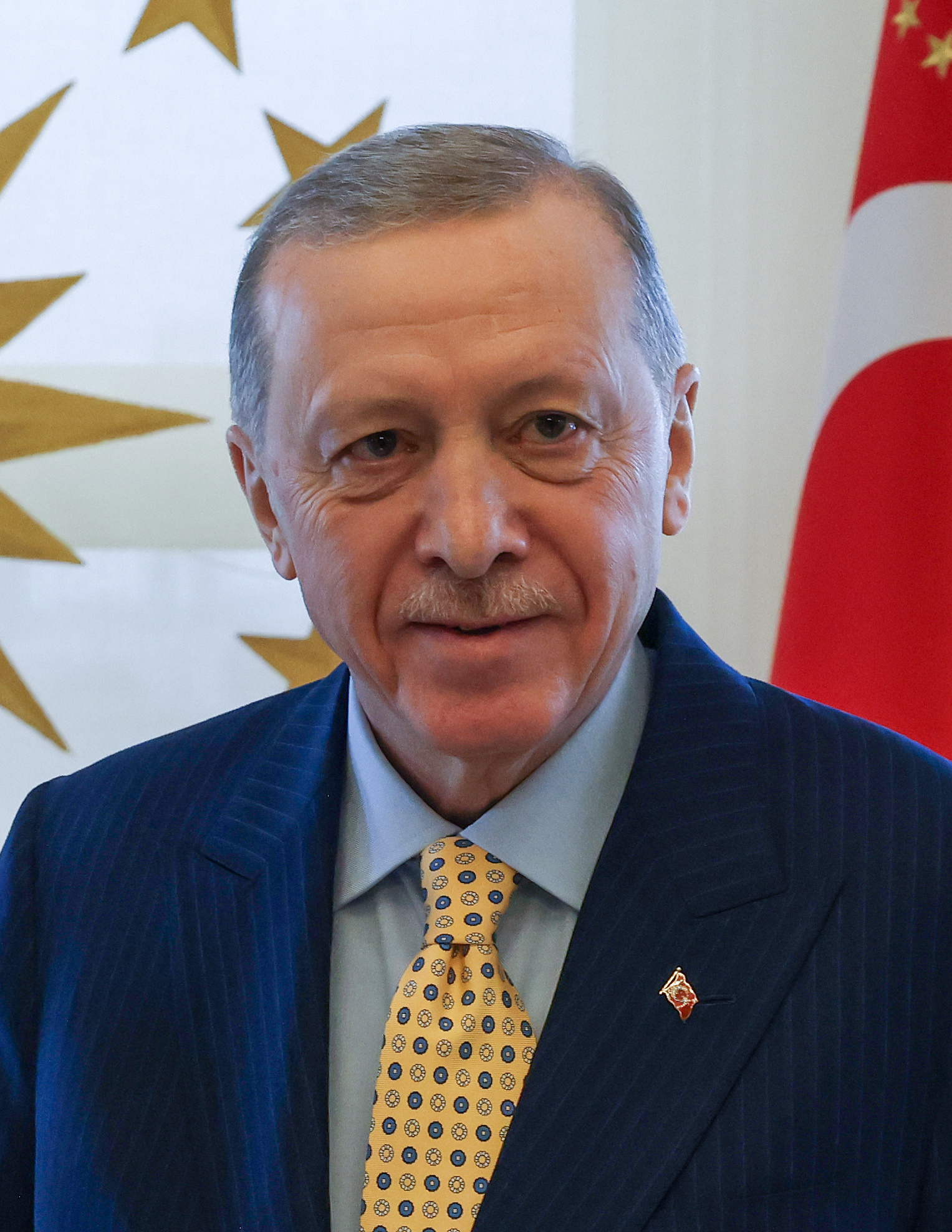
Leaders of the 32 member states will attend the summit. U.S. President Donald Trump's participation has been one of the most talked-about developments of the meeting; Trump stated that he attributed his visit to Ankara to his respect for President Erdoğan. On the European front, British Prime Minister Keir Starmer, French President Emmanuel Macron, and German Chancellor Friedrich Merz will be in Ankara.
The summit also hosts numerous non-member guests. The European Union will be represented by Commission President Ursula von der Leyen and Council President António Costa. Among Indo-Pacific partners, Australian Prime Minister Anthony Albanese, New Zealand Prime Minister Christopher Luxon, and South Korean President Lee Jae-myung will attend at the leader level, while it was reported that Japanese Prime Minister Sanae Takaichi will not come due to the parliamentary agenda, and her country will be represented by ministers. Gulf ICI partners and Azerbaijani President Ilham Aliyev are also among the invitees. In total, around 6,000 people are expected to attend the summit, with nearly 3,000 journalists having applied for accreditation.
Turkey's hosting and defense industry showcase
The Ankara summit will also serve as a defense industry showcase for Turkey. Secretary General Rutte said the first day would effectively be a defense industry day, with tens of billions of dollars' worth of contracts, agreements, and letters of intent possibly being signed. Turkey's defense industry ecosystem of around 3,000 companies, featuring ASELSAN's Steel Dome air defense architecture and prominent firms like Baykar, Roketsan, and TUSAŞ, is positioned as a production hub for the alliance.
The International Media Center has been set up at the Nation's Library, adjacent to the Presidential Complex; the center features approximately 1,500 workspaces and 40 editing suites. Turkey presents the summit under the theme 'Shared Future through Solidarity' and as a demonstration of its transformation from a border country on the alliance's southeastern flank to a central, indispensable ally.
Security and city arrangements in Ankara
Extensive security measures have been taken in Ankara for the summit. Around 40,000 security personnel have been deployed in the city; red zones have been established around airports, the Presidential Complex, and delegation hotels, and airspace restrictions have been imposed. Roads around the Presidential Complex will be closed to traffic from 07:00 on July 7 until midnight on July 8. The Ankara Governorate has banned meetings, demonstrations, and marches in the city from July 1 to 15; public employees have been granted administrative leave, and some exams have been postponed.