- BIST10011,922+0.67%
- USD50.28+0.05%
- EUR55.60-0.24%
- GOLD3,874.20-0.31%
- INTEREST36.00%-1.00
- BITCOIN64,654-1.01%
- November 16, 20262°
- BIST10011,922+0.67%
- USD50.28+0.05%
- EUR55.60-0.24%
- GOLD3,874.20-0.31%
- INTEREST36.00%-1.00
- BITCOIN64,654-1.01%
- November 16, 20262°
Ocean heat hits October record as El Niño builds and central US runs warm
Sea surface temperatures outside the polar regions averaged a record 20.95C (69.7F) in October, the EU’s Copernicus service said, as a fast-strengthening El Niño pushed Pacific readings past the peaks of 1997 and 2015. Its land data showed pronounced warmth across the central United States.
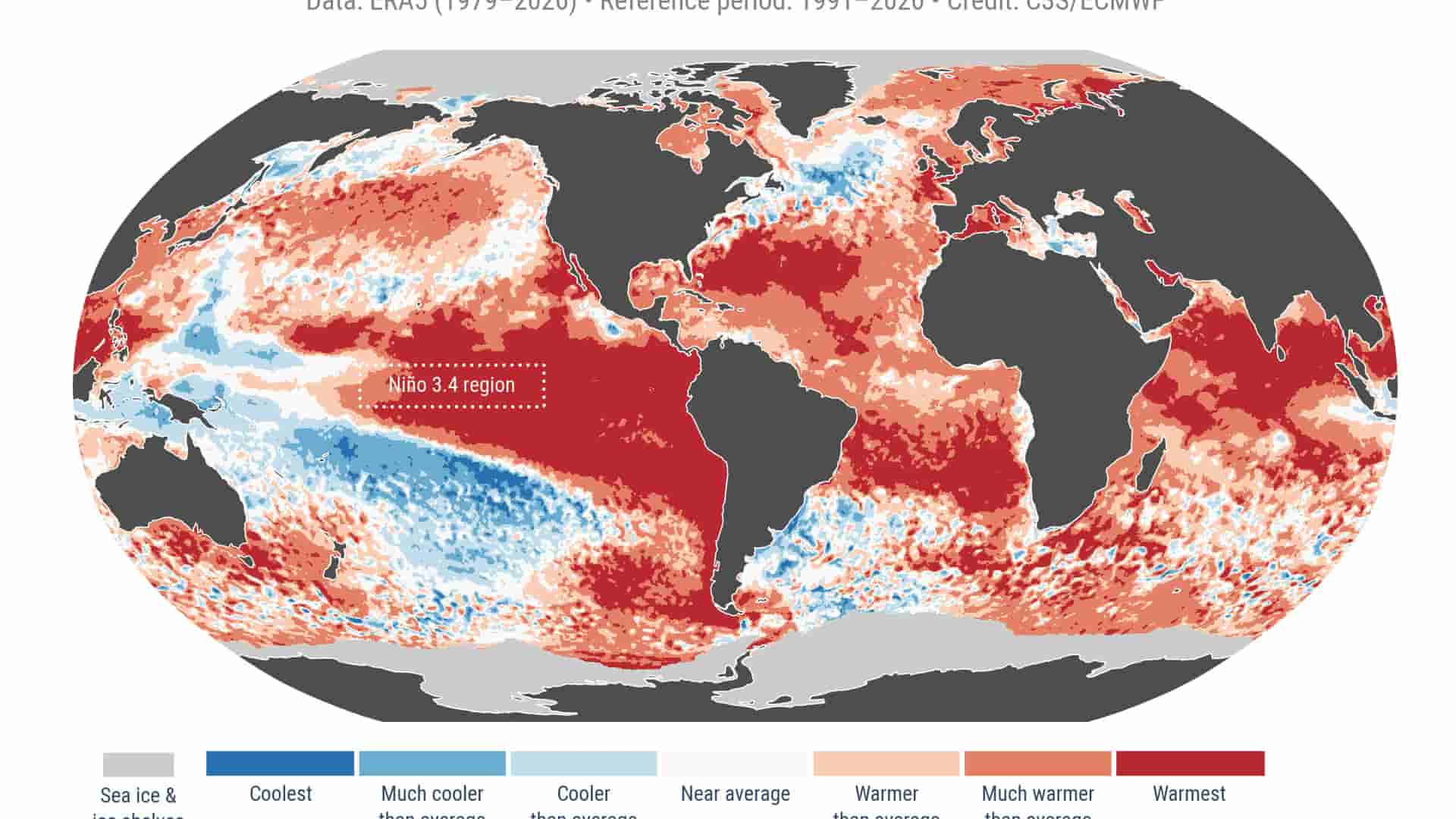
The world’s oceans set a new heat record for October, Europe’s Copernicus Climate Change Service (C3S) said in its monthly bulletin, as one of the strongest El Niño events on record continued to build in the tropical Pacific.
The average sea surface temperature across the extra-polar ocean, between 60 degrees south and 60 degrees north, reached 20.95C (69.7F), the highest October value in the record. The previous October high was set in 2023, when a strong El Niño was also developing, but C3S said this year’s event is "much stronger."
Pacific readings top past super El Niños
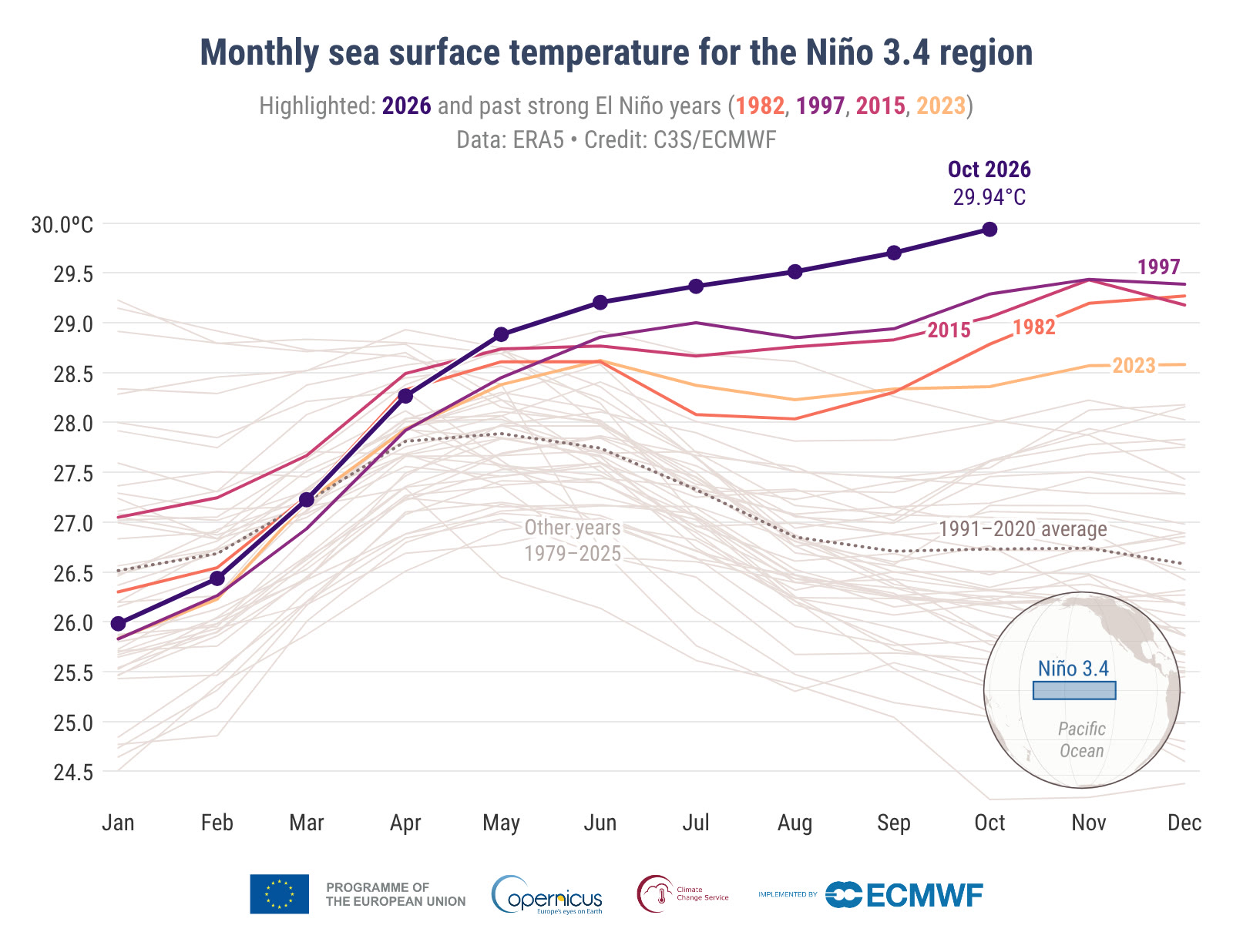
In the Niño 3.4 region of the central equatorial Pacific, the benchmark area forecasters watch for El Niño, the monthly sea surface temperature hit 29.94C (85.9F). That broke the record set in September and topped the peaks of the very strong 1982-83, 1997-98 and 2015-16 events. The anomaly reached 3.21C above the 1991-2020 average, up from 2.99C in September, while waters off Peru and west of the Galápagos ran 6-7C above normal.
C3S said El Niño is strengthening rapidly, is expected to peak in December and is now almost certain to persist through February 2027.
Warmth over the central US
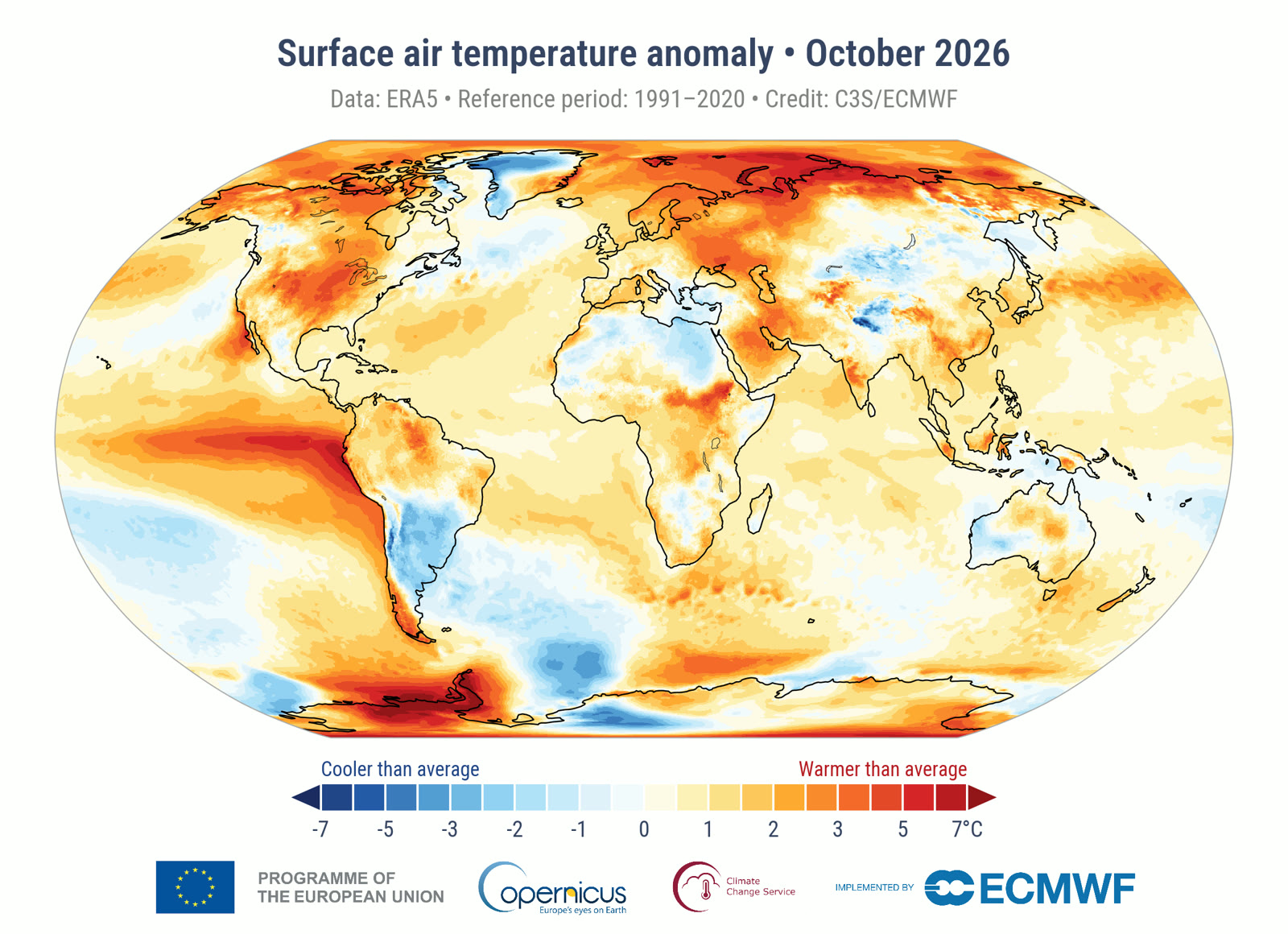
On land, October 2026 was the warmest October on record globally, at 1.75C above pre-industrial levels. Copernicus reported pronounced warm anomalies across the central United States, northern Canada, Siberia, eastern Africa and the Middle East, while Greenland, northern Africa and western Australia were colder than average.
Record ocean warmth also extended well beyond the Pacific, covering large parts of the northern Indian Ocean, the South Atlantic and the subtropical North Atlantic. Based on a statistical model, C3S said 2026 is virtually certain to become only the second calendar year, after 2024, to exceed 1.5C of warming above pre-industrial levels.
Charts: Copernicus Climate Change Service (C3S/ECMWF). Sources: Copernicus, Anadolu.
Stay Updated with Ally Daily
Subscribe to be informed about special news, developments and announcements. We will keep you informed.
By signing up, you agree to our Privacy Policy