Technology stocks and expectations regarding interest-rate policy in the United States were among the prominent factors behind the volatile outlook in global markets, while geopolitical uncertainty in the Middle East and rising long-term bond yields also affected investors' risk appetite. Shifting expectations over whether artificial intelligence companies can maintain their profitability increased market volatility.
Questions over whether the US-based artificial intelligence company OpenAI will reach the expected level of annual revenue created selling pressure on technology stocks. Shares of Oracle, which has large-scale business agreements with OpenAI, fell 5.5%, while declines were also recorded in other artificial intelligence-related companies.
The earnings season, expected to gain momentum from next week, will be decisive for the pricing of artificial intelligence and technology companies. Financial results, profitability and growth forecasts will be at the forefront of investors' decisions.
Oil market monitors developments in the Middle East
While talks between the United States and Iran continued through mediators, tensions in the Middle East continued to affect oil prices. US President Donald Trump said the previous day that he did not want to make a deal to end the war with Iran; yesterday, he announced that they would not launch an attack on Iran until the November 3 midterm elections.
Trump said productive talks were being held with Tehran and that Iran was in very poor condition economically and militarily. Trump's remarks that millions of barrels of oil pass through the Strait of Hormuz each day fueled continuing concerns about energy supplies.
Reports that some vessels had been targeted in the Strait of Hormuz, along with a hurricane affecting the US Gulf Coast, increased concerns about disruptions to oil supplies. After rising above $104 per barrel the previous day, December-dated Brent crude fell 1.4% in the new trading session to $102.8.
Fed officials signal additional rate hikes
Speaking at the Istanbul Economics Forum, Federal Reserve Board Governor Christopher Waller said he expected additional rate hikes to help inflation return more quickly to the 2% target if economic data came in line with expectations.
Waller said the increases did not have to be made at consecutive meetings, adding that rate steps should be taken within a reasonable period. St. Louis Fed President Alberto Musalem also said monetary policy might need to be tightened further to return inflation to its target.
The US Treasury's repurchase of up to $6 billion in long-term bonds partially eased selling pressure in bond markets. The yield on the US 10-year Treasury fell about 5 basis points to 5.24%, and stood at 5.22% in the new trading session.
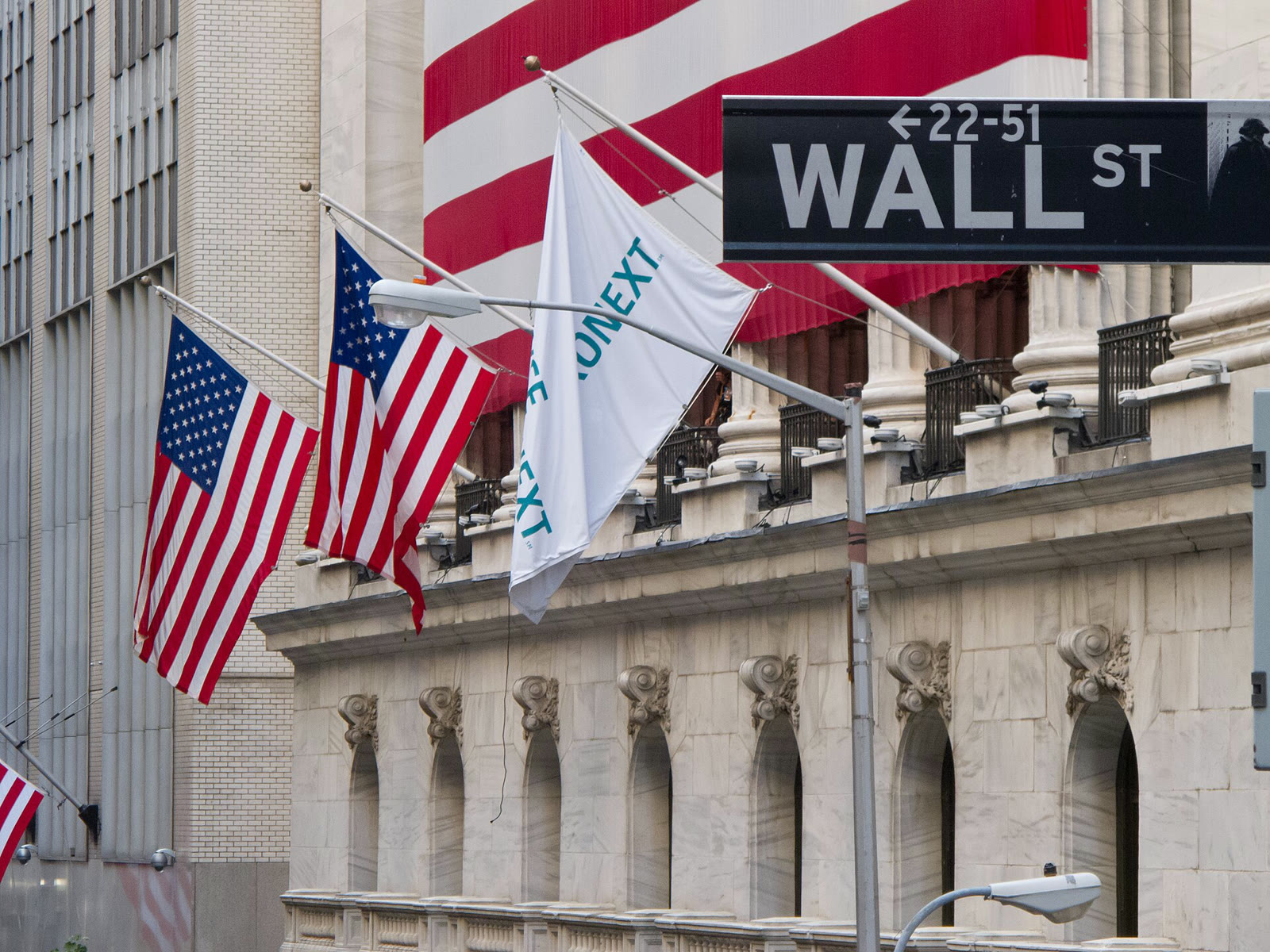
The dollar index fell 0.1% to 102, while the decline in bond yields and the weakening dollar lifted gold prices by 1.2% to $4,184 per ounce. On the New York Stock Exchange, the S&P 500 fell 0.47% and the Nasdaq declined 1.25%, while the Dow Jones rose 0.10%.
European and Asian markets diverge
European stock markets ended the day lower due to selling pressure in regional bond markets and rising energy costs. Bank of England Governor Andrew Bailey said the global financial system had remained resilient despite growing uncertainty, but added that preparations were needed for a world in which larger shocks could occur.
Bailey said the war in the Middle East was creating major uncertainty for growth, inflation and interest rates. He said vulnerabilities could emerge in government bond markets, credit markets and asset valuations, adding that the growth of artificial intelligence-related financing was creating new risks and that artificial intelligence's contribution to growth had become more visible.
Germany's exports fell 0.8% month-on-month in August, while imports rose 0.9%. The country's foreign trade surplus declined to 19.5 billion euros, while its exports to the United States fell 6.3% month-on-month. The German government raised its economic growth forecast for this year to 1.3% from the previously announced 0.5%.
The FTSE 100 in the United Kingdom fell 0.16%, Italy's FTSE MIB 30 declined 1.35%, Germany's DAX 40 lost 1.18% and France's CAC 40 dropped 0.51%. European index futures started the new day higher.

In Asia, energy costs stemming from the Middle East and uncertainty over the profitability of artificial intelligence companies limited risk appetite. Technology stocks fell in Japan, while gold-mining companies in China and Hong Kong rose.
In Hong Kong, Zijin Gold International shares rose 5% and Zhaojin Mining shares gained 3.45%. In China, Chifeng Gold rose 3.01% and Shandong Gold climbed 3%. Household spending in Japan fell 3.1% year-on-year in August.
Near the close, the Nikkei 225 fell 0.1% and the Shanghai Composite Index declined 0.6%, while the Hang Seng rose 1.2%. South Korean markets were closed for a holiday.
BIST 100 ends the day higher
The BIST 100 index on Borsa Istanbul ended the day up 0.75% at 12,213.58 points. In Borsa Istanbul's Futures and Options Market, the October contract based on the BIST 30 index traded flat in the evening session compared with the regular-session close.
Treasury and Finance Minister Mehmet Şimşek announced at the National Vision Summit on Economy and Finance that 17 funds open to TEFAS had been liquidated. Şimşek said the money belonging to 43,000 fund participants had been transferred to the relevant banks.
USD/TRY ended the previous day at 49.2630. The exchange rate traded at 49.3420 at the opening of the interbank market in the new trading session, up 0.2% from the previous close.
Industrial production in Türkiye, machinery orders in Japan, and the University of Michigan's consumer sentiment and inflation expectations data in the United States will be monitored. On the BIST 100 index, 12,300 and 12,400 points stand out as resistance levels, while 12,100 and 12,000 points are seen as support levels.




















