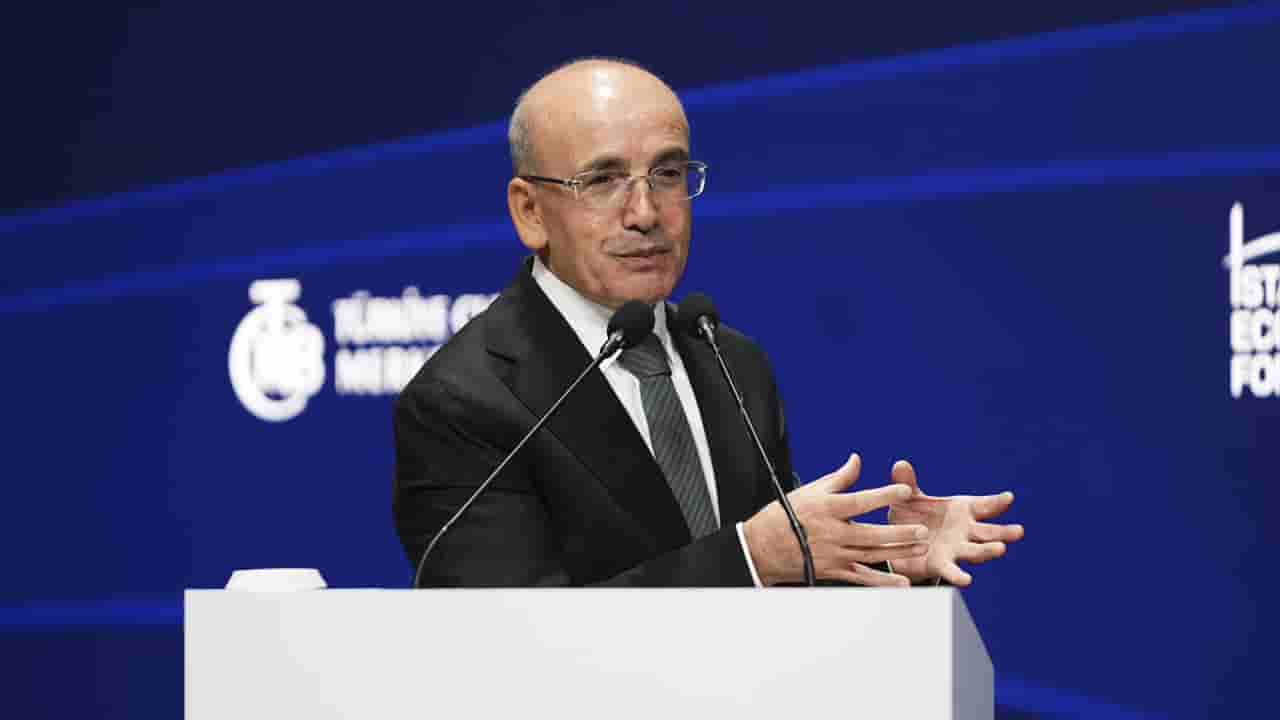
Türkiye will not abandon its fight against inflation even though the war in the region has slowed progress this year, Treasury and Finance Minister Mehmet Şimşek said Thursday. "This year the disinflation process may have slowed somewhat because of the war, but we will never give up on it," he said at the opening of the Istanbul Economic Forum, hosted by the central bank at the Istanbul Financial Center.
Şimşek said the Turkish economy grew by more than 3% last year while its trading partners grew around 1.5%. The central bank is using quantitative tightening and selective credit tightening alongside its policy rate, he said, and fiscal policy still has room to move.
Low debt, more defense spending
"We are in a relatively good position on emerging-market indebtedness. Our debt is low and we have fiscal space," Şimşek said, putting Türkiye’s total indebtedness at about 90%, compared with roughly 230% on average in emerging economies, and public debt at 22% of GDP. He said defense spending will rise by 229% in the 2027 budget to be submitted to parliament soon, as investment in defense has become unavoidable amid ongoing conflicts.
Trade, tourism and reforms
In response to global protectionism, Türkiye has 54 free trade agreements in force and is negotiating with Japan, Indonesia, the Gulf Cooperation Council and Canada, Şimşek said. "We aim to increase trade in services because we are more competitive in this area," he added, noting that tourism revenues have risen ninefold in dollar terms over 25 years.
He listed public procurement reform, stronger fiscal rules and governance reform at state-owned enterprises among the priorities, and said recent turbulence in fund markets was under control. Şimşek also mentioned an $8 billion rail investment crossing the Bosphorus to link Beijing with London.