Spain responded with military forces to a mass influx of migrants in Ceuta on the border with Morocco. According to the president of the autonomous city of Ceuta, at least 34 people died while trying to cross from Morocco by land and sea.
Prime Minister Pedro Sanchez visited the area on Friday and met with security officials. Sanchez said around 60,000 people had entered Ceuta in the past few days, a number equivalent to more than half the enclave's population.
What happened during the surge?
Thousands crossed into Ceuta on Thursday by sea and land, with entries continuing overnight. Officials said most of the dead drowned during sea crossings, while others perished in a crush near the breakwater fence at Tarajal Beach.
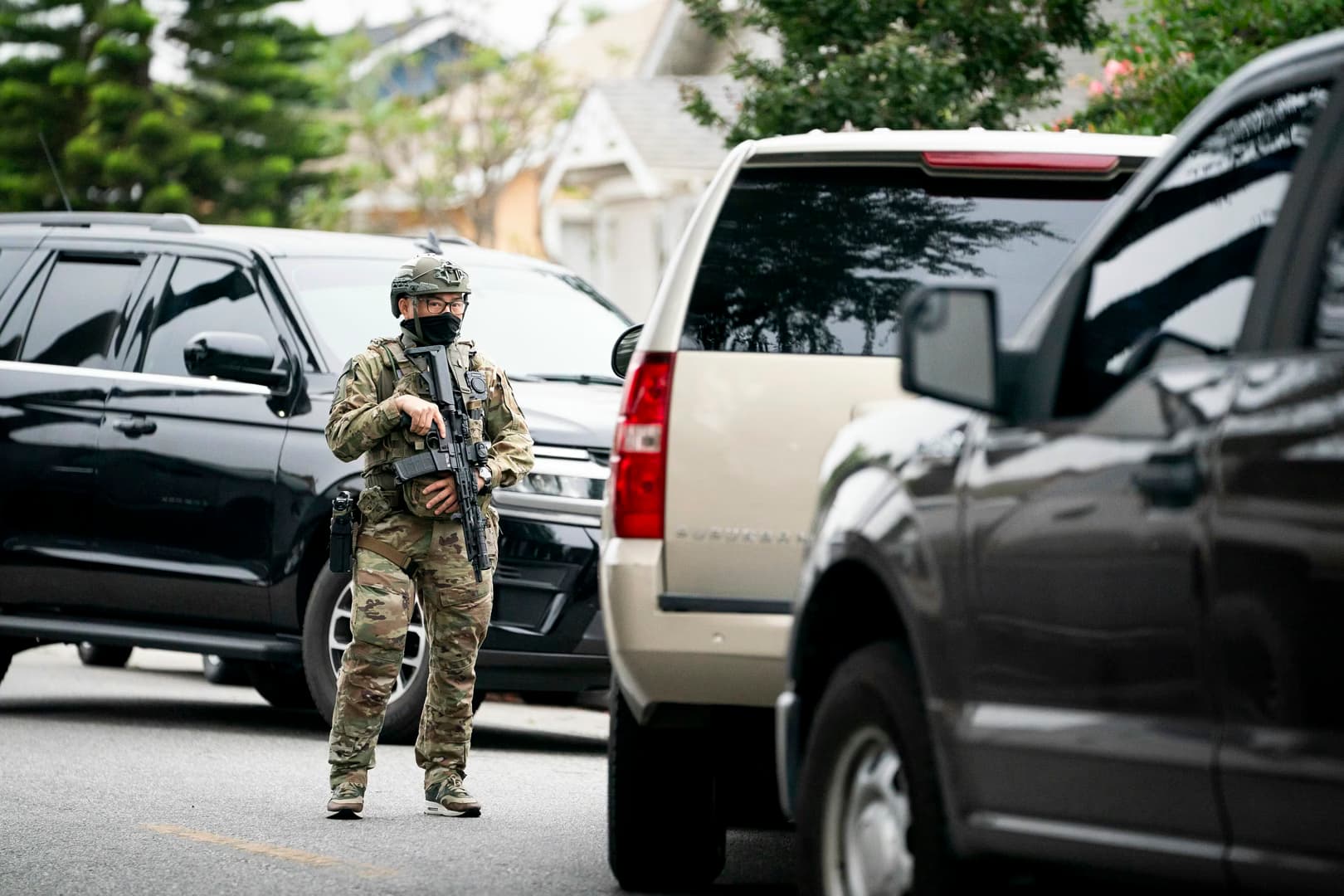
Spanish security forces deployed soldiers and additional police to the area, and Morocco also stationed security forces and water cannon vehicles to disperse crowds approaching the border.
Reuters footage showed large groups, mostly young Moroccan men but also women and children, climbing over breakwaters and advancing onto roads inside Ceuta. Clashes with security forces near the border reportedly caused a bus and seven cars to catch fire.
Although the main border crossing was closed, migrant groups continued seeking alternative routes along the coastline. Footage filmed around 11:30 a.m. on Friday showed entries continuing from the Tarajal Beach area despite strengthened security measures.
Ceuta's strategic position
Ceuta is a Spanish autonomous city located on the border with Morocco. Together with Melilla on the North African coast, it forms one of the two land borders between the European Union and Africa. The territory came under Portuguese rule in 1415, passed to Spain in 1580, and remained under Spanish sovereignty after Portugal regained independence in 1640.
As the only European territory on the continent after Africa's decolonization, Ceuta is protected by high border fences, surveillance systems, and the permanent deployment of Spain's Civil Guard and National Police. Migrants sometimes attempt to swim about 5 kilometers from the Moroccan town of Fnideq, or cross the shorter distance from Belyounech.
Ceuta authorities linked the latest influx to a ruling by Spain's Supreme Court this month. The decision prevents the immediate return of migrants intercepted at sea without legal proceedings. However, it does not apply to those arriving by land or climbing the border fence. Some migrant rights activists in Morocco questioned this explanation, noting that most migrants were unaware of the court ruling.
Sanchez's remarks
Prime Minister Sanchez said the government was mobilizing all resources to respond and pledged to protect Ceuta's security. "Illegal migration fell by about 40 percent last year; so what happened yesterday broke the trend of reducing irregular flows we have been seeing," he said.
Calling the situation "unexpected," Sanchez said the government would defend Ceuta "like Madrid." Asked when the migrants would be returned to Morocco, he replied "As soon as possible." He said they were in contact with Moroccan officials and ready to cooperate, stressing the importance of working with countries of origin. Referring to the Supreme Court ruling, he suggested legislative changes might be needed "to guarantee pushbacks at the border in the most effective way."
Reactions from Europe
The migrant influx has raised pressure on Sanchez ahead of next year's elections in Spain. Opposition People's Party leader Alberto Núñez Feijóo said, "The situation in Ceuta is desperate. The government cannot look away ... because we are facing a national security crisis." Ceuta mayor Juan Jesús Vivas urged Madrid to declare a state of emergency. Far-right Vox party leader Santiago Abascal called the crossings an "invasion" and blamed Sánchez's government.
European Commission President Ursula von der Leyen said, "The images from Ceuta are unacceptable. We cannot allow anyone to come to our union without following our rules. The dangerous crossings must stop immediately. Smuggling networks must be dismantled and returns must be swift, as our rules allow."
France tightened controls at the Spanish border. Interior Minister Laurent Nunez said, "I have instructed an immediate increase in controls at the Spanish border," deploying rapid reaction border units. Italian Prime Minister Giorgia Meloni said they were ready to take "extraordinary measures" if necessary, stating, "Italy will not just stand by and watch. We are convening the relevant bodies, and after those meetings we are ready to intervene with extraordinary measures to protect borders and citizens' security, including the suspension of the Schengen Area with Spain."
Italian Deputy Prime Minister and Foreign Minister Antonio Tajani went further, calling for "the closure of the Schengen Area to Spain." However, former EU foreign policy chief Josep Borrell said such a step was not legally possible, noting, "Under EU law, no member state can unilaterally suspend another's Schengen membership. This option does not exist in the Union's legal architecture." Borrell said the incident showed that some European governments were using EU law "in a way that would clearly violate the principle of loyal cooperation binding them."