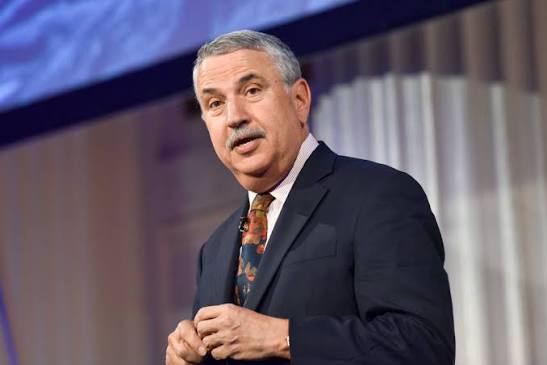
New York Times columnist Thomas Friedman criticized New York Mayor Zahran Mamdani for threatening to arrest Israeli Prime Minister Benjamin Netanyahu instead of focusing on the two-state formula, the only viable solution to the Israeli-Palestinian conflict.
Friedman reminded that New York, home to one of the largest Jewish and Muslim communities in the world, has approximately 750,000 Jews and a similar number of Muslims. He noted that Mamdani, the city's first Muslim mayor, instead of turning this diversity into an opportunity to build bridges, deepened divisions.
‘Political show’ criticism
Friedman reported that Mamdani implied he could arrest Netanyahu based on an International Criminal Court arrest warrant ahead of Netanyahu's expected visit to New York for the United Nations General Assembly meetings, and described the move as a 'political show'. He recalled that the mayor later admitted the city does not have such legal authority.
According to Friedman, such rhetoric provides Netanyahu with a political advantage inside Israel and helps him present himself as the sole protector of Israelis and Jews against growing hostility abroad.
Netanyahu also under fire
Friedman, turning his criticism also toward Netanyahu, argued that despite their different positions, both figures are moving away from a two-state solution. Stating that Netanyahu rejects the Palestinians' right to self-determination and establishment of an independent state, the author wrote that Israel's insistence on controlling all territory between the Mediterranean and the Jordan River would lead to nothing but 'endless war' in the region.
Call for dialogue
Friedman proposed an alternative roadmap for Mamdani. Instead of the arrest threat, he recommended that the New York mayor organize a conference or workshop coinciding with the UN General Assembly, bringing together Israeli, Palestinian, American, and other Arab figures who believe in a two-state solution.
He noted that such a dialogue should include organizations like the Abraham Initiatives, which promote Jewish-Arab coexistence within Israel, initiatives like EcoPeace Middle East that bring together Israelis, Palestinians, and Jordanians around environmental projects, and the new Israeli party 'Kulanu Makom', which centers its program on ending the occupation and establishing an independent Palestinian state.
Friedman stated that if Netanyahu were invited to such a dialogue, he would face a political and moral test; if he did not attend, he would have to take responsibility, and if he did attend, a new window of discussion on the future of the conflict could open.
He concluded his column by emphasizing that the world needs figures who can build bridges between Israelis and Palestinians, rather than rhetoric that deepens polarization.