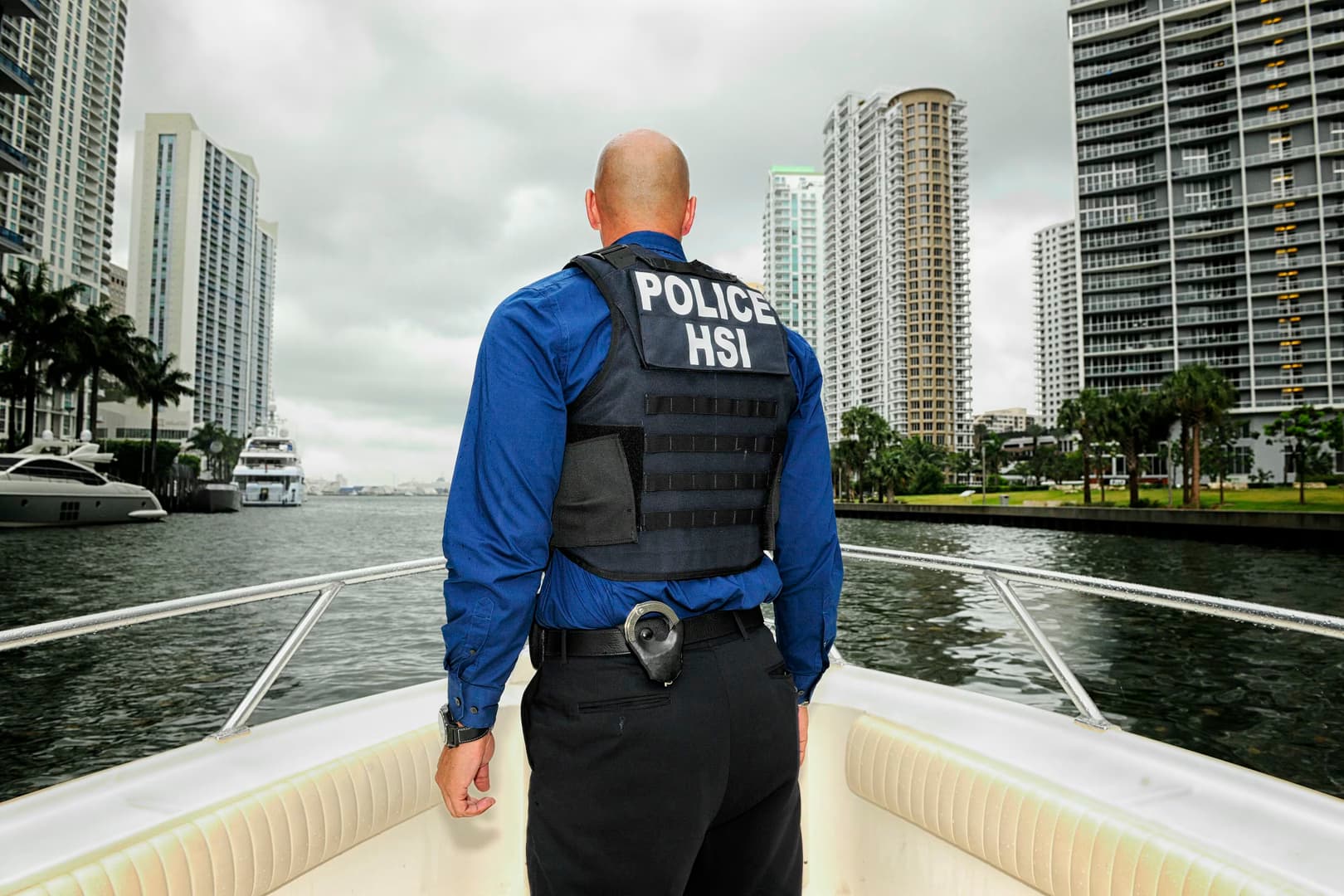
New regulations that sharply limit cooperation between federal immigration authorities and local police have taken effect in Maine. With enforcement starting on Wednesday, the law titled 'ICE Out of Policing' prohibits state and local law enforcement agencies from assisting federal authorities in civil immigration enforcement.
Under the law, police can no longer contact Immigration and Customs Enforcement (ICE) or Border Patrol to obtain translation services when encountering someone who does not speak English. Sharing personal information for civil immigration enforcement is also broadly prohibited, with exceptions only for criminal investigations and certain legally permitted information exchanges.
Local and state agencies are also restricted from detaining individuals solely for civil immigration enforcement purposes on behalf of ICE. Prisons will no longer be able to report inmates' release dates to ICE or comply with civil detention requests, except in cases involving serious crimes, arrest warrants, final deportation orders, and certain public safety concerns.
Another law that took effect the same day covers public schools, universities, public libraries, health facilities, and childcare centers. It prohibits employees from allowing immigration agents into non-public areas or providing access to protected records without a judicial warrant or valid legal authority.
A third law impacts the housing market. The new regulation restricts landlords from disclosing tenants' personal information, including immigration status, without consent. Exceptions are made for search warrants, court subpoenas, emergencies, and certain legitimate housing purposes.
The police-related law was enacted in January without Governor Janet Mills' signature. Mills signed the regulation covering schools, libraries, and health facilities in April, while the tenant privacy law also took effect without her signature the same month.
Some Maine cities, including Portland, Lewiston, Waterville, and Rockland, had already passed their own laws restricting local police communication with ICE and Border Patrol. In December, the Maine State Police announced they would begin complying with these restrictions before the law took effect.
Maine Police Chiefs Association President Scott Stewart warned that limiting cooperation could expose state agencies to federal funding cuts or increased sanctions. Some agencies were said to continue communicating with immigration authorities.
Immigrant rights advocates said the new laws would build community trust in Maine authorities to ensure public safety regardless of immigration status. Organizations such as the ACLU of Maine, the Immigrant Legal Advocacy Project, the Maine Immigrant Rights Coalition, and Maine Equal Justice held a press conference on Tuesday regarding the laws.
Immigrant Legal Advocacy Project Executive Director Sue Roche said they were aware of more than 50 incidents last year in which state and local police contacted immigration authorities, resulting in arrests. Roche said, "The vast majority of individuals turned over to ICE or Border Patrol by Maine law enforcement were people with no criminal record who were in the legal immigration process."
ICE has not yet responded to a request for comment on the matter.