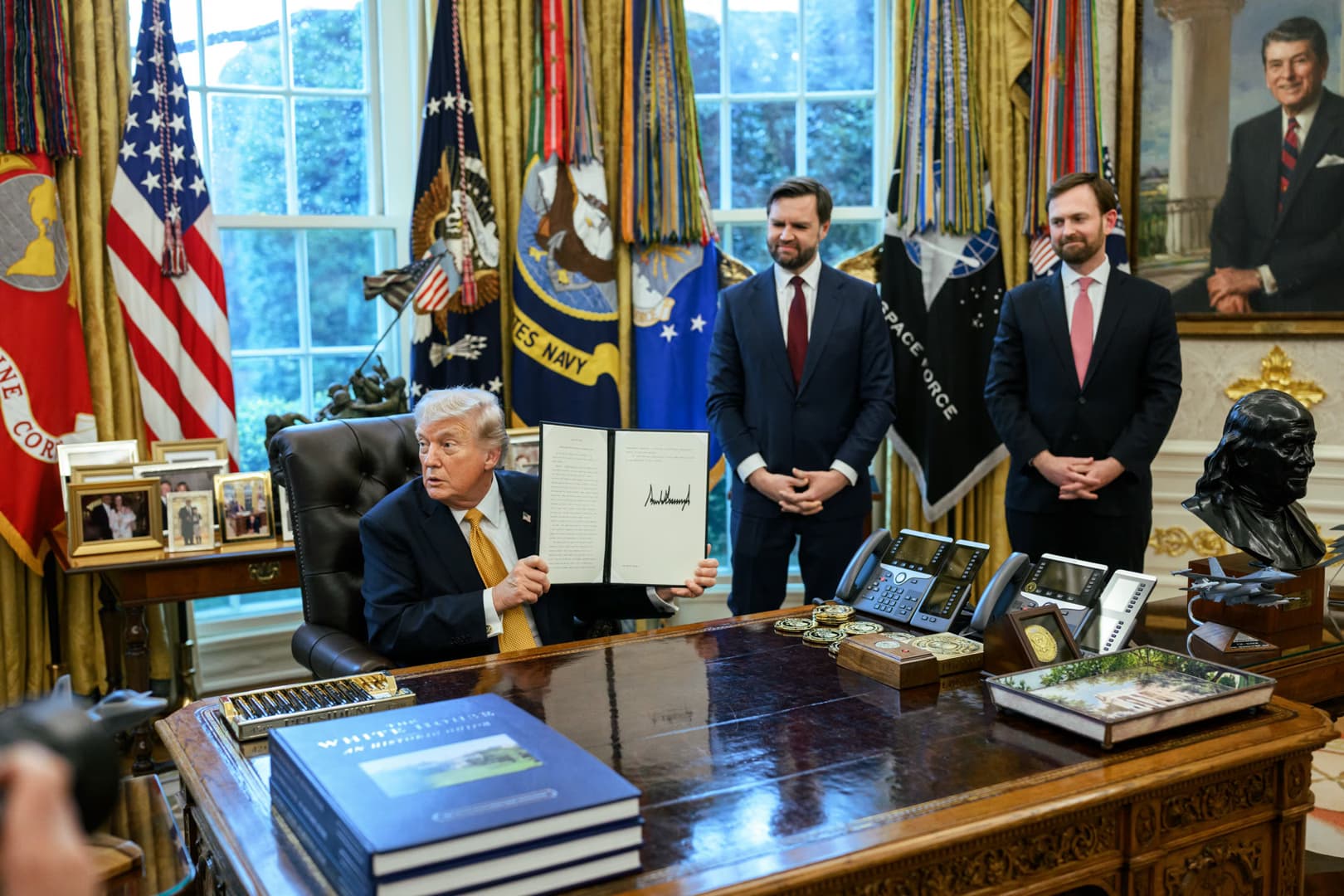
US President Donald Trump is carrying out an unprecedented political purge to cement his dominance over the Republican Party in his second term. Targeting dissenting voices within the party, Trump is supporting loyalists in primaries, fundamentally reshaping the party's landscape.
One of the clearest examples came in South Carolina, where Senator Lindsey Graham, after winning his primary, immediately thanked Trump for his political support and campaign contributions. Graham made a concerted effort to get closer to Trump to avoid the fate of other Republicans who opposed him.
Internal party opposition has no space
According to observers, the Republican Party has moved away from traditional conservative principles and turned into something like a 'Trump party.' Loyalty within the party is now measured not by policies or ideas, but by the degree of personal allegiance to Trump. This new political equation was evident in the primaries ahead of the November congressional midterm elections.
Securing Trump's backing has become a decisive factor for Republican candidates aiming to reach Congress or high offices like governorships. Conversely, losing the president's support can spell the end of political careers, even for seasoned politicians.
Notable names in the purge
Trump's political interventions have led to the removal of long-standing party figures. Among those targeted by the president is House member Thomas Massie, who had called for the full release of the Jeffrey Epstein files.
Another notable loss was Louisiana Senator Bill Cassidy. Cassidy lost his primary to a rival backed by Trump after voting to impeach the president following the January 6, 2021, Capitol attack. A similar scenario played out for John Cornyn, who had represented Texas in the Senate for 24 years and suffered a major defeat after Trump backed his opponent.
Trump's influence was also felt at the state level. Five members of the Indiana state Senate lost their seats to candidates supported by Trump after they opposed his demand to redraw their districts.
Election victory is not guaranteed
Although Trump has been largely successful in purging his rivals within the party, his strategy has not worked everywhere. In Iowa and Georgia, governor candidates backed by Trump failed to win their primaries.
The real question, however, is how successful Trump's loyal candidates will be against Democratic opponents in the November general election. The economic repercussions of the US–Israel war against Iran are negatively affecting Trump and his party's popularity. Rising oil prices due to tensions in the Strait of Hormuz have increased fuel and basic commodity prices in the US, reigniting inflationary pressures.
This economic picture is forcing the Federal Reserve to delay interest rate cuts, threatening economic growth and consumer confidence. American electoral history shows that voters prioritize living conditions and fuel prices over foreign policy.
A 'lame duck' scenario may await Trump
Therefore, the November midterm elections will be a critical test of Trump's popularity and whether Republicans can maintain their power in the legislature. If Democrats seize control of either the House or the Senate, or both, it could severely limit Trump's ability to advance his political agenda for the remainder of his term.
Such an outcome could usher in what is known in American political parlance as a 'lame duck' period. In this phase, the president's power to enact major political or economic changes diminishes, while the race for the White House also begins. If the candidates Trump supports fail to reach broad swaths of voters, he could find himself as a leader who has lost Congress and whose political influence is rapidly waning.