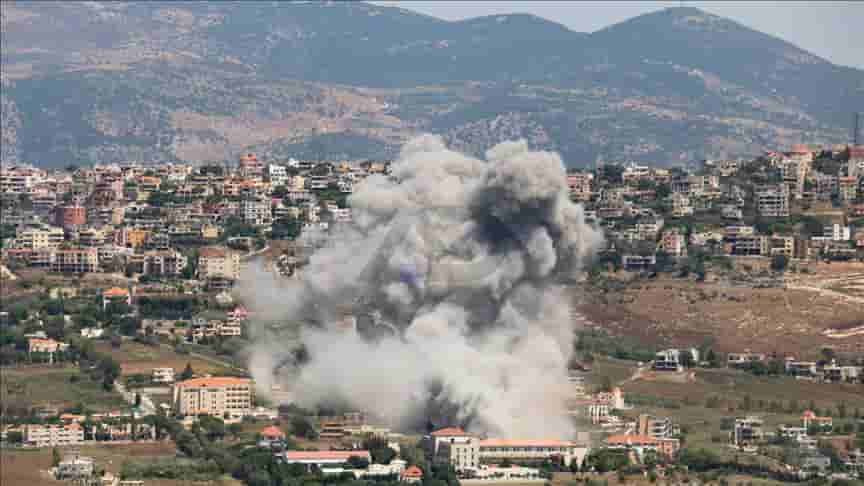
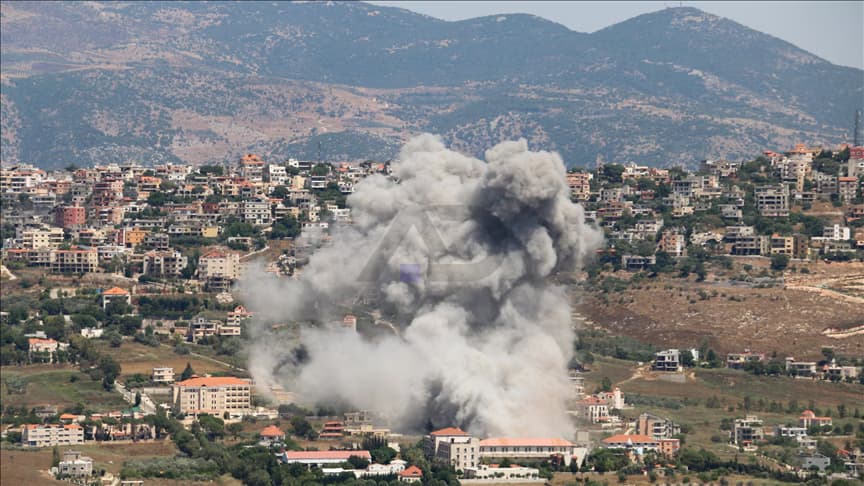
Lebanon, Israel, and the United States signed a tripartite framework agreement on Friday in a ceremony in Washington, aiming to pave the way for lasting peace between the two countries.
US Secretary of State Marco Rubio, speaking at the signing ceremony, said the agreement 'begins to build a framework for lasting peace and security,' adding, 'This is the beginning of the beginning. There is a lot of work ahead.'
Lebanon's Ambassador to Washington, Nada Hamadeh Moawad, said the agreement is 'a first step toward restoring Lebanon's sovereignty and territorial integrity, ending hostilities permanently and finally, and enabling our people to return to their land.'
Israel's Ambassador to the US, Yechiel Leiter, commented that under the agreement, 'Iran is out, Hezbollah is out, and the road to Israeli-Lebanese peace is in.'
Details of the Agreement
According to the text published by the US State Department on Friday evening, Israel and Lebanon declare their 'intention to definitively end the conflict, address its underlying causes, and thus formally conclude any state of war between them.'
The agreement calls for the Lebanese Armed Forces (LAF) to reestablish 'sovereign authority over all Lebanese territory,' contingent on 'verified disarmament of non-state armed groups, particularly Hezbollah.' This process will allow the Israel Defense Forces to 'gradually withdraw from Lebanese territory.'
Pilot Zones and Military Transition
Israeli Prime Minister Benjamin Netanyahu, in a pre-recorded video shared with Israeli media after the announcement, said he had no plans to withdraw from Lebanon until Hezbollah lays down its arms. Netanyahu stated that the Israeli army would allow the Lebanese army to take over control in 'two pilot zones' – one south of the Litani River and one north of it.
According to the agreement text, 'the LAF will assume full and effective security responsibility in these areas, internationally supported reconstruction efforts will begin, and Lebanese civilians will be able to return safely to these areas.'
Different Stances of the Parties
Despite the agreement, both Israel and Hezbollah, which is part of the Lebanese government but has a powerful armed wing outside state control, showed that major differences persist. Hezbollah leader Naim Qasem said in a statement on Friday that Israel 'has no choice but to withdraw completely from every inch of Lebanese territory' and that its forces 'must leave unconditionally.'
Rubio, in a separate statement, said the agreement establishes 'a clear and structured process' to disarm Hezbollah and its infrastructure, and that a US-facilitated military working group has been established to assist implementation.
Humanitarian Aid and Background
The senior US diplomat also said they would commit $100 million in humanitarian aid in coordination with the United Nations and cover $30 million in costs to 'enhance the capacity and capability' of the Lebanese army.
UN Humanitarian Affairs Chief Tom Fletcher welcomed the agreement, describing the signing in Washington as 'a moment of hope and opportunity.'
Under US pressure, Lebanese and Israeli officials began direct negotiations in Washington in April, but a ceasefire declared on April 17 failed to stop the fighting. This month, a new but highly fragile ceasefire was declared after Tehran insisted that Lebanon be included in any agreement to end the broader war with Washington.
The fighting has displaced more than one million people and killed over 4,200, according to Lebanese officials.