- BIST10011,722-2.89%
- USD49.45+0.05%
- EUR55.62+0.37%
- GOLD4,181.10+0.26%
- INTEREST37.00%-1.00
- BITCOIN81,450-0.06%
- October 17, 202614°
- BIST10011,722-2.89%
- USD49.45+0.05%
- EUR55.62+0.37%
- GOLD4,181.10+0.26%
- INTEREST37.00%-1.00
- BITCOIN81,450-0.06%
- October 17, 202614°
Current and former Columbia students sue university over Palestinian rights advocacy
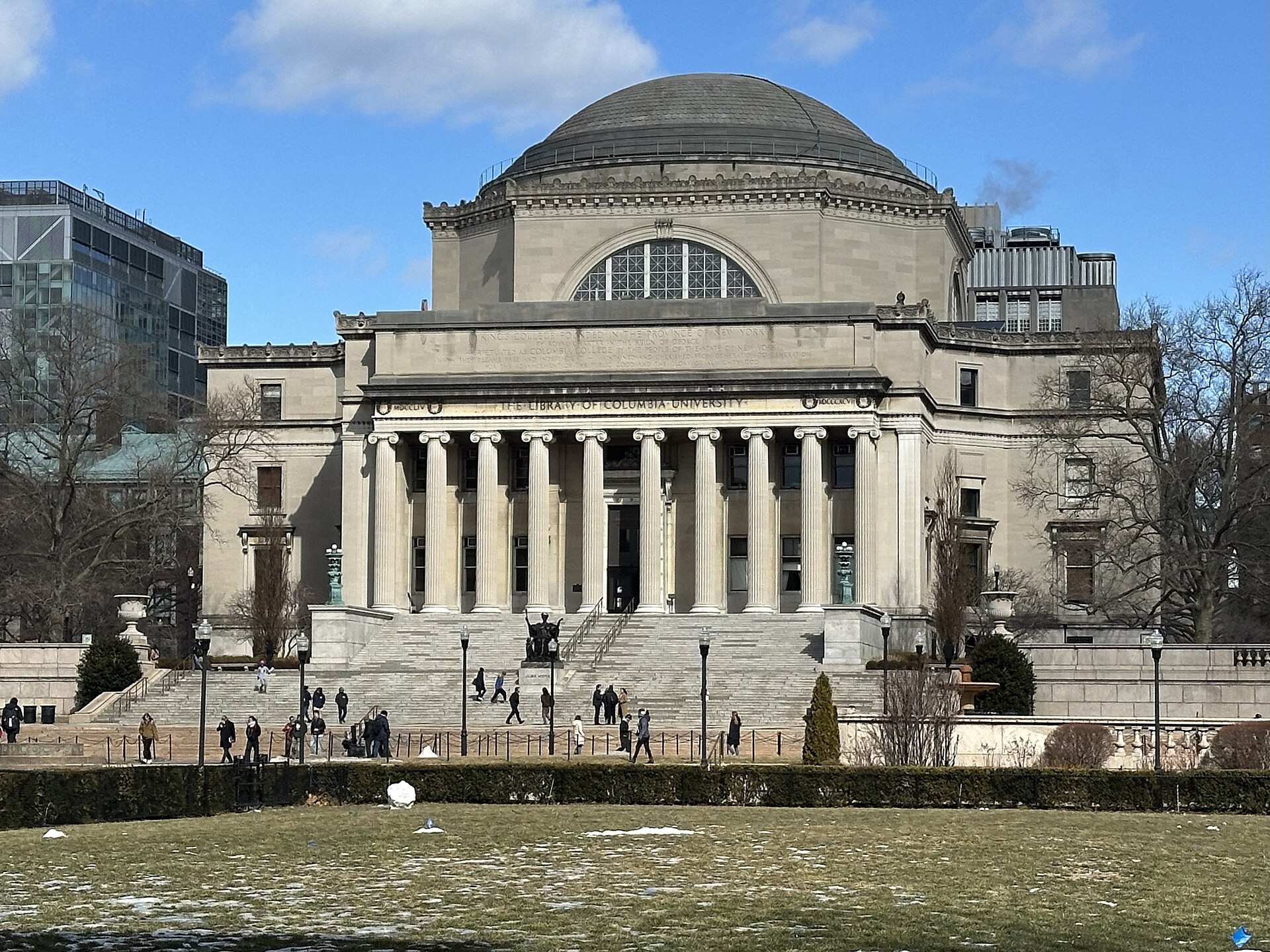
Current and former Columbia University students sued the university in Manhattan federal court, alleging they faced threats, doxxing and harassment for advocating Palestinian rights. The plaintiffs include Mahmoud Khalil and the Columbia Palestine Working Group.


Current and former Columbia University students sued the university in Manhattan federal court, saying they faced discrimination, threats, doxxing and harassment for advocating Palestinian rights. The lawsuit, filed this month, also names Palestinian activist Mahmoud Khalil and the Columbia Palestine Working Group as plaintiffs.
The plaintiffs allege that Columbia violated federal civil rights law by failing to protect students targeted because of their Arab or Muslim backgrounds or their advocacy for Palestinian rights. The complaint argues that university administrators failed to respond to threats, the publication of students' personal information and other forms of harassment.
Students' names and photos displayed around campus
One incident cited in the complaint involved a truck that circulated around Columbia's campus in October 2023, shortly after Israel began its war in Gaza. The truck displayed the names and photos of pro-Palestinian students, labeling them “leading antisemites.”
Bhavana Bellamkonda, one of the students whose name and photo appeared on the truck, said it was the moment when the hostility on campus became frightening for her. Bellamkonda, a Columbia graduate, said the campus environment was becoming increasingly hostile and that students were concerned about their safety.
Bellamkonda said some of the information used on the truck had been taken from the university's password-protected CampusGroups platform. After a similar truck appeared at Harvard University, students asked Keren Yarhi-Milo, dean of Columbia's School of International and Public Affairs, for protection and requested that data that could facilitate the disclosure of personal information be removed from university systems.
Bellamkonda argued that students received no support in response to those requests and that their demands caused discomfort among faculty administrators. She said advocating for Palestinian rights or any human rights should not make a person expendable.
Plaintiffs say threats and harassment began earlier
The plaintiffs said the hostile environment at Columbia had developed long before Khalil was detained. Bellamkonda said some Muslim students had their headscarves pulled and were called “terrorists.” She also said that an Israeli student in one of her classes, who was also a research assistant to the dean of the School of International and Public Affairs, called her a “terrorist.”
Bellamkonda argued that the university's failure to respond adequately to those incidents left pro-Palestinian students more vulnerable. She said the university's handling of what it described as coordinated harassment contributed to the environment that later led to Khalil becoming a target of immigration authorities.
Khalil also argued in the lawsuit that Columbia's failure to protect Palestinian students and its discriminatory practices paved the way for the Trump administration to target him. Khalil said they had sought help from the university for more than two years without receiving a response and that he filed the lawsuit to prevent other students from experiencing what he had endured.
Khalil's detention becomes a central issue in the lawsuit
The lawsuit has also brought renewed attention to Khalil's detention by U.S. immigration authorities in March 2025. Khalil, a lawful permanent resident of the United States, was held in Louisiana for 104 days, about 1,300 miles from his family.
Khalil missed the birth of his first child while in detention and was released in June. His legal fight against the Trump administration's attempt to deport him is continuing.
Khalil's attorney, Brittany Finley, alleged that Columbia failed to protect pro-Palestinian students and also subjected them to disciplinary proceedings. Finley said she began representing students after the university established its Office of Institutional Equity and Diversity in August 2024 to centrally handle reports of discrimination and discriminatory harassment.
Finley alleged that pro-Palestinian students, including Khalil, began to be targeted shortly after the office was established. She argued that Khalil was subjected multiple times to baseless proceedings intended to portray him as someone else.
Finley said the pressure on pro-Palestinian students intensified after October 7, 2023, and spread to the Columbia Palestine Working Group. She said the group remains suspended indefinitely.
Finley said Khalil had repeatedly reported harassment to Columbia before his detention and had informed the university that people connected to it had extensively disseminated his personal information. In early March 2025, Khalil contacted the Office of Institutional Equity and Diversity and emailed Columbia's president.
In the email, Khalil wrote that he could not sleep because he feared Immigration and Customs Enforcement or a dangerous person would come to his home, that he urgently needed legal assistance and that he wanted the university to intervene. He also said people connected to Columbia had publicly described him as a national security threat, questioned his immigration status and posted an accusatory message tagging U.S. Secretary of State Marco Rubio.
Khalil was detained one day after making that complaint and sending the email. The plaintiffs argue that the threats continued both online and in spaces connected to Columbia.
Pakistani graduate says academic and career plans were affected
Mohammad Ibrahim Zubairi, a Pakistani graduate of Columbia's School of International and Public Affairs, said the backlash he faced after defending pro-Palestinian students affected his academic and career plans. He said he had urged U.S. citizen students to exercise their right to protest on behalf of noncitizens such as Khalil, who at the time was under immigration authorities' supervision.
Zubairi said he was accused of acting aggressively and inciting violence after making that appeal. He said he was told that he was not a U.S. citizen and should leave his violence at the door. Instead, he said, he expected to be told that protesting was a constitutional right.
Zubairi, who completed his master's degree on a full scholarship, said he spent much of the time he had set aside for finding work defending his detained friend. He said he believed he had faced institutional pressure at Columbia because of his identity and political advocacy, and argued that he encountered an attitude suggesting that criticizing violence against Palestinians was incompatible with being a good Muslim man.
Zubairi said he was disappointed by the censorship and pressure he encountered in the United States, where free expression and civil rights are emphasized. Zubairi later returned to Pakistan and said he was unsure whether he would be allowed to return to the United States under the current administration after being publicly associated with pro-Palestinian activism.
Columbia administration declines to comment on allegations
A Columbia spokesperson declined to comment on the allegations because of the ongoing lawsuit. The university said it was working toward a campus where all students feel welcome, supported and safe and are protected from discrimination and harassment.
The spokesperson also defended Dean Keren Yarhi-Milo, saying she supports students from all backgrounds, including Palestinian, Arab and Muslim students, and remains committed to creating a campus free from discrimination and harassment.
The plaintiffs are seeking financial damages, the reinstatement of the Columbia Palestine Working Group and the restoration of Khalil's access to campus. Although Khalil graduated while in detention, he is not being allowed onto Columbia's main campus; legal proceedings related to the Trump administration's attempt to deport him are continuing.
Finley argued that Khalil's cases had not been resolved and that Columbia had not provided him with support. According to the attorney, the university contacted Khalil after his release only to ask him to leave university property.
Stay Updated with Ally Daily
Subscribe to be informed about special news, developments and announcements. We will keep you informed.
By signing up, you agree to our Privacy Policy