- BIST10011,909+0.56%
- USD50.28+0.05%
- EUR55.60-0.24%
- GOLD3,866.00-0.52%
- INTEREST36.00%-1.00
- BITCOIN64,461-1.31%
- November 16, 20262°
- BIST10011,909+0.56%
- USD50.28+0.05%
- EUR55.60-0.24%
- GOLD3,866.00-0.52%
- INTEREST36.00%-1.00
- BITCOIN64,461-1.31%
- November 16, 20262°
For Washington, a Mélenchon win would mean a NATO exit and a split over Israel
Jean-Luc Mélenchon, now second in French polls for the April 2027 election, pledges to pull France out of NATO's integrated command and reject the 5% defense spending target pushed by Washington. He also vows to condemn what he calls genocide in Gaza, days after Israel barred him from entering the country.

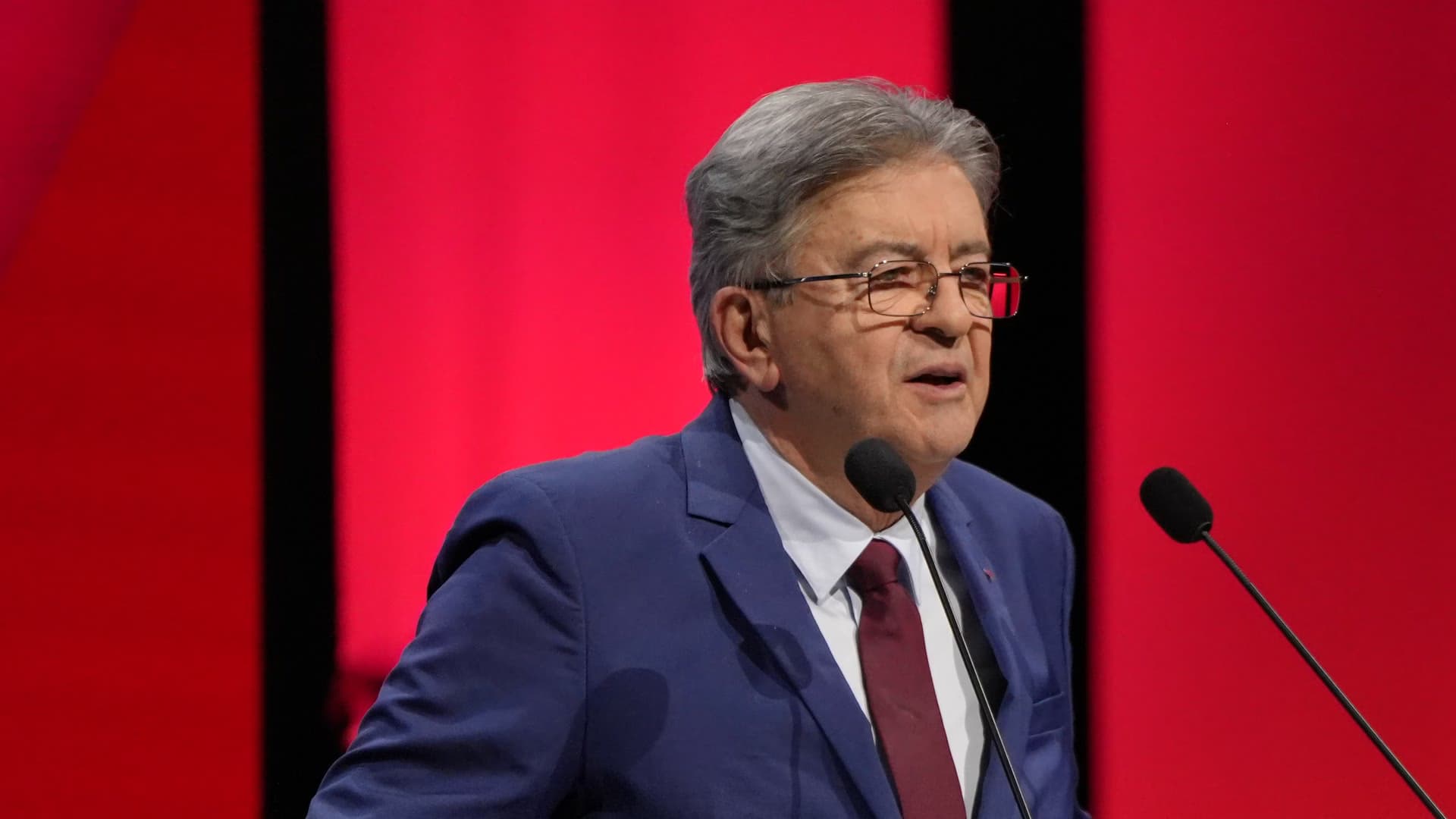
France's far-left presidential contender Jean-Luc Mélenchon is laying out a foreign policy that would put Paris at odds with Washington on two fronts at once: NATO and Israel. And his campaign is gaining ground. An Elabe poll for BFMTV and La Tribune Dimanche, published Nov. 14, put the 75-year-old leader of La France Insoumise (France Unbowed, LFI) in second place with 17% to 18.5% of first-round voting intentions, behind far-right leader Marine Le Pen at 31% to 33%.
The first round of the election to succeed President Emmanuel Macron is due in April 2027. Current polls show Mélenchon reaching a runoff against Le Pen but losing it, Reuters reported.
"No business being in NATO"
LFI's platform, L'Avenir en commun ("A Shared Future"), released Nov. 6, calls to "immediately withdraw from NATO's integrated command and then, in stages, from the organization itself," according to Politico Europe. It also rejects what it calls "the tribute demanded by the United States" of 5% of GDP for defense, the target NATO allies adopted at their 2025 summit under pressure from President Donald Trump.
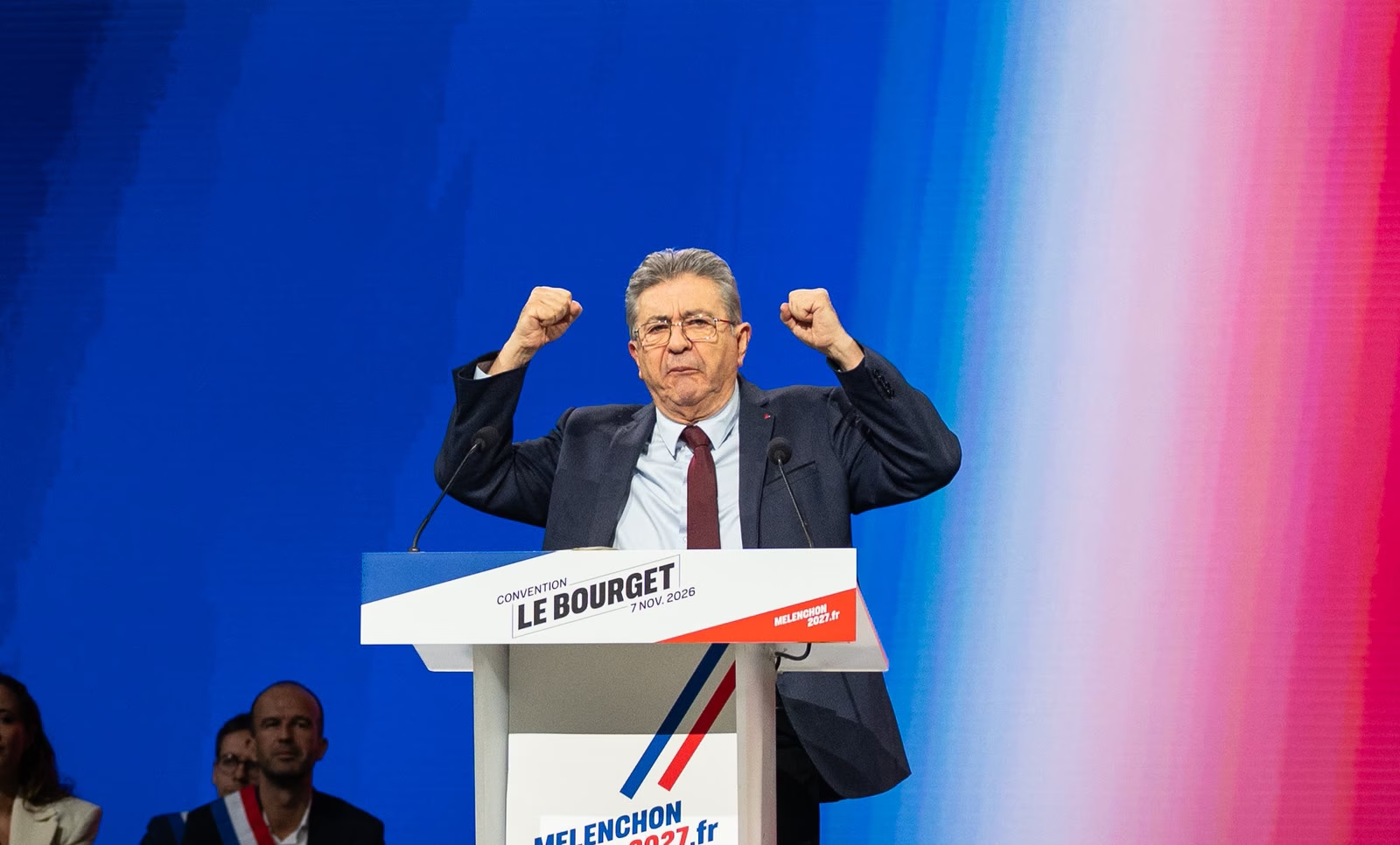
"We have no business being in NATO, nor in American wars," Mélenchon told supporters at a rally in Le Bourget, north of Paris, on Nov. 7. "France must build a global front of non-aligned countries." The platform also pledges to close NATO's space center in Toulouse and to nationalize major defense companies.
France left NATO's integrated military command under Charles de Gaulle in 1966 and rejoined it in 2009. Le Pen also pledges to take France out of the integrated command, Politico noted, which means both current poll leaders want to loosen France's ties to the U.S.-led military structure.
Gaza, the West Bank and an Israeli entry ban
On Israel, Mélenchon goes further than any other major French candidate. At Le Bourget he said that if he is elected, France would act "head-on to help the Palestinians, not only against the genocide in Gaza but against the gradual annexation of the West Bank," and that French navy ships, "like those of Italy and Spain, if necessary," would escort civilian flotillas bound for Gaza. His platform calls for sanctions on Prime Minister Benjamin Netanyahu's government and for suspending the European Union's association agreement with Israel, i24NEWS reported.
Israel's ambassador to France, Joshua Zarka, said the speech would have done credit to one of Mélenchon's predecessors in the European fascist movements of the 1930s, according to i24NEWS. On Nov. 12, Israel's Foreign Ministry barred Mélenchon and Mathilde Panot, who leads LFI's group in the National Assembly, from entering the country, citing the party's "extremely hostile" stance. The move came days after France refused entry to Yossi Dagan, a West Bank settler leader.
Mélenchon shrugged off the ban. "Since I asked for nothing, I cannot be disappointed," he told franceinfo. He then restated his line: "If we come to power, we will say what we have to say: denounce the genocide in Gaza, the colonization of the West Bank and the gradual annexation of southern Lebanon and the Golan Heights." He added that there could be "no question of normalization" with Israel while those policies continue.

Paris pushes back on both sides
Macron's government criticized both Israel and Mélenchon. Foreign Minister Jean-Noël Barrot called the ban "demagogic" and said it came from a government that "has multiplied violations of international law," while adding that it played into the hands of those who, like LFI, exploit the Israeli-Palestinian conflict. Barrot reaffirmed France's support for a two-state solution. France formally recognized the State of Palestine in September 2025.

Yonathan Arfi, president of CRIF, the umbrella body of French Jewish organizations, rejected the navy pledge: "The French army will never be LFI's flotilla."
For Washington, a Mélenchon presidency would put one of its oldest allies at odds with U.S. positions on both defense spending and Israel. For now, the polls still give Le Pen a wide lead.
Photos: Anadolu, Reuters, social media
Stay Updated with Ally Daily
Subscribe to be informed about special news, developments and announcements. We will keep you informed.
By signing up, you agree to our Privacy Policy