- BIST10011,909+0.56%
- USD50.28+0.05%
- EUR55.60-0.24%
- GOLD3,866.00-0.52%
- INTEREST36.00%-1.00
- BITCOIN64,461-1.31%
- November 16, 20262°
- BIST10011,909+0.56%
- USD50.28+0.05%
- EUR55.60-0.24%
- GOLD3,866.00-0.52%
- INTEREST36.00%-1.00
- BITCOIN64,461-1.31%
- November 16, 20262°
Pentagon weighs cutting just 5,000 of 80,000 U.S. troops in Europe
The Pentagon is leaning toward a far smaller drawdown in Europe than NATO allies feared, Bloomberg reported, as the Iran war shows how much U.S. operations rely on European bases. Defense Secretary Pete Hegseth is expected to send final recommendations to President Trump on Dec. 1.
Ally Daily Editorial DeskUpdated:


The Pentagon is considering cutting only about 5,000 of the roughly 80,000 U.S. troops stationed in Europe, far fewer than the as many as 25,000 that European allies had feared, Bloomberg News reported, citing people familiar with the deliberations.
A smaller reduction is now more likely because Washington has looked favorably on higher defense spending by NATO allies, the people said. Pentagon leaders have also come to see how heavily the U.S. military relies on forces posted across Europe to project power into the Middle East, where the war with Iran drags on.
Germany first, eastern flank stronger
Most of the cuts would fall on Germany, which hosts the largest American contingent in Europe, according to the report. NATO's eastern flank would be reinforced, with countries bordering Russia offering to pay part of the costs. A Pentagon official said in a statement that the review is ongoing and there is nothing more to announce yet.

U.S. soldiers trained in the snow at the Joint Multinational Readiness Center in Hohenfels, Germany, in February. Under Secretary of Defense for Policy Elbridge Colby is set to deliver a formal report on the proposed changes to Hegseth, who is expected to hand his final recommendations to Trump on Dec. 1. Gen. Alexus Grynkewich, NATO's supreme allied commander and head of U.S. European Command, sent Colby's team a set of possible scenarios in September. The final decision rests with the president.
"I don't expect anything big"
Trump's envoy to NATO, Matt Whitaker, signaled earlier this month that the changes would be limited. "We have a lot of assets here that are right where we want them," he said while discussing possible troop cuts. "I don't expect anything big."
The review grew out of long-running, bipartisan frustration in Washington over how much the United States pays for Europe's security. "America cannot care for — or pay more for — Europe's defense than our allies do," Hegseth told NATO allies when he announced it earlier this year. "Europe can and must take primary responsibility for its conventional defense."
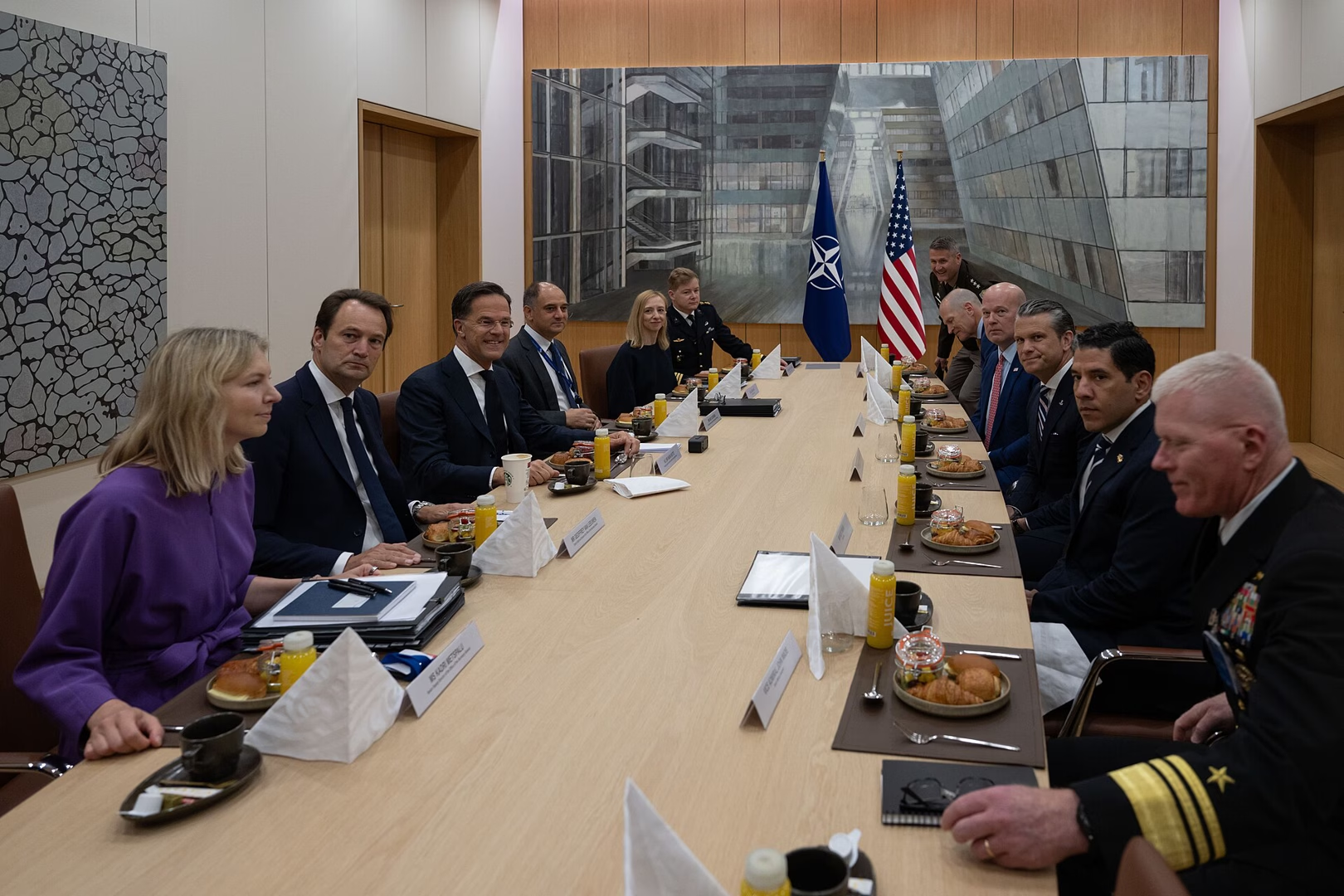
American and NATO officials met at alliance headquarters in Brussels during a defense ministerial in June. Since then, the Iran war has made U.S. assets in Europe more valuable, and at times more exposed, as American operations have depended on European bases and the right to fly over allied territory.
Congress sets a floor
Lawmakers have also limited how far the Pentagon can go. Legislation passed last year bars the Defense Department from dropping below 76,000 troops in Europe, divesting bases or removing major equipment without consulting allies and carrying out a detailed risk analysis. With Democrats set to take control of Congress after the Nov. 3 midterm elections, including over government spending, Trump's room for major cutbacks would narrow further, Bloomberg noted.
Photos: U.S. Army and U.S. Department of Defense via Wikimedia Commons. Additional reporting: Bloomberg, Stars and Stripes.A Pentagon inspector general review published Friday found that about 78,000 American military personnel were assigned to U.S. European Command as of Sept. 30, down from roughly 90,000 at the start of fiscal 2025, Stars and Stripes reported. That leaves U.S. forces close to the 76,000 floor set by Congress, and U.S. Army Europe and Africa told the inspector general that reductions to its rotational and permanent forces "have affected its mission operations and readiness." Under Secretary of Defense for Policy Elbridge Colby has reportedly delivered his posture findings to Defense Secretary Pete Hegseth, who is expected to present options to President Donald Trump soon.
>Stay Updated with Ally Daily
Subscribe to be informed about special news, developments and announcements. We will keep you informed.
By signing up, you agree to our Privacy Policy