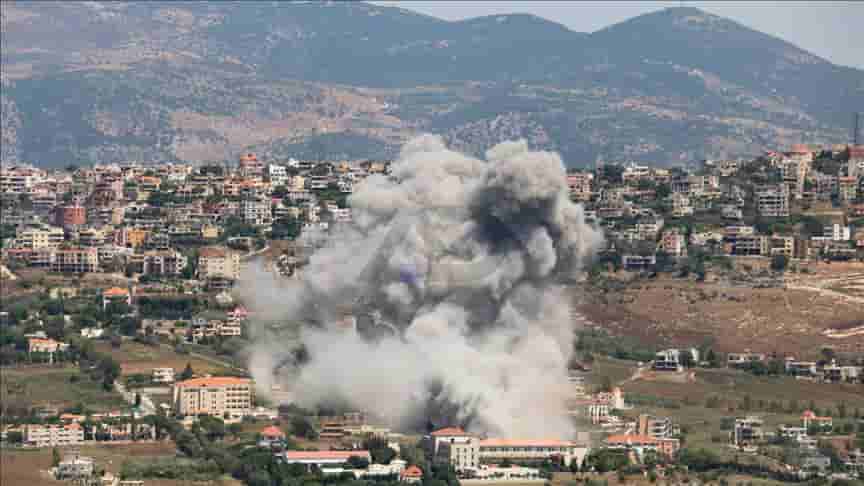
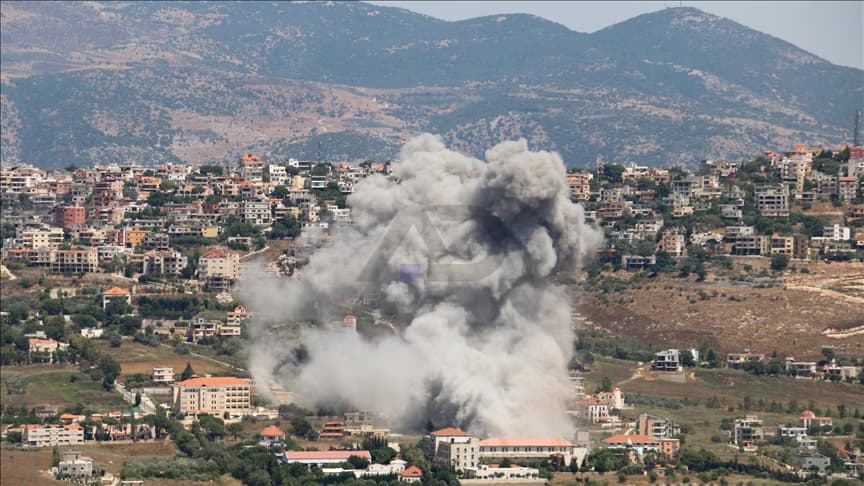
Two parallel tracks are advancing between Lebanon and Israel to ensure the withdrawal from occupied Lebanese territories. The first is the fifth round of direct talks planned for next Monday in Washington.
The second track is driven by pressure from Iran. It is reported that Tehran wants Israel to fully withdraw from Lebanese lands before the nuclear deal process with Washington is completed.
Main Agenda at the Washington Talks
Lebanon has insisted from the start that demands be addressed as a package in direct contacts with Israel. At the forefront of this package is the complete withdrawal of Israeli forces from Lebanese territories occupied during the war.
The Lebanese presidency announced that President Joseph Aoun and Prime Minister Nawaf Salam discussed preparations on Tuesday. The talks in Washington are expected to last from Monday to Wednesday, focusing on developments in security and diplomatic sessions.
Aoun and Salam described the US-Iran agreement as a positive factor that could reduce regional tensions and open the door to peaceful solutions. They also reiterated Lebanon's stance in the Washington talks.
This stance includes a final ceasefire, withdrawal of Israeli forces, deployment of the Lebanese army up to the international border, release of Lebanese detainees, and the start of reconstruction efforts.
Iran and Hezbollah Track
A source close to the Shia duo in Lebanon said Iran told Hezbollah it would not sign the agreement unless Israel fully withdraws from Lebanese territory. The Shia duo consists of Hezbollah and the Amal Movement led by Parliament Speaker Nabih Berri.
According to the same source, the agreement includes a ceasefire, cessation of Israeli attacks, and guarantees for Lebanon's territorial integrity. The source said this implies an Israeli commitment that must be guaranteed by the US.
The source added that Iran informed Hezbollah that after the agreement is signed, Israel must begin a phased withdrawal from occupied Lebanese lands and complete it before the nuclear deal is signed. This timeline is linked to a 60-day period.
Iranian Foreign Minister Abbas Araghchi also stated on Tuesday that the war cannot be considered over until Israeli forces withdraw from occupied lands. Araghchi said any future Israeli military attacks on Lebanon or occupation of Lebanese territory would be considered a violation of the agreement.
Diverse Political Interpretations Within Lebanon
Hezbollah Secretary-General Naim Qassem sent a thank-you message to Iranian Parliament Speaker Mohammad Bagher Ghalibaf. In his message, Qassem said that Israel's immediate and permanent halt to military operations on all fronts is the first and fundamental article of the Iran-US agreement.
Parliament Speaker Nabih Berri and Ghalibaf also discussed developments on the ground and in politics related to the US-Iran agreement over the phone. A statement from the Lebanese parliament said the two emphasized the need for the US, guarantors of the agreement, and the international community to take responsibility.
The statement called for Israel to end the war, stop destroying villages, respect Lebanon's sovereignty, and immediately withdraw from occupied territories.
Meanwhile, Hezbollah opponents in Lebanon questioned whether Iran can actually force Israel to withdraw. Following an extraordinary meeting of the executive body of the Strong Republic bloc and the Lebanese Forces Party, a statement said any agreement between the US and Iran concerns only the two states.
The statement argued that the ceasefire mentioned in the agreement is general and covers the Middle East region. It also claimed that since the party fighting in Lebanon is Israel, not the US, the agreement would not have practical results for Lebanon.
These groups accused Tehran of laying the groundwork for continuing the war for its goals by verbally supporting Hezbollah. They expressed the view that after the devastation experienced by the Lebanese people, what is needed is not only a ceasefire but the complete end of wars through the disarmament of armed groups.
The Kataeb Party also argued that Lebanon should only be concerned with an agreement made through delegations authorized by legitimate institutions elected by the Lebanese state and people. The party stated that representatives in Washington are tasked with strengthening sovereignty, ensuring Israel's withdrawal, stopping attacks, and completing the decision to give the state a monopoly on weapons.