- BIST10011,483+0.04%
- USD50.05+0.05%
- EUR56.25-0.01%
- GOLD4,062.30-1.24%
- INTEREST36.00%-1.00
- BITCOIN75,651-0.44%
- November 6, 202620°
- BIST10011,483+0.04%
- USD50.05+0.05%
- EUR56.25-0.01%
- GOLD4,062.30-1.24%
- INTEREST36.00%-1.00
- BITCOIN75,651-0.44%
- November 6, 202620°
Newsom commutes all 548 California death sentences in largest clemency in U.S. history
California Gov. Gavin Newsom moved Thursday to change every death sentence in the state to life without parole, the largest mass clemency in U.S. history. The state Supreme Court must approve about 70% of the cases, and victims’ families and prosecutors are sharply divided.
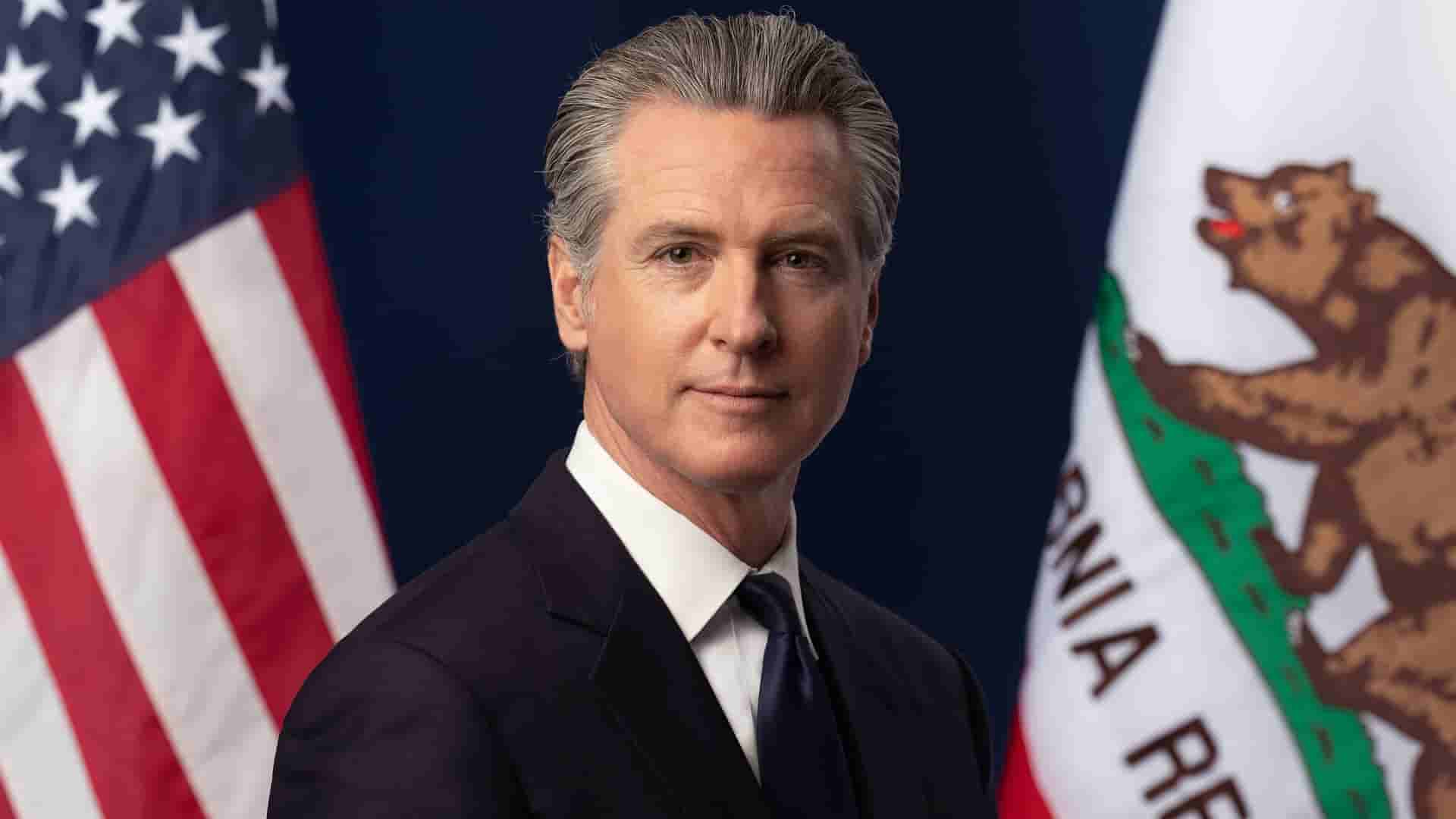
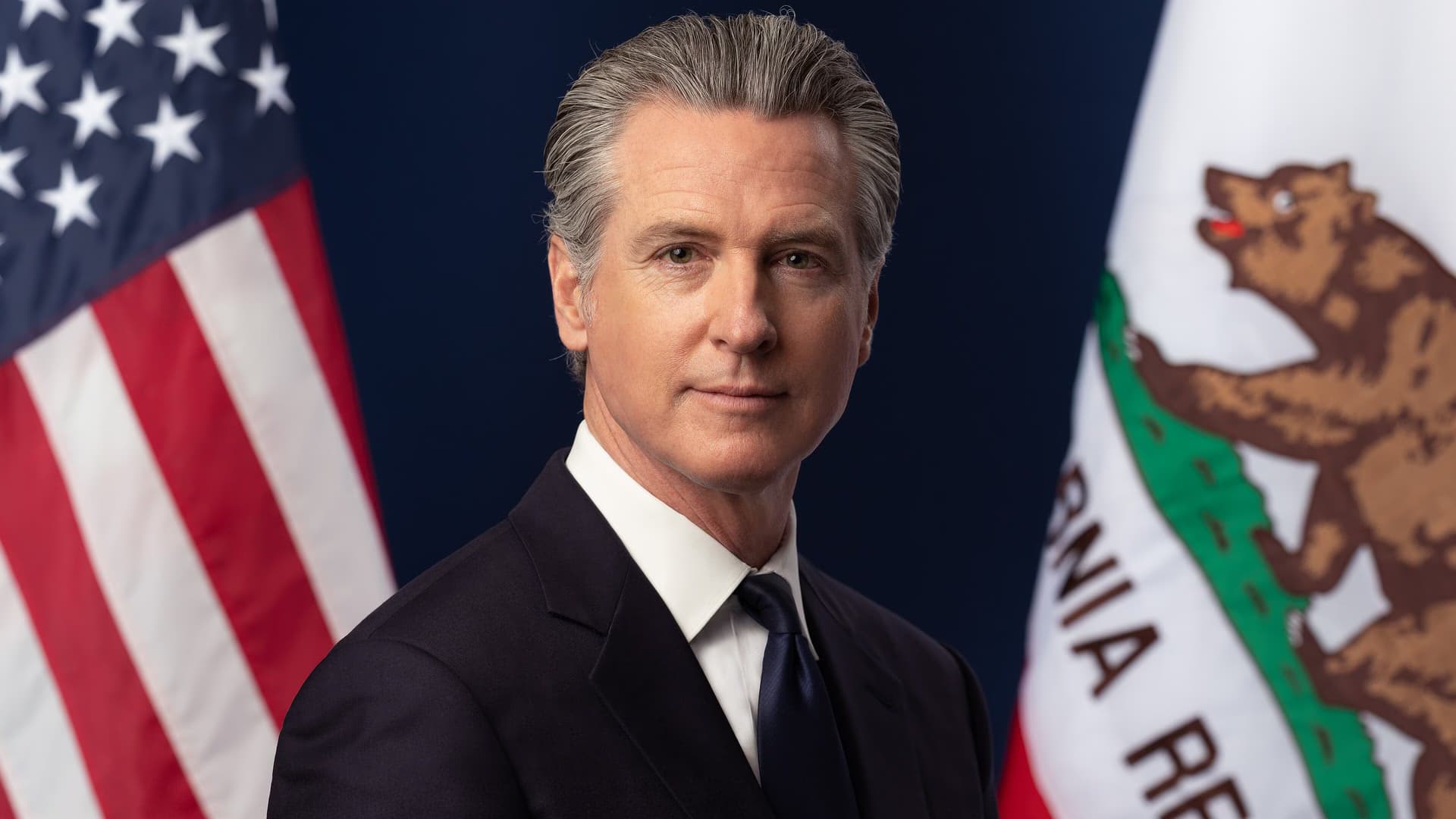
California Gov. Gavin Newsom moved on Thursday to commute the death sentences of all 548 people on the state’s death row to life in prison without the possibility of parole. It is the largest mass clemency in American history and, once final, would shrink the nation’s death row population by nearly 30%, according to the Death Penalty Information Center.
Newsom announced the decision in an open letter to Californians two days after the midterm elections and about two months before he leaves office. "I take this action because I firmly believe that state-sanctioned killing is incompatible with California’s values, undermines the foundations of our legal system, and diminishes each of us," he wrote. "Many Californians feel that those who commit brutal crimes deserve to die. But as Governor, I have concluded the state cannot morally kill them."

California has not carried out an execution since January 2006, when Clarence Ray Allen was put to death by lethal injection at San Quentin State Prison, long the home of the state’s death row. Newsom imposed a moratorium on executions shortly after taking office in 2019, and the state later moved condemned prisoners from San Quentin into the general population at other prisons. California has executed 13 people since it reinstated capital punishment in 1978, while spending about $6 billion on the system, the center estimates.
Most cases need court approval
The commutations will not all take effect at once. The state constitution requires the California Supreme Court to approve clemency for anyone convicted of more than one felony. According to the governor’s office, that applies to 382 of the 548 cases, or roughly 70%. Of those affected, 529 are men and 19 are women. Among them are Richard Allen Davis, who kidnapped and killed 12-year-old Polly Klaas in 1993, and serial killers Randy Kraft and Charles Ng.
The move does not repeal the death penalty. Because capital punishment was enacted by voters, only voters can abolish it, and they declined to do so in 2012 and again in 2016, when they also narrowly approved a measure meant to speed up executions. Prosecutors can still seek death sentences in future cases. Newsom’s successor, Democrat Xavier Becerra, who won Tuesday’s election and takes office in January, has said he will extend the moratorium.
In his letter, Newsom called California’s system "a failure" that "has not been and cannot be fairly applied and has resulted in the conviction of innocent people." He said he chose not to exclude anyone because that would "inadvertently create two classes of murder victims." He added: "As Governor, I alone bear responsibility for this decision and its impact, just as I alone would bear responsibility for each execution."
Victims’ families and prosecutors split
Marc Klaas, Polly’s father, called the decision a "knife in the back" to victims’ families. "We’re talking about serial killers, we’re talking about spree killers, we’re talking about cop killers, we’re talking about child killers," he told NBC News. "Why, two days after the midterms, does Gavin Newsom feel the need to commute these sentences? Who benefits from this?" Polly’s sister, Jess Nichol, backed the move. "I used to think the man who killed my sister deserved execution," she said in a statement. "But over time I’ve realized that whether he’s executed has absolutely nothing to do with my recovery or with real public safety."

The lethal injection room at San Quentin, pictured above in 2010, was dismantled after Newsom’s 2019 order. San Mateo County District Attorney Steve Wagstaffe told KTVU he felt "disgust" at the commutations, noting that voters had rejected repeal in 2016. "I don’t think that’s democracy at work," he said. Last month, the California District Attorneys Association warned Newsom in a letter that erasing the sentences "with the stroke of a pen" would be "a profound disservice to the administration of justice." Patricia Wenskunas, founder of the victims’ group Crime Survivors, called the decision "offensive" and "outrageous."
A national debate and a 2028 subtext
Civil liberties groups welcomed the move. "These commutations reflect what justice demands: an end to a racist, error-prone, and inhumane punishment that has burdened California for far too long," said Anthony Romero, executive director of the American Civil Liberties Union. "Though other governors have granted universal clemencies, none have been at this scale," said Robin Maher of the Death Penalty Information Center. Colorado Gov. Jared Polis and Oregon Gov. Kate Brown cleared their states’ death rows in 2020 and 2022, and President Joe Biden commuted 37 of 40 federal death sentences in December 2024.
The decision cuts against the direction of Washington. President Donald Trump signed an executive order on his first day back in office in January 2025 calling for the death penalty to be pursued in eligible federal cases, and his Justice Department lifted a moratorium on federal executions. Executions are also continuing in other states. Three were scheduled on Thursday alone, in Indiana, Florida and Alabama, according to CNN. Newsom, who is weighing a run for the Democratic presidential nomination in 2028, said the decision was "among the most difficult" of his career.
Photos: Office of the Governor of California; Frank Schulenburg / Wikimedia Commons (CC BY-SA 4.0); California Department of Corrections and Rehabilitation
Have a story, event or announcement of your own?Send us your news on WhatsApp
Spotted an error in this story?Report it on WhatsApp
Share on all social platforms
Sponsored Ads
Featured Listings
Loading featured properties...
Stay Updated with Ally Daily
Subscribe to be informed about special news, developments and announcements. We will keep you informed.
By signing up, you agree to our Privacy Policy