Economic contacts between the United States and China, along with expected leader-level talks ahead of the United Nations Summit, supported a positive mood in global markets at the start of the week. Despite hawkish expectations regarding the US Federal Reserve's interest-rate policy, diplomatic activity increased demand for riskier assets.
Regional tensions in the Middle East and the conflict between Russia and Ukraine continue to fuel concerns over energy supplies. Rising fuel prices also continue to put pressure on growth and inflation expectations.

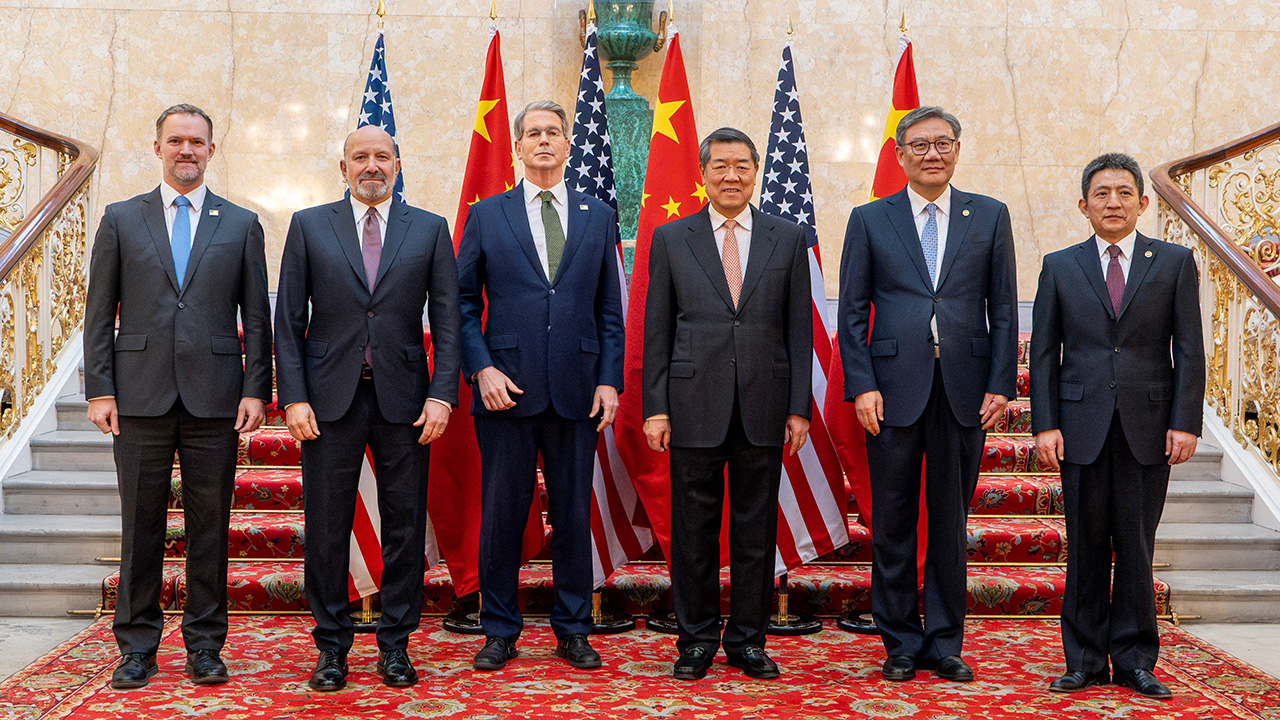
US and Chinese delegations meet in New York
Ahead of Chinese President Xi Jinping's expected visit to the United States, US and Chinese delegations met in New York to discuss economic and trade issues. US Treasury Secretary Scott Bessent led the US delegation, while Vice Premier He Lifeng headed the Chinese delegation.
Speaking after the meeting, which continued throughout the day at JPMorgan Chase's headquarters in Manhattan, Bessent said the sides had held a successful meeting on trade and artificial intelligence with China. Bessent said the parties had agreed to meet again and that the United States had proposed establishing a notification mechanism between the two countries.
Mike Waltz, the US permanent representative to the UN, also said the door remained open for Iran to return to the negotiating table.
Diplomatic expectations push oil prices lower
Rising energy costs in the United States strengthened hawkish expectations regarding the Fed's monetary policy. Market pricing increasingly pointed to the possibility that the Fed could deliver another interest-rate hike by the end of the year, while statements from numerous Fed officials will be watched this week.
Numerous leader-level meetings are expected to take place at the UN Summit in the United States, particularly involving the US and China. Expectations of positive results from these contacts and a possible reduction in geopolitical risks contributed to oil prices starting the week lower.
The decline in oil prices eased inflation concerns to some extent and increased interest in riskier assets. Analysts say that fewer problems with oil supplies could make the economic outlook and central banks' policy road maps more predictable.
Dollar and Treasury yields move sideways in US markets
The yield on the US 10-year Treasury note began the week moving sideways at around 5%. The dollar index, which rose to 100 last week on expectations that the Fed could raise interest rates successively, also began the new week near that level.
Gold fell 0.5% to $4,355 per ounce as high bond yields and a strong dollar increased its opportunity cost. November Brent crude futures also declined 2.1% on diplomatic expectations, reaching $101.7 per barrel.
On Friday, the S&P 500 rose 0.17% and the Nasdaq gained 0.3% on the New York Stock Exchange. The Dow Jones index, meanwhile, fell 0.18%. US stock-index futures began the week higher.
Risk appetite increases in European and Asian markets
European stocks ended Friday lower. Markets will monitor developments at the UN General Assembly, as well as energy prices and purchasing managers' index data from countries across the region.
Tensions in the Middle East and concerns over oil and gas supplies are prompting investors in Europe to act cautiously. A renewed escalation of the conflict between Russia and Ukraine is also keeping geopolitical risks elevated.
Russia's Defense Ministry announced that it had struck a logistics center, a depot and vessels used for military purposes in Ukraine. Ukrainian President Volodymyr Zelenskyy said he had discussed efforts to end the war with US President Donald Trump and had also discussed a meeting planned to take place in New York in the coming days.
Zelenskyy said he and Trump had agreed to meet in New York and that a diplomatic process was under way. As energy costs continued to pressure Europe's economy, 10-year government bond yields in Germany, the United Kingdom and France rose.
On Friday, the FTSE 100 fell 1.45% in the United Kingdom, the FTSE MIB 30 declined 1.60% in Italy, the CAC 40 dropped 1.49% in France and the DAX 40 fell 1.60% in Germany. European stock-index futures, however, began the week higher.
Positive signals from talks between the United States and China supported risk appetite in Asian stock markets. Expectations of a positive outcome from a meeting expected to take place this week between US President Donald Trump and Chinese President Xi Jinping came to the fore.
Xi Jinping is expected to visit the United States on September 23. During Trump's second term, US tariff increases and technology restrictions, along with China's control over rare-earth elements, have been among the main areas of disagreement between the two countries.
After meeting in Busan, South Korea, on October 30, 2025, Trump and Xi Jinping had delivered positive messages about a temporary agreement on areas of disagreement. Falling oil prices also increased risk appetite in Asian markets.
Near the close, South Korea's Kospi index rose 1.3%, China's Shanghai Composite gained 0.5% and Hong Kong's Hang Seng index increased 0.5%. Markets in Japan remained closed for a holiday.
US visit and economic agenda shape Turkish markets
President Recep Tayyip Erdoğan arrived in New York, United States, to attend the 81st UN General Assembly and hold various meetings.
The BIST 100 index on Borsa Istanbul ended Friday at 13,284.42 points, down 1.67%. The October futures contract based on the BIST 30 index on Borsa Istanbul's Futures and Options Market also fell 0.14% in the evening session compared with the regular-session close.
The Capital Markets Board extended the liquidation period for funds slated for liquidation from three months to six months, taking into account their portfolio structures and market developments. On September 17, the board authorized Türkiye İş Bankası and Ziraat Bank to manage the liquidation processes for 131 investment funds being liquidated by seven portfolio management companies.
The dollar/Turkish lira exchange rate closed Friday at 48.7650. At the opening of interbank trading, the rate reached 48.8010, up 0.1% from the previous close.
Domestically, markets will follow the capacity utilization rate, the real-sector confidence index and August producer price index data for products sold abroad. In the BIST 100 index, 13,100 and 13,000 points are being monitored as support levels, while 13,400 and 13,500 points are seen as resistance levels.























