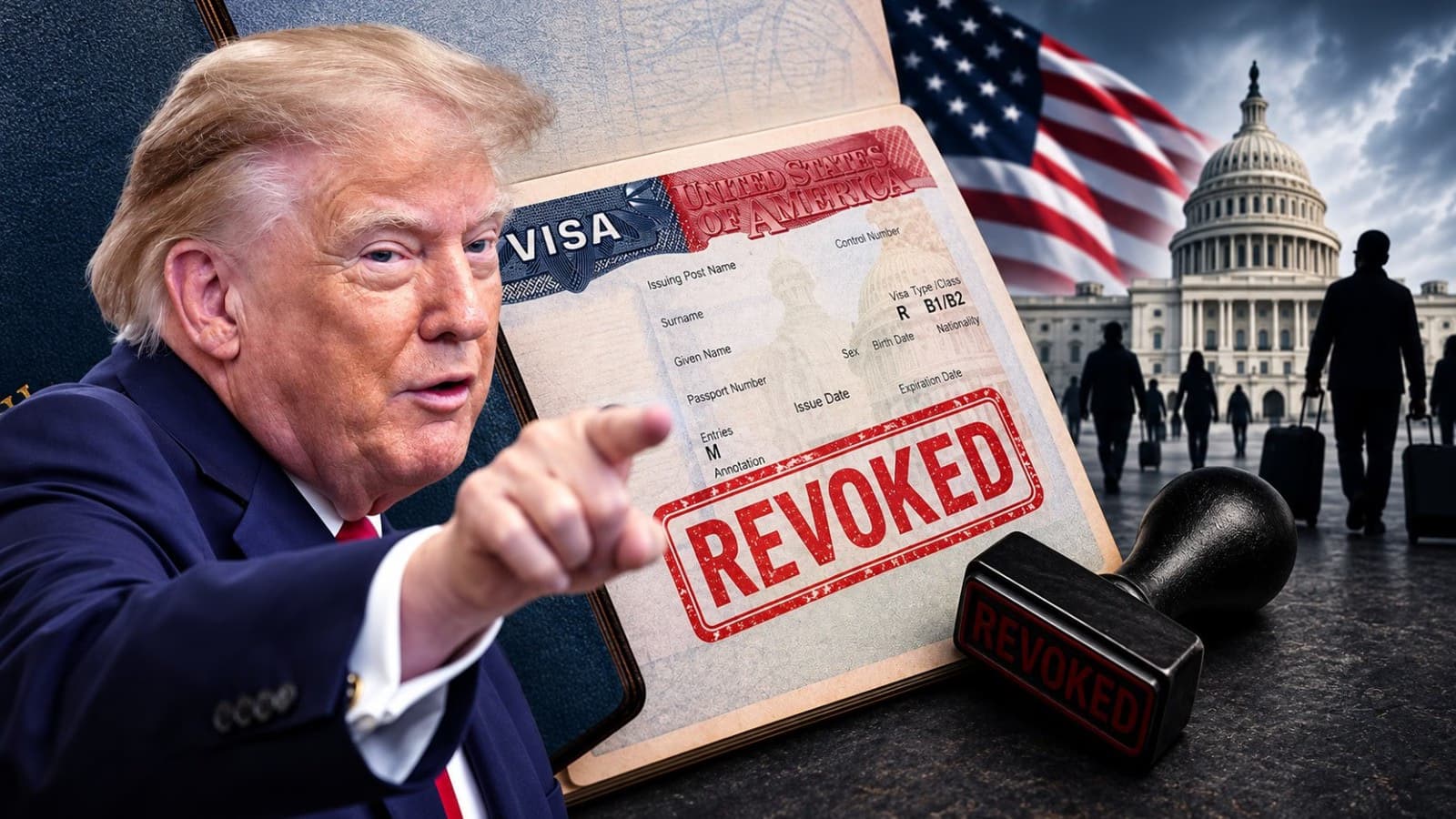
A US federal court has struck down a Trump administration policy that suspended immigrant visa processing for nationals of 75 countries, marking a significant legal setback for one of the administration's immigration measures.
US District Judge Jeannette Vargas of the Southern District of New York ruled on August 21 that the State Department policy was contrary to federal immigration law and exceeded the authority granted to the department.
The policy affected nationals of dozens of countries across Africa, the Middle East, Asia, Latin America, the Caribbean and the Balkans, including Afghanistan, Iran, Russia and Somalia.
Policy took effect in January
The US State Department announced the measure on January 14, 2026, with the suspension taking effect on January 21.
Under the policy, immigrant visa processing for nationals of the 75 designated countries was suspended as the administration reassessed procedures related to applicants considered potentially likely to become dependent on public benefits in the United States.
The Trump administration linked the measure to the long-standing US “public charge” principle, which allows immigration authorities to consider whether an applicant is likely to become primarily dependent on government assistance.
The administration argued that households involving immigrants from some of the affected countries had comparatively high rates of public-benefit use.
Judge says State Department exceeded its authority
Judge Vargas rejected the government's use of those concerns to impose a broad nationality-based suspension.
The court found that US immigration law requires public-charge determinations to be based on the individual circumstances of visa applicants, rather than imposing a blanket restriction on nationals of entire countries.
Vargas concluded that the State Department's policy was “contrary to law and in excess of statutory authority.”
The ruling effectively rejected the administration's attempt to use public-charge considerations as the basis for a broad suspension of immigrant visa processing across dozens of countries.
Family and employment-based immigration affected
The policy primarily affected people seeking to move permanently to the United States.
That included applicants seeking family-based immigrant visas, such as relatives of US citizens and lawful permanent residents, as well as some people pursuing permanent residence through employment-based immigration.
The legal challenge was brought by affected individuals and immigration advocacy organizations, including people attempting to reunite with family members in the United States.
Ruling does not apply to all US visas
Importantly, the case concerns immigrant visas, which are generally issued to people seeking permanent residence in the United States.
The 75-country suspension should therefore not be confused with a blanket ban on all US visas.
Temporary or “nonimmigrant” categories — including many B1/B2 visitor visas, F-1 student visas and other temporary visas — were not automatically covered by this particular immigrant visa suspension.
Separate travel restrictions, security screening requirements and visa policies imposed by the Trump administration may still apply to nationals of certain countries.
As a result, the court ruling does not mean that all US visa restrictions affecting the 75 countries have been eliminated.
What happens next?
The ruling invalidates the State Department's broad policy of suspending immigrant visa processing for nationals of the 75 countries.
It potentially clears the way for affected immigrant visa applications to once again be processed under existing US immigration law, including individual assessments of whether an applicant could become a public charge.
The Trump administration may still seek to challenge the ruling through the appeals process.
The State Department has maintained that strict visa screening and vetting remain essential to protecting US national security and public interests.
The federal court's decision now represents another significant judicial challenge to the Trump administration's immigration agenda, while potentially affecting thousands of families and prospective immigrants seeking permanent residence in the United States.