- BIST10011,220-3.08%
- USD49.60+0.05%
- EUR55.68+0.11%
- GOLD4,048.10-2.46%
- INTEREST36.00%-1.00
- BITCOIN81,279-3.27%
- October 22, 202619°
- BIST10011,220-3.08%
- USD49.60+0.05%
- EUR55.68+0.11%
- GOLD4,048.10-2.46%
- INTEREST36.00%-1.00
- BITCOIN81,279-3.27%
- October 22, 202619°
US-Iran Agreement Sparks Debate Over War Objectives
The agreement prepared between the US and Iran was signed without the expected ceremony in Geneva. Some clauses in the text were seen as diverging from the war objectives declared by Washington, sparking debate both within the US and in Israel.


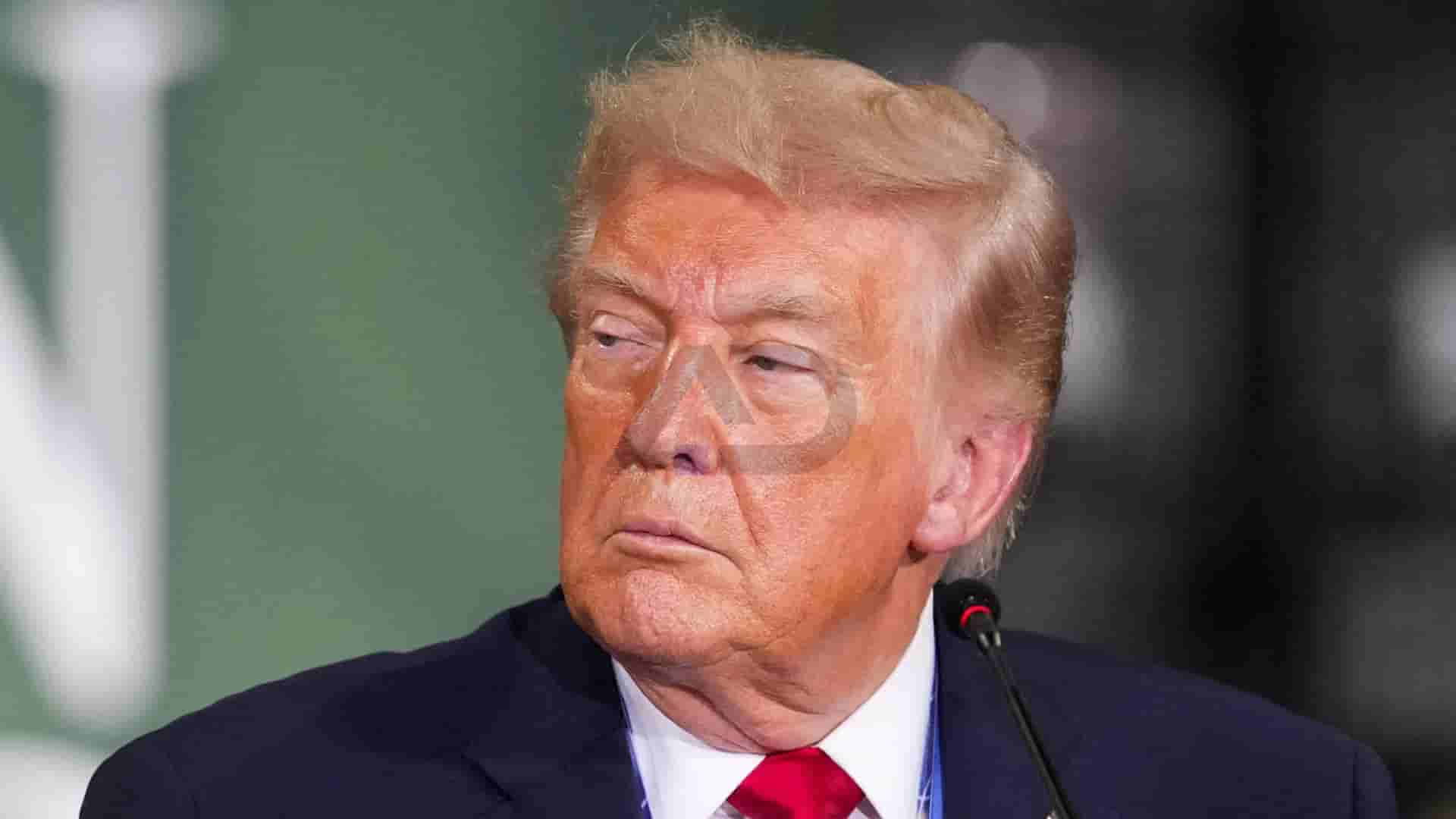
The agreement prepared between the US and Iran was signed without waiting for the planned ceremony in Geneva, Switzerland. Donald Trump, who was in France for the G7 Leaders Summit, signed the agreement during a dinner held in his honor at the Palace of Versailles, and footage of the moment was shared on the White House's social media accounts.
On the Iranian side, it was announced that the agreement was signed by President Masoud Pezeshkian. Pakistan's President Shahbaz Sharif, acting as mediator, also confirmed the signing and thanked Turkey for its role and contribution.
While it remains unclear whether a ceremony will be held in Switzerland following the leaders' signatures, the US media targeted the Trump administration, criticizing the 14-point agreement for prioritizing Iran's interests.
Found Inconsistent with Washington’s War Goals
Comments emerged that the agreed points were far from the strategic objectives expressed by President Trump and senior US officials since the start of the war, raising the question, "Why was the war fought then?"
Washington launched the war against Iran on February 28 with the aims of completely dismantling the country's nuclear program, destroying its ballistic missile infrastructure, and permanently cutting off funding to regional proxy forces like Hezbollah. Trump also did not hesitate to say that regime change in Tehran would be the best possible outcome.
However, the process did not proceed as expected for the US and Israel. After the agreement, Trump told the Wall Street Journal, "Regime change never really mattered to me. The current Iranian leadership is the most rational group we've dealt with so far," a statement that shocked his allies.
When entering the war, Trump had declared that Iran’s nuclear program would be completely eliminated and uranium enrichment would be zeroed out. However, the agreement preserves Iran’s current nuclear status. The future of uranium stockpiles was left open to further negotiations. The only US gain here was the clause confirming "Iran will not develop nuclear weapons," but this was already Tehran’s stated position before the war.
Missile Program and Proxy Forces Remain on the Table
The goal of "dismantling Iran’s missile program," presented as a key condition for regional security especially by Israel, was absent from the 14-point text. Iran retained its missile technology at the negotiating table. Trump even recently said it would be unfair to say "no" only to Iran while other countries in the region possess ballistic missiles.
Although the war began with the aim of eliminating Hezbollah and the Houthis in the region, the opposite occurred. The US was forced to sign a ceasefire that halted Israeli operations in Lebanon.
The agreement also included a commitment of $300 billion in funds for Iran’s reconstruction. It was stated that all US sanctions imposed through the UN and the International Atomic Energy Agency would be lifted as part of the final deal, and Iran’s frozen assets would be released.
During the agreement process, it was reported that the US Treasury Department would grant exemptions for Iranian crude oil, petroleum products, banking, insurance, and shipping sectors, and that Iran and Oman would negotiate the future of transit through the Strait of Hormuz. This could mean a shift in the pre-war status quo in Hormuz in favor of Iran.
Iran’s Parliament Speaker Mohammad Kalibaf described the gains by saying, "We won the war. We defeated the US and Israel." Meanwhile, a statement from CENTCOM last night announced the lifting of the US blockade in the Strait of Hormuz, marking the first step taken by the US after the signing.
Israel Is Not Satisfied with the Agreement
The US-Iran agreement strained ties between Washington and Tel Aviv. The clause calling for a halt to attacks in Lebanon caused discomfort in Israel.
Despite the agreement, the Israeli army launched a drone attack yesterday on the town of Kfar Tebnit in southern Lebanon. It is claimed that Israel requested operational freedom in the area from Tel Aviv and held extensive talks with the US regarding its occupation in southern Lebanon.
Israel’s Diaspora Minister Amichai Chikli stated that withdrawing behind the "Blue Line," the UN-approved informal border at the Lebanon frontier, would be a "failure," and emphasized that they know how to say "no" to the US if necessary.
US Vice President JD Vance responded sharply to Israeli criticism of the US by naming Israel’s National Security Minister Itamar Ben-Gvir and Finance Minister Bezalel Smotrich, saying, "You are a country of 9 million. You cannot solve every national security problem you face just by killing." Vance also said, "I find all this panic in Israel strange because I think it stems from insecurity."
Stay Updated with Ally Daily
Subscribe to be informed about special news, developments and announcements. We will keep you informed.
By signing up, you agree to our Privacy Policy