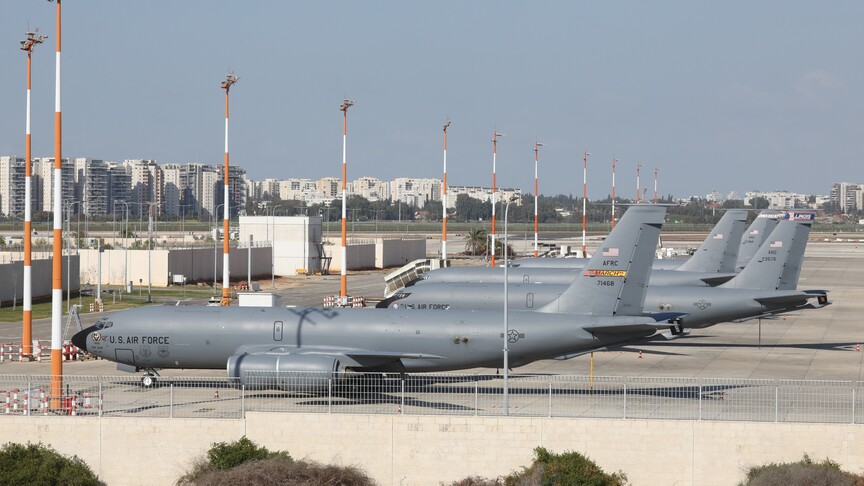
The US Department of Defense (Pentagon) officially rejected Israel's plan to move American refueling planes stationed at Ben-Gurion Airport in Tel Aviv to other military bases. Pentagon officials stated that the proposed alternative bases did not meet security and operational requirements.
According to the Jerusalem Post, US officials did not accept the plan of the Israeli Ministry of Transportation. The Israeli Ministry of Transportation had previously announced that an agreement had been reached on moving American military equipment to other areas.
Security and operational concerns
US sources stated that the other military bases proposed for the relocation were overcrowded and made it difficult to quickly transition to full operational readiness in an emergency scenario. The Pentagon's rejection of the alternatives on the grounds that they did not meet security standards escalated the crisis to a diplomatic level.
US military representatives therefore clearly stated that the planes must remain at Ben-Gurion Airport.
Tensions within Israel and civilian pressure
The crisis erupted on top of existing tensions between the Israeli Ministry of Transportation and defense units. The issue is expected to be resolved at the level of Prime Minister Benjamin Netanyahu and Defense Minister Yisrael Katz.
Israeli media had reported criticism that the military planes at the airport were disrupting commercial flights and reducing capacity during the peak tourism season. Transportation Minister Miri Regev had demanded the removal of the planes and limiting their number to 20 in order to protect the civilian flight schedule.
However, the Israeli military, with the support of Chief of Staff Eyal Zamir, opposed moving the planes to air bases in the Negev Desert.
Regional security context
The US insistence on using Ben-Gurion Airport stems from the Pentagon's need to be prepared for 'worst-case scenarios' in the region, including a possible attack on American bases in the Persian Gulf.
Previously, the withdrawal of the planes was halted due to escalating tensions with Iran, they were sent to Europe after a ceasefire, but were redeployed to Israel and the Middle East following the resumption of attacks on Iran.