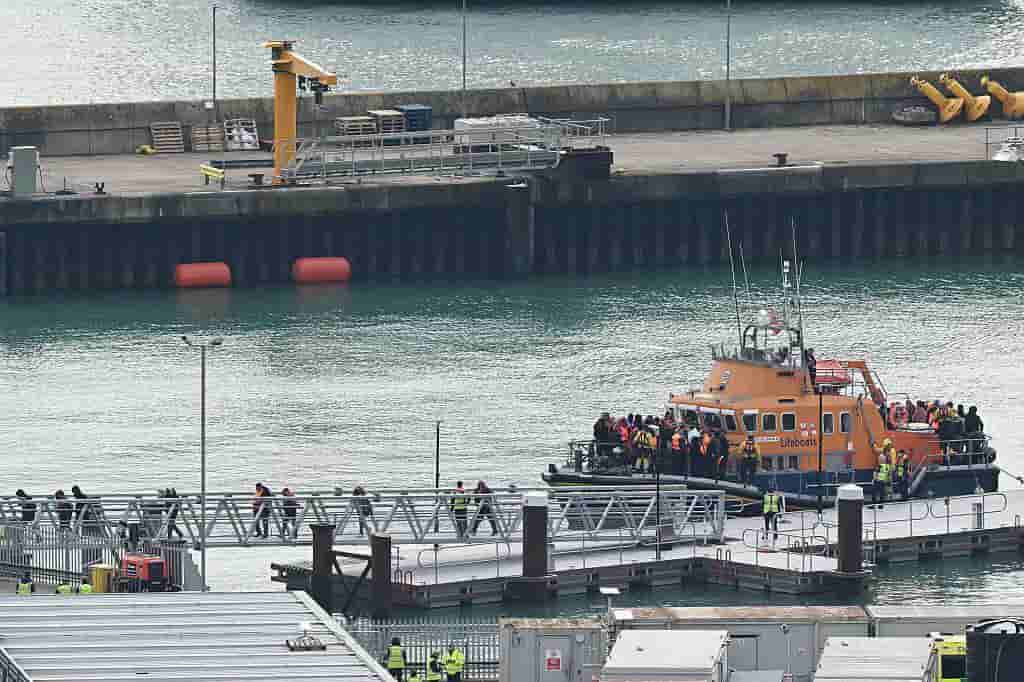
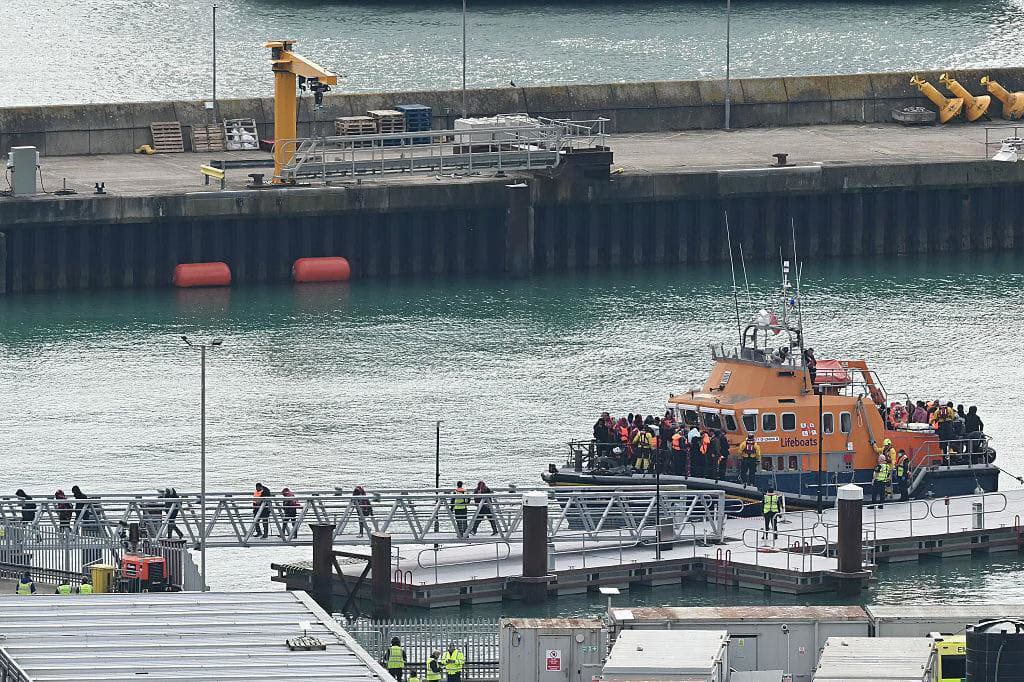
Hundreds of anti-immigration protesters gathered in the southern English city of Portsmouth after around 140 migrants crossed the English Channel from France and were brought ashore, triggering a major police response and renewed debate over Britain's migration policy.
The demonstration began on Sunday evening near Eastney after authorities responded to a small boat carrying migrants toward the Hampshire coast.
Emergency services, including RNLI lifeboats and HM Coastguard aircraft, were deployed to the area. The migrants were eventually brought ashore in Portsmouth and were expected to be transferred to the Manston immigration processing center in Kent.
However, news of their arrival quickly drew hundreds of protesters to the area.
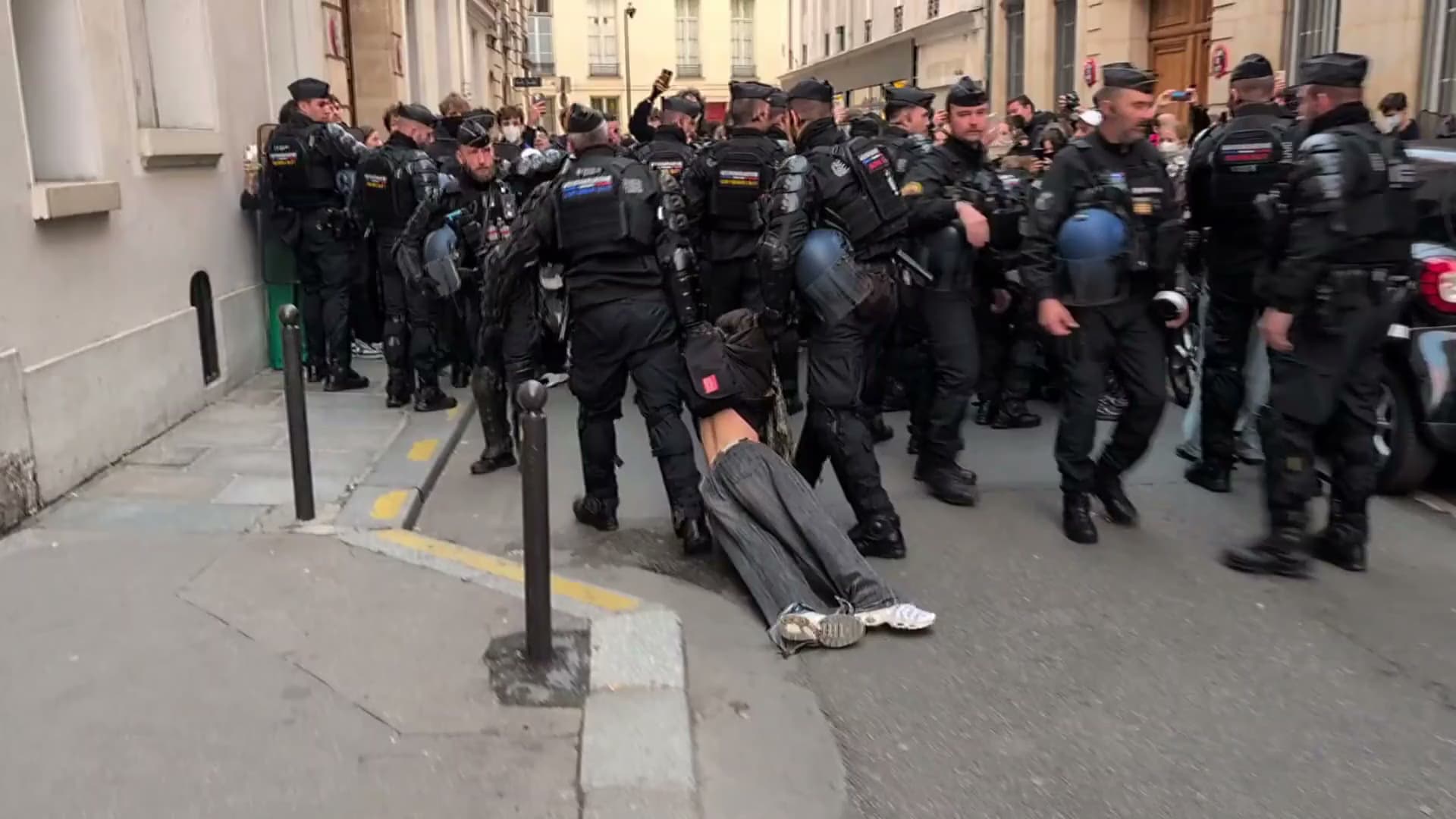
Many demonstrators dressed in black and some wore face coverings as they gathered near Eastney Marina. Protesters blocked roads for several hours and attempted to prevent vehicles carrying the migrants from leaving Portsmouth.
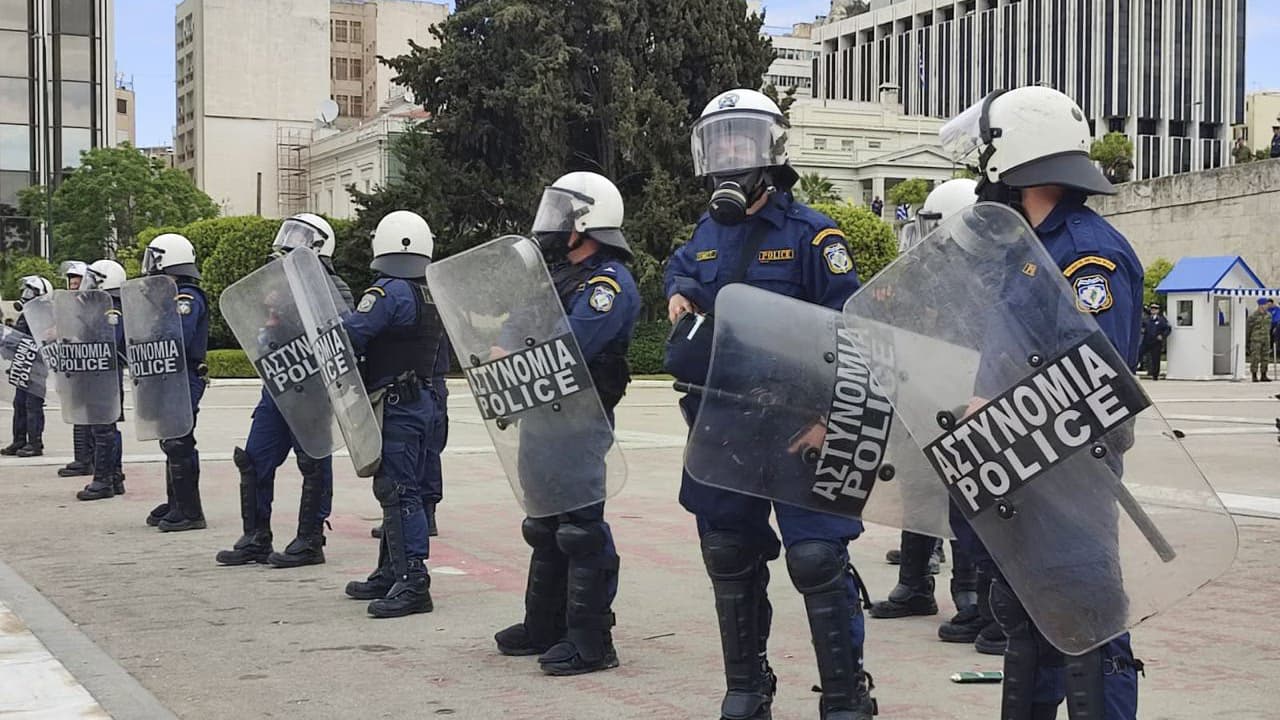
Police officers carrying riot shields formed lines to control the crowd, while Hampshire Police introduced a dispersal order and warned that anyone refusing an instruction to leave the area could face arrest.
Some protesters were heard chanting “Stop the boats” and “Send them back.”
Sky News reported that objects were also thrown at police during the unrest.
Government condemns protest
The British government strongly condemned the scenes in Portsmouth.
Chief Secretary to the Treasury Emma Reynolds said she supported the democratic right to peaceful protest but argued that events in Portsmouth had gone beyond that point.
“This is thuggish and intimidating behaviour,” Reynolds told Sky News.
A government spokesperson similarly said that peaceful protest was fundamental to British democracy but should not cross into disorder.
The scale of the demonstration forced Hampshire authorities to bring in additional police officers from other parts of the country.
Donna Jones, the Police and Crime Commissioner for Hampshire and the Isle of Wight, said the demonstration was largely peaceful but acknowledged that its size required significant additional police resources.
An unusual route across the Channel
Beyond the protests themselves, the route taken by the migrant boat has attracted significant attention from British authorities.
Most small boats carrying migrants across the English Channel traditionally arrive around Dover and the Kent coast.
The latest vessel, however, travelled significantly farther west and reached the Portsmouth area.
The boat reportedly departed from the Normandy region of France before making what is believed to have been one of the longest journeys undertaken by a migrant small boat attempting to reach Britain.
Arrivals this far west along the Hampshire coast remain rare.
The development has raised concerns that people-smuggling networks may be experimenting with alternative routes as British and French authorities increase enforcement around traditional Channel crossing points.
Unlike Dover, Portsmouth and other areas along Britain's southern coast do not have the same infrastructure for receiving and processing large numbers of migrants arriving by small boats.
Jones warned that authorities would need to respond to changing tactics used by people smugglers.
Second major protest in two days
The Portsmouth demonstration was the second major anti-immigration protest in southern England in just two days.
On Saturday, hundreds of protesters — including masked demonstrators dressed in black — blocked roads around the Port of Dover.
The protesters disrupted traffic while chanting slogans against migrant boat crossings.
The rapid organization of the Portsmouth demonstration has also attracted government attention. Reuters reported that calls to attend the protest were linked to far-right groups using messaging platforms including Signal and Telegram.
Small boat arrivals down more than 40%
Despite the political pressure surrounding Channel crossings, the British government says the number of people arriving by small boats has fallen significantly this year.
According to figures cited by Reynolds, around 17,000 asylum seekers arrived between January 1 and September 1, 2026 — approximately 43% fewer than during the same period last year.
However, the Portsmouth arrival has created a new concern for authorities: whether people-smuggling networks are adapting to tougher enforcement by launching boats from different parts of the French coast and attempting longer routes to Britain.
The events in Portsmouth have therefore intensified two debates simultaneously — how Britain should respond to irregular migration across the English Channel and how authorities should handle increasingly organized anti-immigration demonstrations.
With protesters mobilizing rapidly and migrant routes potentially shifting away from Dover, both issues are likely to remain high on Britain's political agenda.