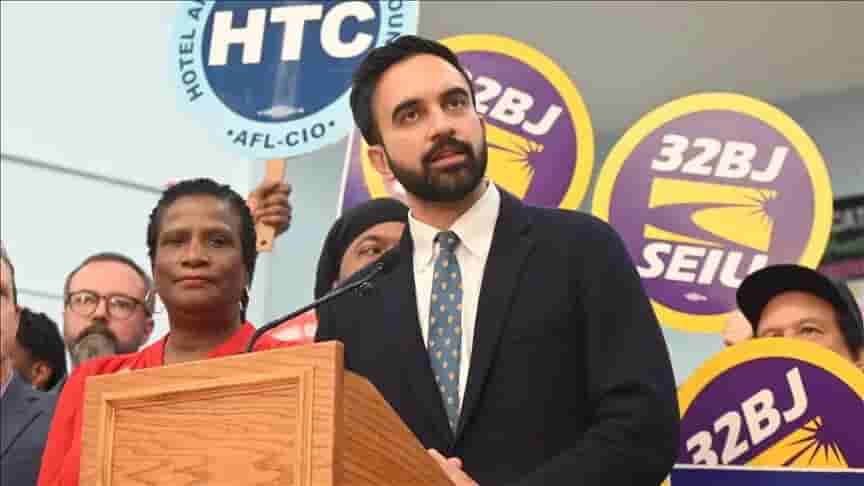
New York Mayor Zohran Mamdani has launched a comprehensive reform package to reduce the bureaucratic burden on the city's small businesses. The "OPEN for Small Business" package includes more than 50 regulatory changes and affects approximately 180,000 businesses.
While announcing the reforms, Mamdani also signed an executive order that directly enacts a number of changes. At the rollout on July 20 at La Bodega in the Bronx, it was emphasized that these businesses employ about 1 million New Yorkers.
Second permit for ice cream sales eliminated
One of the package's most notable items is the elimination of the second license that restaurants were required to obtain to sell ice cream. The city will cooperate with the state government to completely remove this outdated requirement.

Similarly, the requirement for grocery stores to obtain a separate license to sell products from a sidewalk display stand is being completely eliminated. The simplification of three separate documents required for barber shops will also be addressed with the state.
Which sectors will be affected?
The more than 50 changes are distributed across sectors: 25 for food service and retail, 7 for transportation, 5 for other retailers, 4 for child care services, 3 for industrial and commercial businesses, 2 for personal care, and 3 for nonprofit organizations. The remaining 6 items cover all businesses in the city.
Key regulations include:

- The mayor's approval requirement in the sidewalk café program is immediately eliminated.
- The $110 registration fee for cooking equipment and food trucks is reduced to zero for the next twelve months.
- The requirement for mobile food vendors to keep a copy of their commissary kitchen contract at their carts is eliminated.
- The maximum fine for three common food safety violations is reduced from $600 to $500.
- The two separate allergen posters required by the city and state are replaced with a single poster.
- License renewal periods are extended for many businesses, such as newsstands, pawnshops, and second-hand goods dealers.
- A guide that consolidates processes for child care centers will be published.
- The Health Academy, the only physical location for the food safety course, is being relocated.
- The old prize caps on bingo games organized by nonprofits are eliminated.
Permanent structure established by executive order
The signed executive order provides both immediate changes and a framework for ongoing reform.
- Single Point of Contact: Every new business will be assigned a single account manager to assist with all processes.
- Business Owner Bill of Rights: This document explaining inspection rights must now be provided at every service point and during inspections.
- Permanent working group: The OPEN Task Force will continue to identify problems and propose new reforms each year.
- Inspector training: Annual customer service training is being mandated for city inspectors.
- Non-regulatory costs: Recommendations will be developed regarding insurance, rent, and energy costs.
How did the reform process begin?
In January, Mamdani signed an executive order directing seven city agencies to review fees and fines. Subsequently, roundtable discussions were held in all five boroughs, and surveys were conducted with more than 500 business owners. The most common complaints were opening delays, unclear regulations, and inconsistent inspections.
In a 2025 survey, only 9 percent said they had received the Business Owner Bill of Rights. Mamdani stated that the new executive order would permanently address this issue.

Reactions from the business community
Manhattan Chamber of Commerce President Jessica Walker welcomed the permanent working group, saying it means "a lasting change embedded in the city's operations." She noted that small businesses deal with more than 6,000 regulations.
While some transportation sector representatives viewed the elimination of fines positively, Andrew Rigie, executive director of the New York City Hospitality Alliance, said he was "extremely disappointed" by the limited scope of the changes. The Five Boro Jobs Campaign supported regulations that do not weaken health and safety protections.
50 percent reduction target and timeline
During the campaign, Mamdani pledged to cut fees and fines on small businesses by half. However, it is not clear how close the announced package comes to that target, nor has a timeline been set for achieving it.
While some reforms take effect immediately, items such as the elimination of the ice cream license and barber licenses await state approval. The city did not release a precise cost estimate or staffing plan for the full implementation of the package.