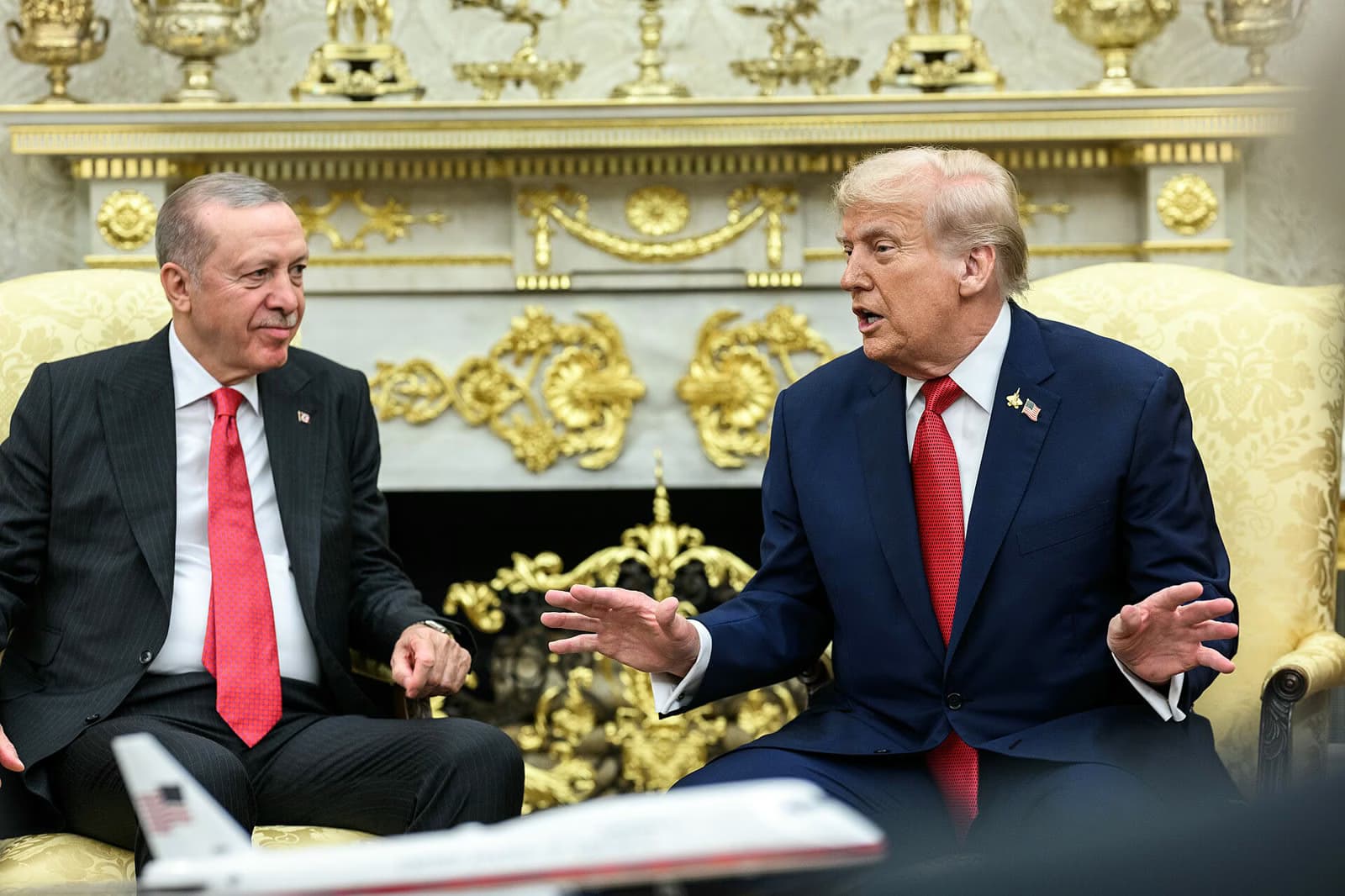
President Donald Trump held a cabinet meeting on Friday at the historic Camp David facility in Maryland. The main agenda item was the escalating war with Iran and the regional crisis in recent weeks.
Trump stated that Iran was "negotiating at the point of exhaustion" and expressed confidence that a deal could be reached that would open the Strait of Hormuz and limit Iran's nuclear capacity. At the same time, pointing to Defense Secretary Pete Hegseth, he signaled that the military option was on the table, saying,
"If Iran does not give us what we want, the man to my left will finish the job."
Diplomatic Call and Escalating Tensions
Secretary of State Marco Rubio reiterated that Washington prefers the path of negotiation. Rubio said, "We want to give the diplomatic path a chance, and we will use every opportunity for it to succeed."
The meeting came at a time when the war with Iran has expanded. Since the last cabinet meeting in May, fighting has escalated; U.S. soldiers have lost their lives, Iran has launched new attacks on commercial ships in the Strait of Hormuz, and the Iranian Revolutionary Guard Corps fired a salvo of ballistic missiles at U.S. forces in Jordan. It has been claimed that the Pentagon concealed the deaths of four soldiers and hundreds of injuries in "Operation Epic Fury" under the name of "Overseas Operations."
Economic Effects and Political Risks
The economic fallout of the war has also begun to be felt. The price of Brent crude rose above $100 a barrel on Wednesday, its highest level since May. U.S. economic growth is slowing while inflation remains above the Federal Reserve's 2% target.
The costs of uncertainty have also affected Trump's approval rating. According to a recent Quinnipiac poll, Trump's approval rating fell to a record low of 32 percent. Some members of Congress are concerned about the political risks that a war without a clear end point could create ahead of the midterm elections.
Historic Headquarters and Regional Concerns
Camp David is a venue that has hosted many critical foreign policy decisions in U.S. history. White House Press Secretary Karoline Leavitt described the meeting last week as "a fun and different experience."
A senior Arab official in the region told NBC News, "The situation is getting crazier," pointing to the risk that the war could spiral out of control.