- BIST10011,629-0.79%
- USD49.45+0.05%
- EUR55.62+0.37%
- GOLD4,197.60+0.39%
- INTEREST37.00%-1.00
- BITCOIN82,542+0.65%
- October 19, 20265°
- BIST10011,629-0.79%
- USD49.45+0.05%
- EUR55.62+0.37%
- GOLD4,197.60+0.39%
- INTEREST37.00%-1.00
- BITCOIN82,542+0.65%
- October 19, 20265°
Colombia’s ‘cultural counterrevolution’ sparks clashes outside National Museum in Bogotá
The removal of about 30 politically charged pieces from Colombia’s National Museum on the orders of President Abelardo de la Espriella has brought protesters onto the streets of Bogotá for two days. On Sunday, riot police cleared the avenue outside the museum with water cannon.
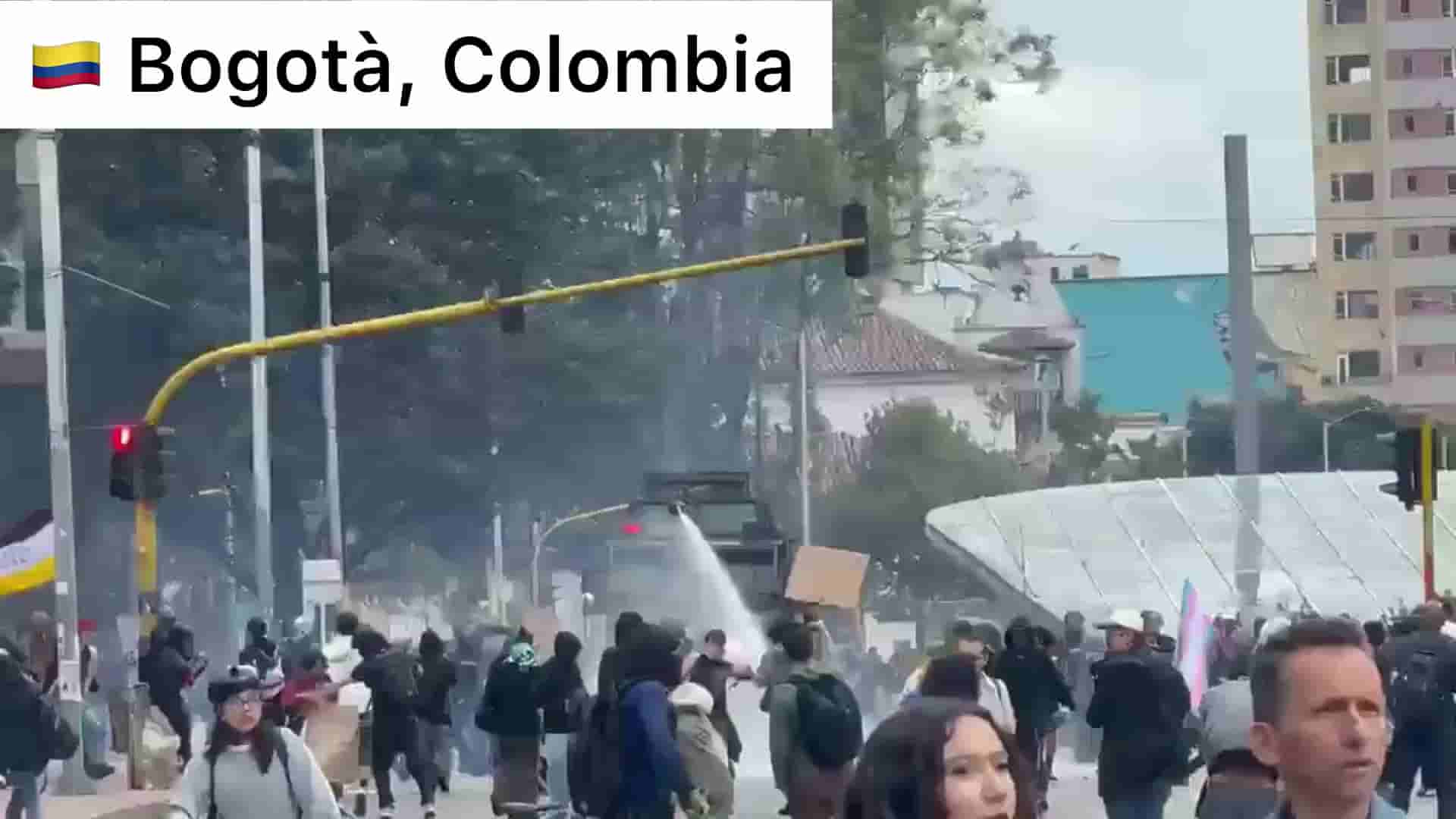
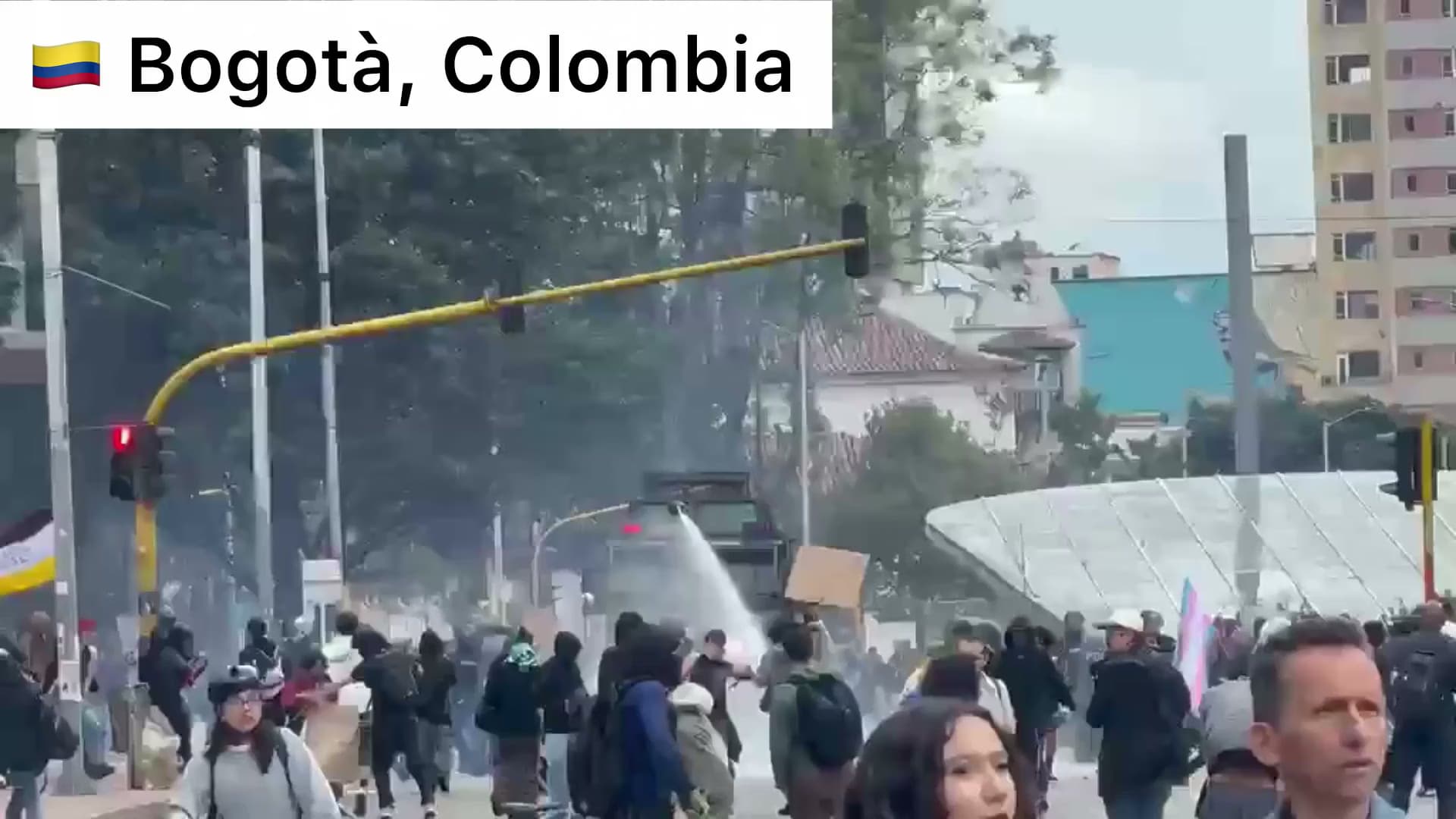
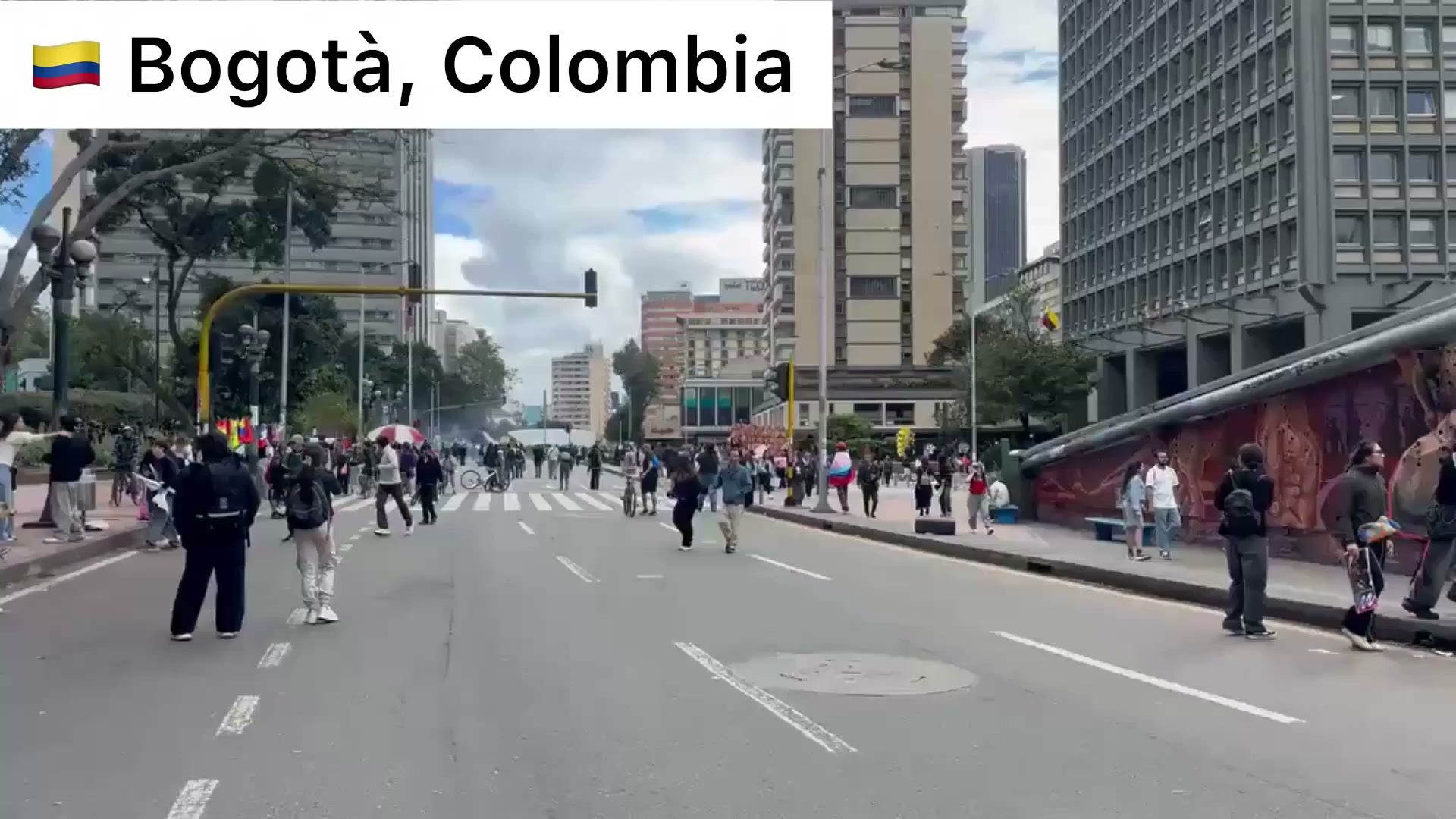
A culture-war decision by Colombian President Abelardo de la Espriella has spilled onto the streets of Bogotá. For a second straight day on Sunday, riot police used water cannon and stun grenades to clear protesters from Carrera Séptima, the avenue in front of the National Museum, after the government removed about 30 pieces from its exhibits.
Witness videos showed armored police vehicles spraying water at demonstrators at around 3:30 p.m., while some protesters hurled stones at officers. The footage below was filmed near the museum’s TransMilenio bus station.
Sunday’s sit-in drew at least 300 people and began at 10 a.m. with banners, flags and art performances. Signs at the protest read “The less history, the less memory” and “With censorship, there is no culture.” Later in the day, the unrest spread to the Center for Memory, Peace and Reconciliation on Calle 26.
What was taken down
The Culture Ministry pulled the items from three halls of the museum last week and moved them to storage. They include campaign posters of two presidential candidates assassinated in 1990: Carlos Pizarro, a former commander of the M-19 guerrilla group, which had laid down its arms, and Bernardo Jaramillo Ossa of the leftist Patriotic Union (UP).
Also removed were an armband of the M-19’s political party, a 1986 UP leaflet backing Jaime Pardo Leal, the “Balígrafo,” a bullet-casing pen used to sign the 2016 peace deal with the FARC, and the “Seventh Ballot” of 1990 that led to the 1991 Constitution. A pride flag, photos of LGBTQ+ marches and feminist posters were taken down as well.
‘Ode to terrorism’
De la Espriella said he had instructed Culture Minister Paola Holguín to remove from public places “all that ode to terrorism” featuring Pizarro. “Here, terrorists will never again have a place as if they were heroes of the nation,” he said, framing the move as a “cultural counterrevolution” against the “wokeism” of his predecessor, Gustavo Petro.
Holguín defended the removal, saying the museum cannot become “a space for political indoctrination or for glorifying crime.”
Ombudsman calls response disproportionate
The first day of protests on Saturday drew about 500 people, according to the Ombudsman’s Office, and ended with water cannon, stun grenades and stone-throwing before order was restored at around 7:30 p.m. Ombudsman Iris Marín called the deployment of a water cannon vehicle against a peaceful protest “unnecessary and disproportionate.” The rights group Temblores reported injuries and arbitrary detentions, while authorities have not released official figures.
Interior Minister Rodrigo Lara defended the police, saying officers acted only to restore traffic after protesters fully blocked Carrera Séptima, which he called one of Bogotá’s main arteries. Carolina Restrepo, head of the Colombian Family Welfare Institute (ICBF), accused some adults of putting children at the front of the protest. “Children are not shields,” she said.
Modern art museums and cultural organizations rejected the removal in a joint statement, arguing that exhibits should be reviewed through research and public dialogue rather than chosen on ideological grounds. Lawmaker Jennifer Pedraza said Holguín will be summoned to Congress for an oversight debate.
More rallies ahead
Bogotá authorities said eight demonstrations are planned in the city between Oct. 19 and 24, two of them outside the National Museum. The protests are unrelated to the recent fuel-price demonstrations in France and focus solely on the museum removals.
Have a story, event or announcement of your own?Send us your news on WhatsApp
Spotted an error in this story?Report it on WhatsApp
Share on all social platforms
Sponsored Ads
Featured Listings
Loading featured properties...
Stay Updated with Ally Daily
Subscribe to be informed about special news, developments and announcements. We will keep you informed.
By signing up, you agree to our Privacy Policy