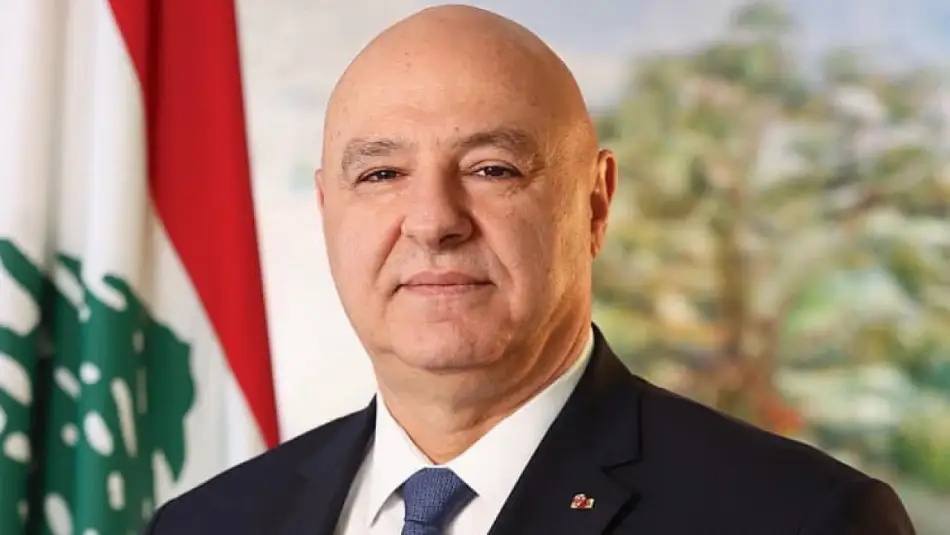
Lebanese President Joseph Aoun will present a plan aimed at securing Israel's withdrawal from Lebanon and the disarmament of Iran-backed Hezbollah during his meeting with US President Donald Trump at the White House. Aoun will be the first Lebanese head of state to visit the White House in nearly 20 years.
Aoun, a former commander of the US-backed Lebanese army, said he would ask Trump to "exert the necessary pressure on Israel" during the meeting. This request aims to implement the Lebanon-Israel agreement reached on June 26 under US mediation. The agreement envisages Hezbollah's disarmament, the gradual withdrawal of Israeli troops, and laying the groundwork for peaceful relations between the two countries.
A Lebanese official said Aoun will present Trump with a written proposal on how to destroy Hezbollah's massive weapons stockpile. The official conveyed that Aoun believes only Trump has the power to pressure Israel to withdraw its troops and can help Lebanon restore its sovereignty.
Hezbollah disarmament goal
Aoun, 62, was elected president last year just before Trump began his second term. The US welcomed Aoun's election. His first year in office was spent with the government striving to achieve Hezbollah's disarmament. Lebanese soldiers deployed to the south to collect the weapons of Hezbollah, which was founded by Iran's Revolutionary Guards in 1982.
Aoun's rise reflects the shift in Lebanon's balance of power following the devastating Israeli offensive against Hezbollah in 2024 and the overthrow of Hezbollah's ally Bashar al-Assad in Syria. At his swearing-in ceremony, Aoun declared he would emphasize "the state's right to have a monopoly on weapons."
A new war erupts
But at the start of Aoun's second year, a new war erupted when Hezbollah opened fire on Israel on March 2 in support of Iran, which was under US and Israeli attack. Hezbollah's attack triggered a fierce Israeli air and ground offensive that, according to Lebanon's Health Ministry, killed more than 4,300 people, nearly 800 of them children, women, and health workers. The death toll does not distinguish between civilians and fighters; Hezbollah has not disclosed its combatant losses.
After the war began, Aoun quickly called for direct negotiations with Israel. This was a historic shift for a state repeatedly occupied by Israel since 1978, and led to the highest-level face-to-face contacts between the two countries in decades. At the same time, Aoun became the target of fierce criticism from Hezbollah and its supporters.
Aoun criticized Hezbollah for starting the war, saying Lebanon was being destroyed for Iran's sake, and he maintained his stance. However, he has so far not responded positively to Trump's call for a meeting with Israeli Prime Minister Benjamin Netanyahu.
A military veteran
Aoun was born in Sin el-Fil, a suburb of eastern Beirut. His family is originally from southern Lebanon. His first military assignment was as a platoon commander in the army rangers during Lebanon's 1975-1990 civil war in 1985. Shortly after being promoted to commander, he led an operation to clear ISIS militants from the Syria-Lebanon border.
In 2019, after Lebanon's financial collapse, he steered the army through the crisis. Decades of state corruption and mismanagement had caused the Lebanese currency to collapse. At the time, Aoun warned that the crisis would lead to the collapse of the Lebanese army, which he called "the backbone of the country." In an unusually political statement for an army commander, he held the ruling politicians responsible for the collapse, saying soldiers were going hungry alongside the people.
Aoun's election ended a two-year presidential vacuum that followed the end of Hezbollah ally Michel Aoun's (no relation) term in 2022. Aoun pledged to work on long-delayed economic reforms and to seek justice for the victims of the 2020 Beirut port explosion.



























