An article published in the New York Times argues that Israel's 'total victory' doctrine, adopted after the Hamas attack on October 7, 2023, has isolated the country internationally and caused serious tension in its relations with its most important ally, the United States.
The article, written by Merav Zonszein, an Israel expert at the International Crisis Group, argues that Israel's military power and lobbying activities in Washington are no longer unquestioned as they once were.
A zero-sum concept of victory
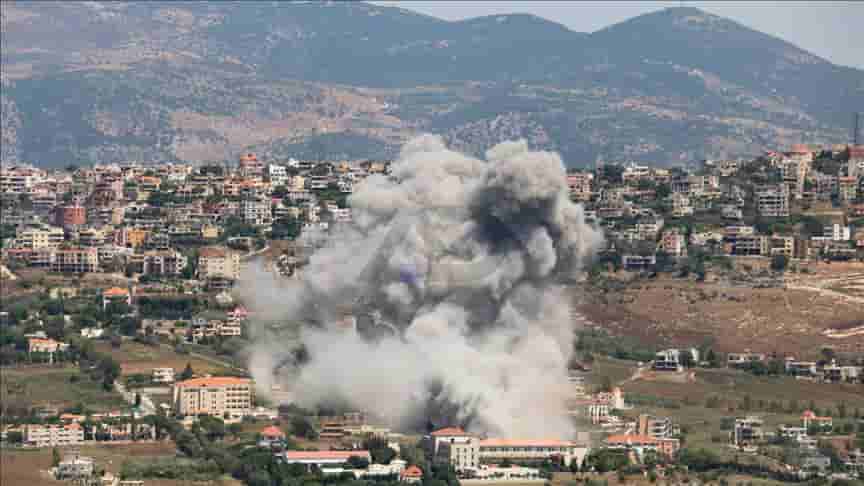
According to Zonszein, Prime Minister Benjamin Netanyahu's government, not content with destroying Gaza, launched a military campaign extending to Lebanon, Yemen, Syria, and Iran. 'The unlimited continuation of the war has become an end in itself,' the author said, adding that being pro-Israel has come to mean accepting this security approach or remaining silent.
The article emphasizes that Israel's portrayal of every criticism or security problem as an existential threat has destroyed its ability to distinguish real threats from exaggerated ones. Military force has become an automatic response that replaces diplomatic solutions.
This mindset, which views any concession as a 'defeat,' is said to have alienated Israel even from its closest allies and cornered its political leaders. Zonszein notes that anything less than 'total victory' – a temporary withdrawal or negotiation – is seen as political suicide.
Divergence with Washington
According to the article, the consequences of this approach are now clearly visible. Israelis are watching with bewilderment and anger as the distance between the White House and their government grows. However, it is also noted that this rift does not mean the end of the relationship.
US Vice President JD Vance's remarks laid bare the extent of the tension. In an interview with New York Times writer Ross Douthat, Vance said he would tell the far-right ministers in the Israeli government, 'You cannot solve every security problem with murder.' In a podcast he participated in in June, he emphasized the difference between criticizing the Israeli government and antisemitism, and noted that the interests of the US and Israel do not always align.
It is also reported that former President Donald Trump called Netanyahu 'crazy' and said, 'now everyone hates you.' Netanyahu supporters in the Israeli media responded to these remarks with insults, escalating the tension.
Zonszein states that Israel is not immune to political storms and is at a critical juncture: either it will redefine its concept of security, or it will continue its current policy of attrition at the cost of losing international support entirely.