- BIST10011,483+0.04%
- USD50.05+0.05%
- EUR56.25-0.01%
- GOLD4,067.60-1.12%
- INTEREST36.00%-1.00
- BITCOIN75,459-0.69%
- November 6, 202621°
- BIST10011,483+0.04%
- USD50.05+0.05%
- EUR56.25-0.01%
- GOLD4,067.60-1.12%
- INTEREST36.00%-1.00
- BITCOIN75,459-0.69%
- November 6, 202621°
Pentagon intel report finds Iran still an emerging space power despite U.S. strikes
A Defense Intelligence Agency assessment says Iran jammed GPS signals and went after U.S. space capabilities during Operation Epic Fury. The findings cast doubt on CENTCOM's claim that American forces had won "space superiority" over Tehran.


Iran remains an "emerging" space power that can still complicate U.S. military operations in the Middle East, even after American strikes on its key space facilities, according to a Defense Intelligence Agency report first described by Axios on Thursday. The assessment says Tehran took offensive action against U.S. space capabilities during Operation Epic Fury, the U.S. campaign against Iran that began on Feb. 28.
At the center of the warning is jamming. The DIA says Iran fields a range of ground-based systems that can degrade the performance of space-based GPS. The agency's 2026 report on security challenges in space, released in late October, names three of them: Nazir, Fajr-3 and Zolfaqar. It also says several organizations reported navigation disruptions affecting aircraft and ships near the Strait of Hormuz in June. In September, the U.S. Department of Transportation warned of "significant" interference with satellite navigation signals in the strait, Axios reported.
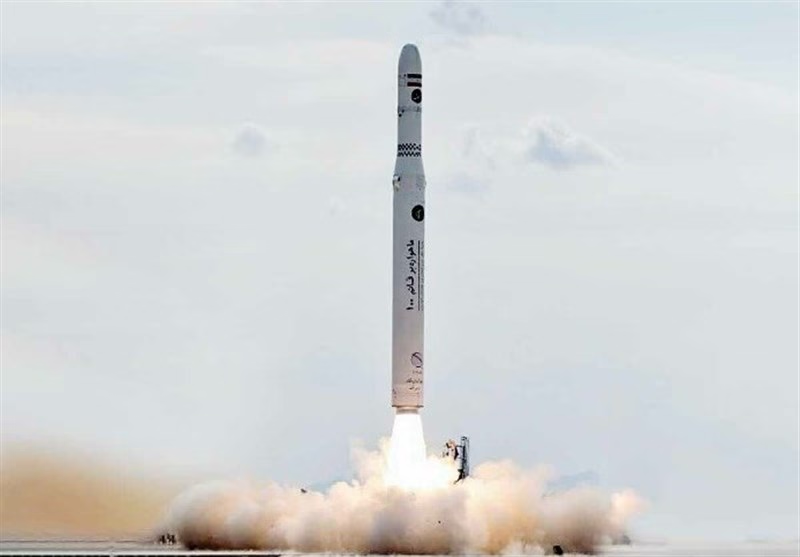
U.S. officials are also worried that Iran is using space-based intelligence to hit military sites with greater precision. Brig. Gen. Todd Benson, who commands U.S. Space Forces Central, said in a Mitchell Institute webinar last month that space has become accessible and affordable for almost anyone, and that a country no longer needs to be a world power to reach it.
A disputed claim of "space superiority"
The report complicates the picture the Pentagon painted early in the war. On March 11, CENTCOM commander Adm. Brad Cooper said U.S. forces had struck Iran's equivalent of a space command. "Our space superiority has been a critical enabler to this fight," he said, adding that the Space Force was "degrading Iranian capability" and "helping to protect American forces."
Space Force chief Gen. Chance Saltzman acknowledged in April that, because Iran's space capabilities are nascent, "it wasn't really a fair fight from a space superiority standpoint." Todd Harrison, a space expert at the American Enterprise Institute, told Axios that if Iran can still degrade U.S. space capabilities, the United States does not have superiority over it. Kari Bingen of the Center for Strategic and International Studies said Iran has capabilities that make it harder for the U.S. to use space, though she stressed that its assets are far more limited than those of the United States, China or even Russia.
U.S. space assets "targeted and destroyed"
The Space Force has acknowledged losses. "We've seen in Operation Epic Fury, for the first time, that our space capabilities have been targeted and destroyed," Brig. Gen. Christopher Fernengel, a senior Space Force planner, told an industry conference in New Mexico in May. He did not say which systems were hit or by whom, but said the service expects such attacks to become more common and is investing in several electronic warfare tactical operations centers at home and abroad.
Help from Beijing and Moscow
Iran is not doing this alone. A separate report to the Pentagon says Tehran bought a Chinese-made spy satellite that helps it identify ground targets, according to Axios. In May, the State Department sanctioned three Chinese firms, among them Chang Guang Satellite Technology, for providing satellite imagery that enabled Iran's military strikes on U.S. forces in the Middle East.
Russia has been Tehran's main launch partner. According to the DIA, Russia put two Iranian remote-sensing satellites into orbit in 2022 and 2024, and more launches followed in 2025 with Russian support. In December 2025, a Soyuz rocket lifted off from Russia's Vostochny Cosmodrome with three Iranian satellites, Paya, Zafar-2 and Kowsar-1.5, in what Iranian officials called the country's seventh satellite mission on a Russian rocket.
A small fleet with big ambitions
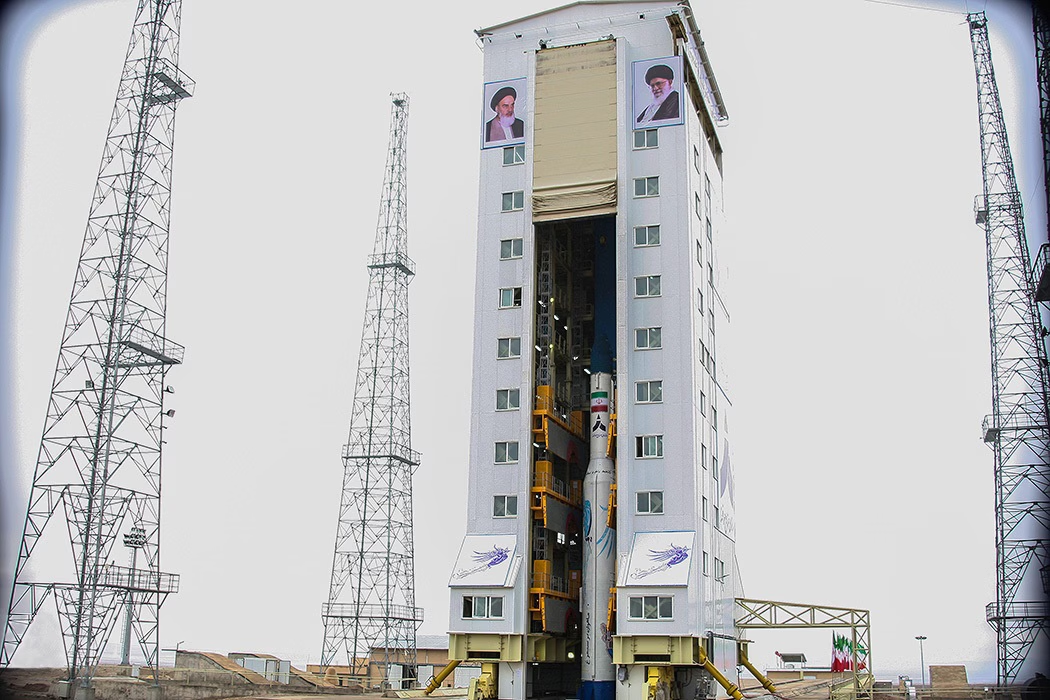
By the numbers, Iran is a minor player. It has about a dozen operational satellites, according to AEI space data, while the United States has more than 1,000 times as many. The DIA says Iran's defense ministry placed three satellites in low Earth orbit in 2024 on the first successful flight of its Simorgh rocket. The war has since hit Iran's launch infrastructure: an October analysis of satellite imagery by the International Institute for Strategic Studies showed damage from U.S. and Israeli strikes at two space launch sites in Semnan province, one run by the Iranian Space Agency and the other by the Islamic Revolutionary Guard Corps.
Still, the DIA warns that Tehran is pressing ahead with both military and civilian space programs to boost its national prestige, economic development and military modernization, and is working to make its guidance and navigation systems more resistant to electronic attack. Harrison summed up the skeptics' view with an analogy: declaring space superiority in this conflict, he said, is like declaring air superiority while the enemy keeps shooting down American planes.
Cover photo: La Citta Vita / Flickr (CC BY-SA 2.0). Photos: Tasnim News Agency, Fars News Agency (CC BY 4.0)
Have a story, event or announcement of your own?Send us your news on WhatsApp
Spotted an error in this story?Report it on WhatsApp
Share on all social platforms
Sponsored Ads
Featured Listings
Loading featured properties...
Stay Updated with Ally Daily
Subscribe to be informed about special news, developments and announcements. We will keep you informed.
By signing up, you agree to our Privacy Policy