- BIST10011,922+0.67%
- USD50.28+0.05%
- EUR55.60-0.24%
- GOLD3,874.20-0.31%
- INTEREST36.00%-1.00
- BITCOIN64,654-1.01%
- November 16, 20262°
- BIST10011,922+0.67%
- USD50.28+0.05%
- EUR55.60-0.24%
- GOLD3,874.20-0.31%
- INTEREST36.00%-1.00
- BITCOIN64,654-1.01%
- November 16, 20262°
Trump ally Milei's Argentina slips into technical recession, economists estimate
Private analysts estimate Argentina's economy shrank again in the third quarter, a second straight decline that meets the common definition of a recession. The slump hits the closest Latin American partner of the Trump administration, which backed Buenos Aires with a $20 billion swap line last year.

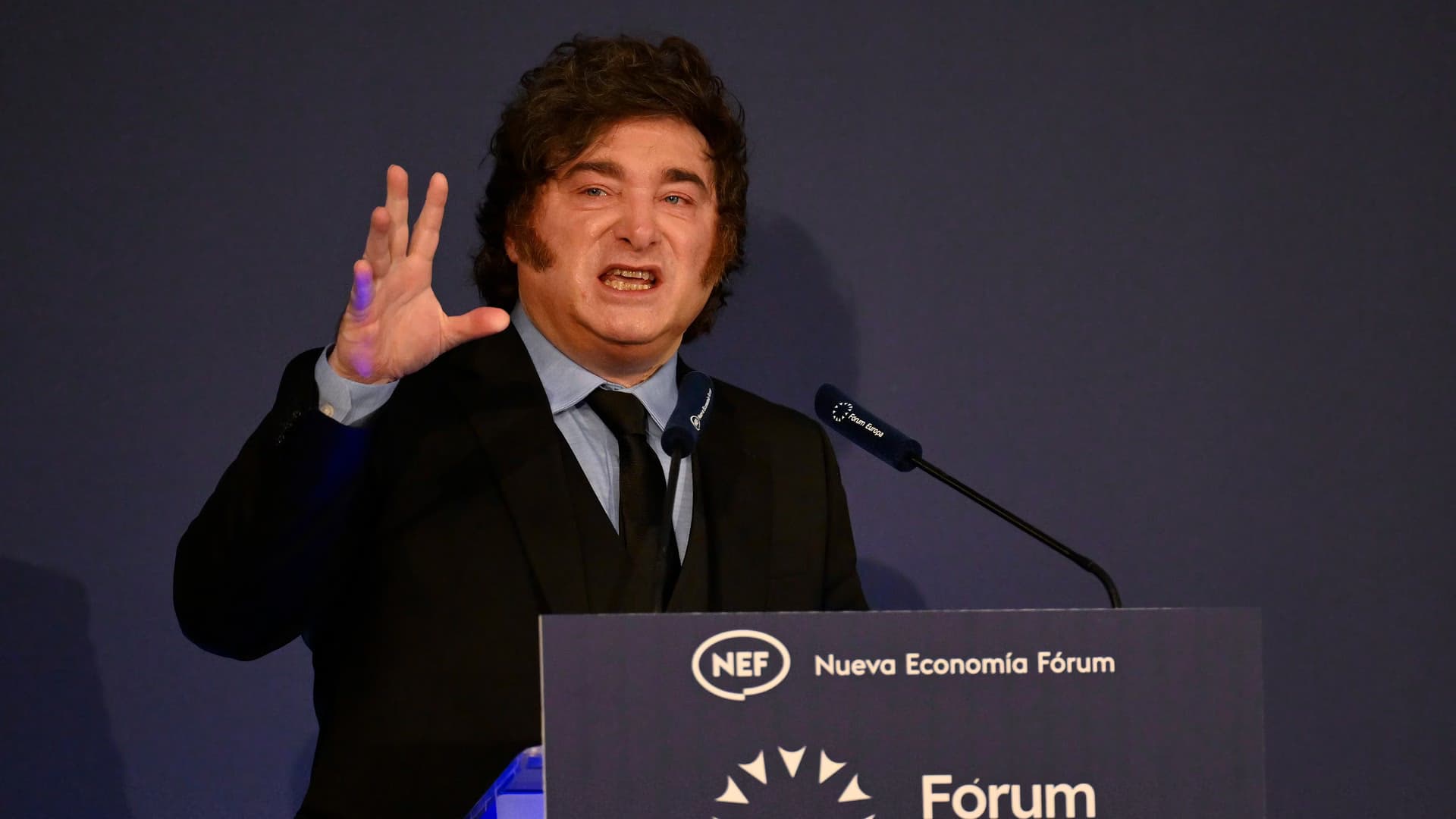
Argentina, which Washington propped up with a 0 billion lifeline last year, has slipped into a technical recession, according to private economists. Leading consultancies estimate that the economy contracted in July-September for a second consecutive quarter, the common definition of a recession, the Argentine outlet La Reforma reported this week.
Gross domestic product had already fallen 0.6% in the second quarter from the first, Reuters reported. Consultancy Orlando J. Ferreres estimates a 1.2% quarterly drop in the third quarter, while Ricardo Delgado, head of Analytica, expects a decline of around 1.5%. "Argentina's economy is technically in a moderate recession," Delgado told Reuters. The official third-quarter GDP report from the statistics agency INDEC is due on Dec. 16, according to Infobae.
Washington's $20 billion bet

President Javier Milei is one of President Donald Trump's closest allies in Latin America. In October 2025, the U.S. Treasury signed a $20 billion currency swap line with Argentina's central bank as part of a rescue package put together by Treasury Secretary Scott Bessent ahead of Argentina's midterm vote. According to Bloomberg, Argentina drew only $2.5 billion and repaid it in full in January 2026, and Bessent said the deal made "tens of millions in USD profit for the American taxpayer."
The recession news comes as U.S. investors reassess Argentine risk after Republicans' heavy losses in the Nov. 3 midterms. Argentina's country-risk index, the extra yield investors demand on its dollar bonds, closed at 939 basis points on Nov. 6, up 152 points in a week, The Rio Times reported. Analysts there said a Democratic-controlled Congress could leave the administration less room to help.
Forecasts cut to about 1%
Consultancies have cut their 2026 growth forecasts to around 1% or less, well below the government's 3% projection. The Economist Intelligence Unit now expects 0.5%. In October the International Monetary Fund lowered its forecast for Argentina from 3.5% to 2.1% and raised its inflation estimate.

Milei's austerity program has brought inflation down to about 30% from roughly 200%, but household spending, about two-thirds of the economy, keeps falling. Market research firm Scentia says consumption dropped 2.7% in the first nine months of 2026, and think tank Fundar counts about 32,300 business closures since Milei took office in December 2023. A Bloomberg-commissioned AtlasIntel poll published Friday found 62% of Argentines now view Milei negatively, with unemployment the top concern a year before the October 2027 presidential election.
Photos: Anadolu Agency, The White House, Wikimedia Commons
Stay Updated with Ally Daily
Subscribe to be informed about special news, developments and announcements. We will keep you informed.
By signing up, you agree to our Privacy Policy