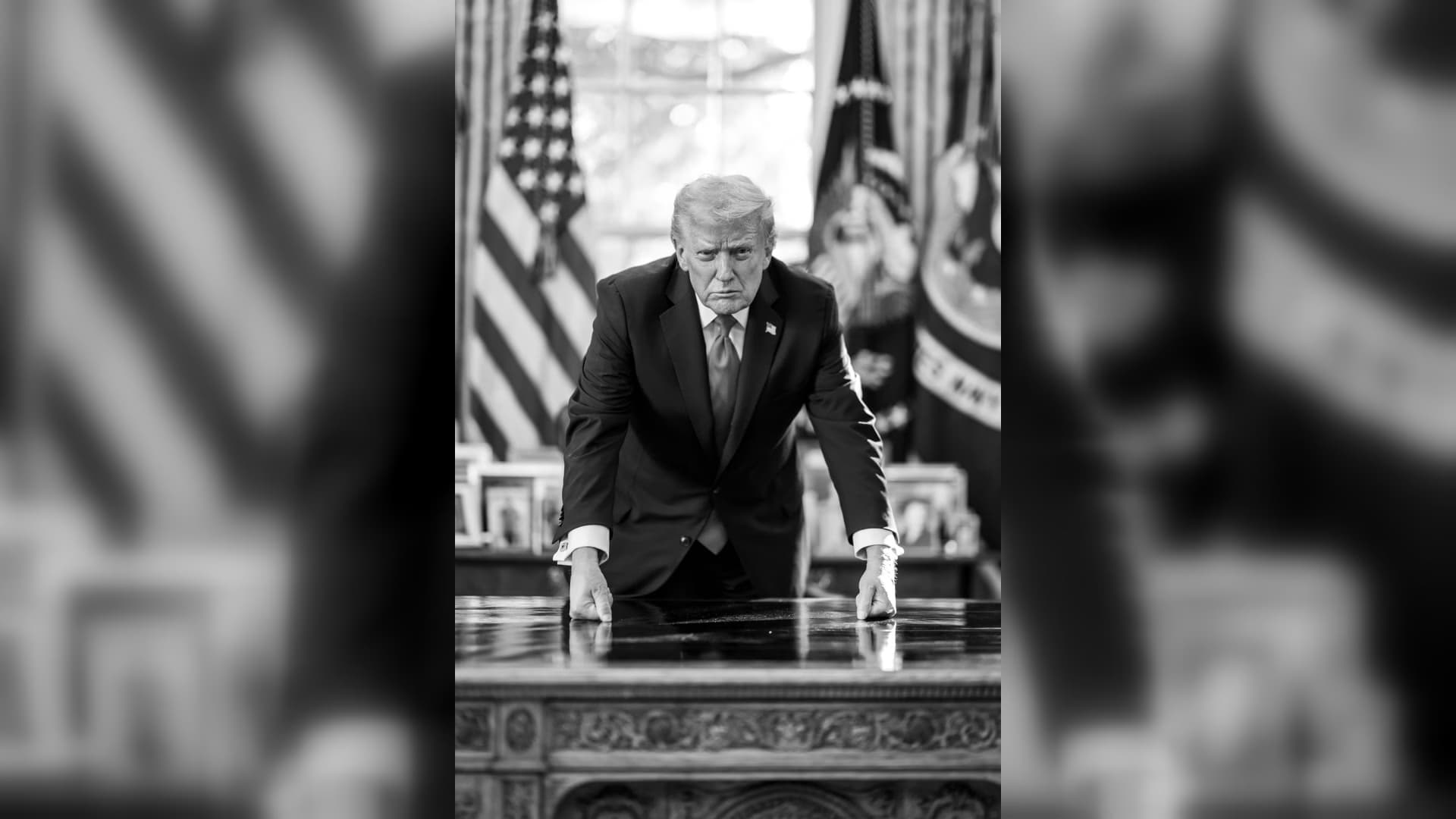
U.S. President Donald Trump made a significant announcement at the NATO summit in Ankara regarding the lifting of sanctions on Turkey. Meeting with President Recep Tayyip Erdoğan at the Presidential Complex, Trump said of the measures under the Countering America's Adversaries Through Sanctions Act (CAATSA), "I can say that we could lift the sanctions."
Trump also referred to Turkey's military strength, saying, "Turkey, under your leadership (President Erdoğan), has become a very strong country militarily."
Background of the CAATSA sanctions
The CAATSA sanctions were imposed due to Turkey's purchase of the S-400 air defense systems from Russia. After nearly three years of debate, these sanctions officially took effect on April 7, 2021.
The U.S. Congress approved the CAATSA law in 2017. The first steps regarding Turkey's S-400 purchase were taken in the National Defense Authorization Act (NDAA) for the 2018 defense budget, which requested a report from the Department of Defense on the matter. In its report submitted in November 2018, the Department stated that Turkey's S-400 purchase was certain and that its negative effects on U.S.-Turkey relations and Turkey's role in NATO would be inevitable.
In response, Congress imposed restrictions on the delivery of F-35 fighter jets to Turkey in the NDAA for the 2019 defense budget. In the NDAA for the 2020 budget, Turkey's receipt of the S-400 systems in July 2019 was defined as a 'significant financial transaction' with the Russian defense and intelligence sector under CAATSA. This law required the President to impose at least five of the CAATSA sanctions on Turkey within 180 days.
Pursuant to the CAATSA law, the U.S. State Department published a list of Russian defense and intelligence companies subject to sanctions on October 27, 2017. On this list, the Almaz-Antey Air and Space Defense Corporation, which produces the S-400 systems, was second.
As a result, although CAATSA sanctions on Turkey had been discussed verbally since 2017, they were officially included for the first time in the 2020 National Defense Authorization Act, which was enacted in December 2019.