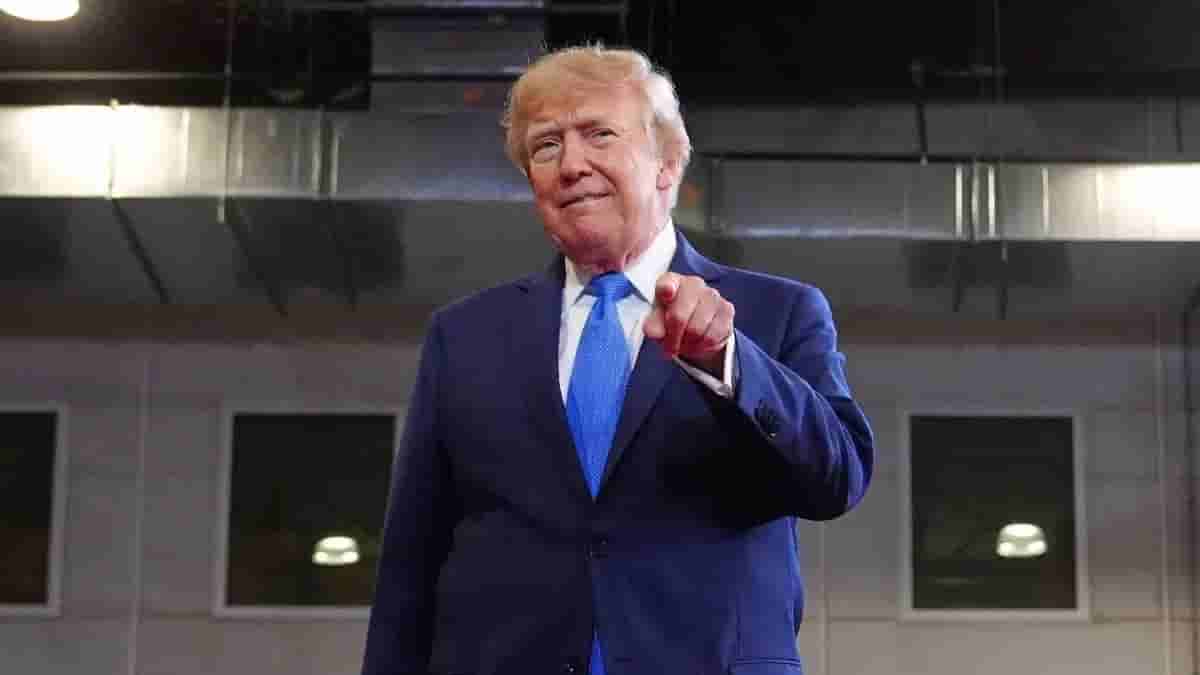
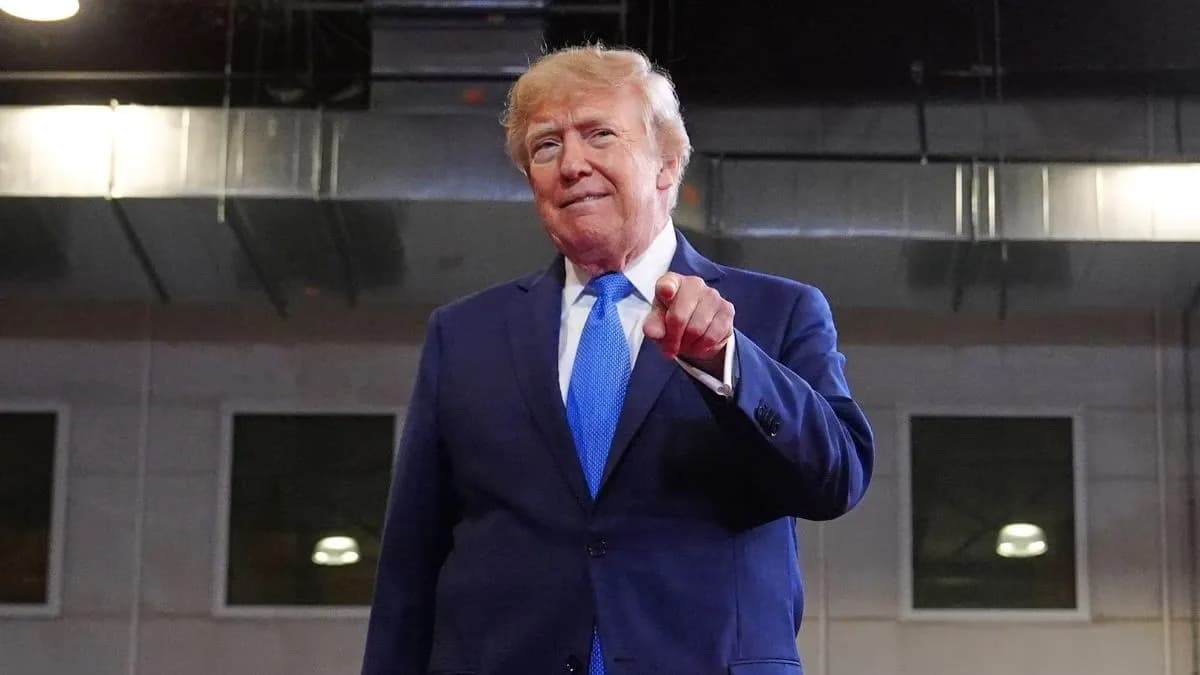
U.S. President Donald Trump has publicly welcomed the newly signed joint defense agreement between Türkiye, Saudi Arabia and Pakistan, offering strong support for the emerging regional security mechanism.
Trump praised the Makkah Joint Defense Agreement and described the deal as an important development for regional security and cooperation.
The U.S. president called the agreement a “big, bold, and important first step,” while arguing that it would allow the participating countries to defend themselves in a more meaningful and effective manner.
Trump also delivered a broader message about the changing political landscape in the region, saying the Middle East is “coming together.”
TRUMP: “A BIG, BOLD, AND IMPORTANT FIRST STEP”
Trump used particularly strong language in welcoming the agreement between the three countries.
The U.S. president praised Saudi Arabia, Türkiye and Pakistan for moving forward with the new defense framework and presented the agreement as a positive step toward greater regional security cooperation.
His remarks represent one of Washington’s clearest high-level expressions of support for the newly established mechanism.
Trump’s statement is particularly significant because the agreement has prompted questions about how a new regional defense structure involving three major U.S. partners could affect the existing security architecture of the Middle East.
Rather than portraying the pact as a challenge to Washington, Trump publicly welcomed it.
TÜRKİYE, SAUDI ARABIA AND PAKISTAN FORM NEW DEFENSE MECHANISM
The Makkah Joint Defense Agreement brings together three of the most influential military powers in the wider region.
Türkiye has NATO’s second-largest military and an increasingly prominent domestic defense industry.
Saudi Arabia is one of the Middle East’s most important political, economic and military powers, while Pakistan possesses one of the region’s largest armed forces and is the only Muslim-majority country with nuclear weapons.
The new agreement is intended to deepen defense and security cooperation among Ankara, Riyadh and Islamabad.
AN ATTACK ON ONE WOULD BE CONSIDERED AN ATTACK ON ALL
One of the most significant elements of the agreement is its collective defense provision.
Under the mechanism, an armed attack against one of the participating countries would be considered an attack against all parties to the agreement.
The provision has led to comparisons with NATO’s Article 5, which establishes the principle of collective defense among members of the transatlantic alliance.
However, officials involved in the new framework have stressed that the Makkah agreement is not intended to replace existing alliances or create a direct regional equivalent of NATO.
The parties have also emphasized that the mechanism is not directed against any particular country.
JOINT MILITARY EXERCISES PLANNED
The agreement extends beyond a political commitment to collective defense.
Türkiye, Saudi Arabia and Pakistan are expected to establish high-level political and military coordination mechanisms as part of the new framework.
Cooperation is expected to include joint military exercises across land, air and maritime domains.
Cybersecurity and other emerging areas of modern warfare are also expected to form part of the cooperation.
The three countries already maintain significant bilateral military relationships, but the new agreement provides a broader trilateral framework for coordinating those activities.
DEFENSE INDUSTRY COOPERATION COULD EXPAND
Defense industry cooperation is another major component of the emerging partnership.
Türkiye has developed a rapidly growing defense sector in recent years, particularly in unmanned aerial vehicles, missiles, electronic warfare systems, naval platforms and armored vehicles.
Saudi Arabia, meanwhile, has been investing heavily in efforts to localize military production as part of its broader economic and industrial strategy.
Pakistan also maintains a substantial domestic defense industry and decades of military cooperation with both Türkiye and Saudi Arabia.
The new framework could therefore create opportunities for joint development, production, technology transfer and procurement projects among the three countries.
WHY TRUMP’S SUPPORT MATTERS
One of the most notable aspects of Trump’s remarks is that he did not characterize the emerging defense mechanism as a competitor to the United States.
Instead, the U.S. president presented greater regional defense cooperation as a positive development.
Trump has repeatedly called on American allies and partners to assume greater responsibility for their own defense.
His argument that the agreement could allow participating countries to defend themselves more effectively broadly fits that approach.
The statement therefore suggests that Washington may view the new mechanism as complementary to, rather than necessarily competitive with, existing U.S. security partnerships in the region.
THE AGREEMENT COULD EXPAND BEYOND THREE COUNTRIES
The Makkah Joint Defense Agreement may not ultimately remain limited to Türkiye, Saudi Arabia and Pakistan.
Turkish President Recep Tayyip Erdoğan has indicated that the framework is open to the participation of other countries.
Egypt has emerged as one of the most notable potential candidates.
Erdoğan, in remarks connected to his Al Jazeera interview, said Egypt’s participation in the agreement could be possible.
However, no Egyptian membership has been finalized, and the framework currently remains a trilateral agreement involving Türkiye, Saudi Arabia and Pakistan.
EGYPT’S PARTICIPATION COULD SIGNIFICANTLY EXPAND THE PACT
Any future participation by Egypt would substantially increase the geographic and military scope of the framework.
Türkiye sits at the intersection of Europe, the Black Sea, the Caucasus and the Eastern Mediterranean.
Saudi Arabia occupies a central position in the Gulf and Red Sea regions, while Pakistan extends the emerging security framework toward South Asia.
Egypt would add another major military power with strategic influence over the Eastern Mediterranean, North Africa, the Red Sea and the Suez Canal.
For now, however, such a development remains a possibility rather than a confirmed expansion of the pact.
A CHANGING REGIONAL SECURITY LANDSCAPE
The agreement comes at a time of significant changes in the Middle East’s security environment.
Regional governments have increasingly sought to diversify their defense relationships while building mechanisms capable of responding to security threats without relying exclusively on outside powers.
Türkiye, Saudi Arabia and Pakistan have also expanded their bilateral military and political cooperation in recent years.
The Makkah agreement represents a significant step toward transforming those separate relationships into a coordinated trilateral security framework.
TRUMP: “THE MIDDLE EAST IS COMING TOGETHER”
Trump’s broader characterization of the agreement may ultimately prove as politically significant as his endorsement of the pact itself.
By declaring that the Middle East is “coming together,” the U.S. president framed the agreement as part of a wider regional shift toward cooperation rather than simply a military arrangement among three countries.
The statement also gives the newly created mechanism high-level political backing from Washington at an early stage of its development.
Attention will now turn to how Türkiye, Saudi Arabia and Pakistan implement the agreement, including the establishment of joint military mechanisms, future exercises and potential defense industry projects.
Another major question will be whether additional countries eventually join the framework.
For now, Trump’s endorsement has added another significant dimension to the Makkah Joint Defense Agreement, with the U.S. president describing the Türkiye-Saudi Arabia-Pakistan pact as a “big, bold, and important first step” and declaring that the Middle East is “coming together.”