- BIST10011,577-1.87%
- USD49.58+0.05%
- EUR55.62+0.09%
- GOLD4,156.80+0.16%
- INTEREST37.00%-1.00
- BITCOIN84,591+1.99%
- October 22, 202615°
- BIST10011,577-1.87%
- USD49.58+0.05%
- EUR55.62+0.09%
- GOLD4,156.80+0.16%
- INTEREST37.00%-1.00
- BITCOIN84,591+1.99%
- October 22, 202615°
U.S. announces it will not renew $1.6 trillion USMCA trade deal
The U.S. announced it will not renew the USMCA trade agreement with Mexico and Canada in its current form. The decision was made one day before the agreement's first mandatory joint review; the parties will continue negotiations.


The U.S. announced it would not renew the USMCA agreement, which covers $1.6 trillion in trade between the U.S., Mexico and Canada, in its current form. The announcement was made by U.S. Trade Representative Ambassador Jamieson Greer just one day before the agreement's first mandatory joint review.
In a written statement, Greer said: 'The United States will continue to engage with Mexico and Canada to address the shortcomings of the Agreement and our trade deficits with these countries. However, the agreement will remain in effect until these issues are resolved or it is terminated.' It was also stated that the U.S. would hold a third round of bilateral talks with Mexico in the week of July 20 as part of the USMCA joint review.
What is the USMCA?
The trilateral trade deal entered into force on July 1, 2020, during Trump's first term, replacing the North American Free Trade Agreement (NAFTA). According to the U.S. State Department, the USMCA aimed to create 'more balanced, reciprocal trade that supports high-paying jobs for Americans and grows the North American economy.'
However, under the 'sunset clause' negotiated during Trump's first term, the agreement will expire on July 1, 2036, unless it is amended. This latest decision triggered the six-year review process.
Trump's Criticism
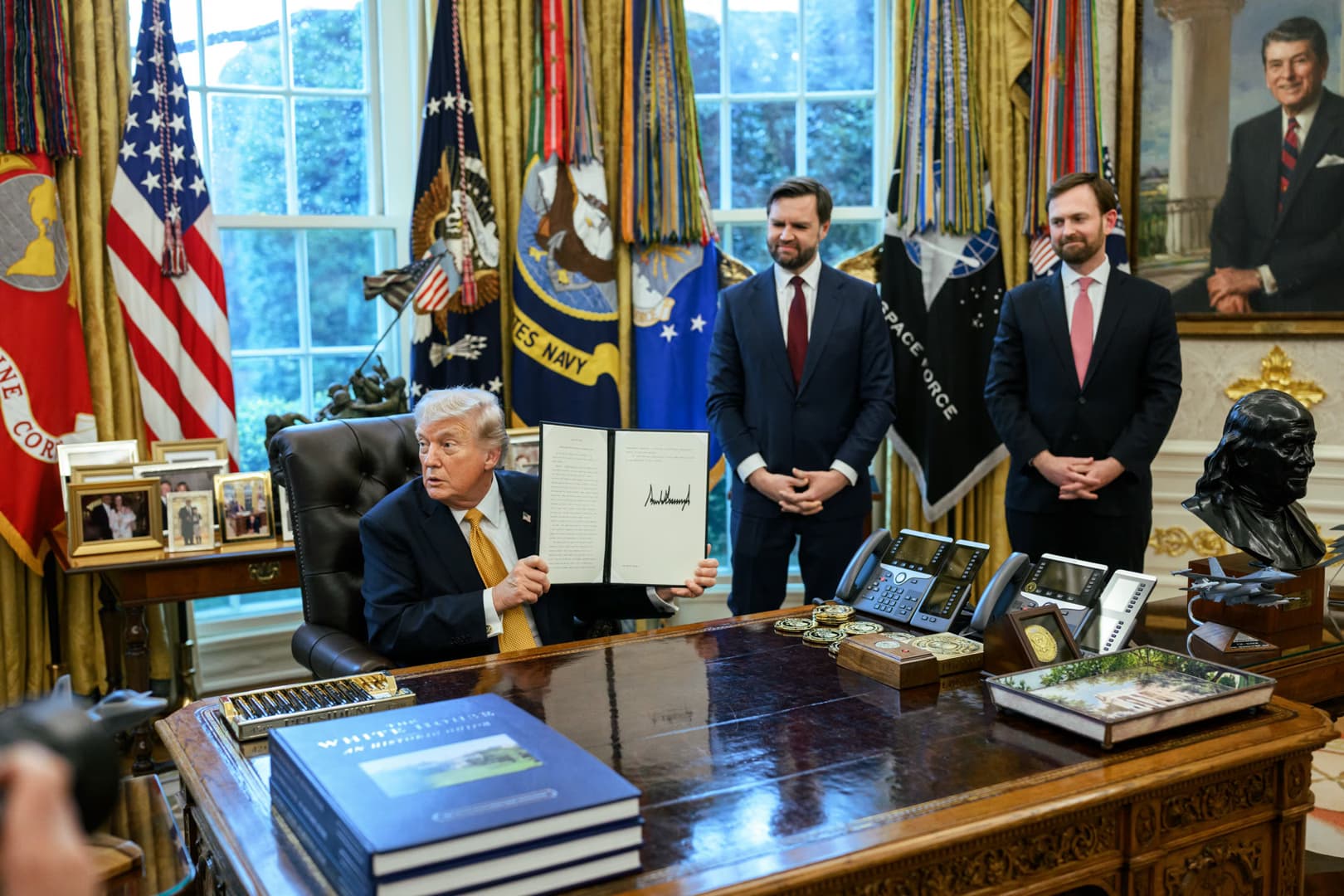
U.S. President Donald Trump criticized the deal in recent months, calling it 'no real advantage; insignificant' and saying 'I don't think I will renew it.' Trump said: 'We don't need anything from Canada. We don't need anything from Mexico, but they need everything from us. They have to treat us better.'
The U.S. ran a $197 billion goods trade deficit with Mexico and a $48.3 billion deficit with Canada in 2025. Much of the deficit with Canada stems from crude oil imports, while the deficit with Mexico grew as companies shifted supply chains to Mexico to avoid tariffs on China.
A Trump administration official told Reuters that despite the imposition of additional tariffs of 25% on automobiles, 50% on metals and 10% on lumber, the President remains skeptical of any deal with the two countries.
Response from Mexico and Canada
Mexican Economy Minister Marcelo Ebrard said at a press conference on Wednesday that his country wants to help address U.S. concerns about job losses and trade deficits. Ebrard noted that he had attended a virtual meeting with Greer and Canadian Minister Dominic LeBlanc, who is responsible for U.S.-Canada trade, and said: 'I don't see any difference between Mexico, the U.S. and Canada that is too big to resolve.'
Ebrard also stressed that protecting the automotive industry was the main agenda item of all the talks. LeBlanc said Canada will continue to address issues related to tariffs on steel, aluminum, automobiles and lumber, adding: 'We agreed to identify ways to ensure that trade and investment frameworks continue to support North American prosperity and competitiveness.'
Next Steps
With Canada and Mexico open to negotiations, the agreement will remain in force until 2036. Trump may use tariffs as leverage during the talks. While bilateral deals have been put forward as an alternative, they are not expected to match the trade volume and strength of the USMCA.
Stay Updated with Ally Daily
Subscribe to be informed about special news, developments and announcements. We will keep you informed.
By signing up, you agree to our Privacy Policy