The election results in Germany's state of Mecklenburg-Western Pomerania made the AfD the strongest political party in the state parliament. The AfD won 38.2% of the vote, according to provisional official results announced by the State Election Committee.

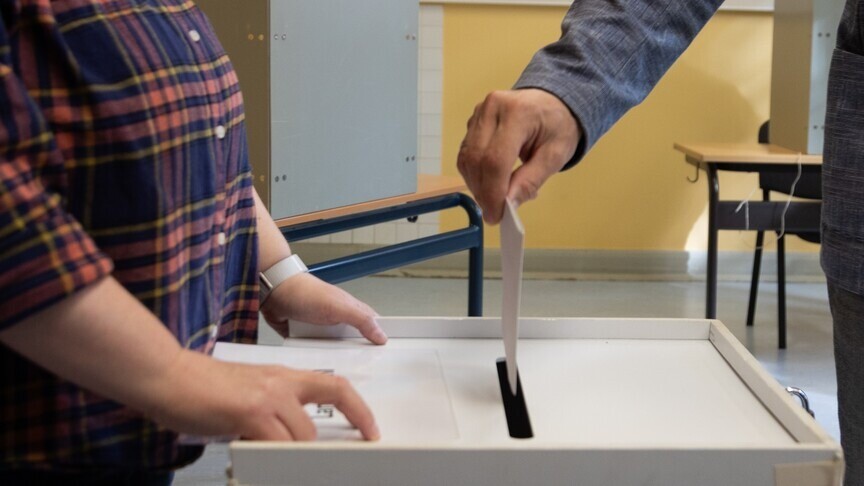
AfD becomes strongest party for the first time
The AfD came first with 32 seats in the state parliament, which has a total of 71 seats. The SPD won 29 seats with 35.5% of the vote, while the Left Party and the Greens each secured five seats, with 6.5% and 5.7% of the vote, respectively.
The AfD increased its share of the vote by 21.5 percentage points from the 16.7% it received in the 2021 election, more than doubling its support. The party thus became the strongest political force in the Mecklenburg-Western Pomerania state parliament for the first time.
CDU and BSW remain outside parliament
The Christian Democratic Union (CDU), whose federal leader is Chancellor Friedrich Merz, received 4.9% of the vote and failed to clear the 5% electoral threshold. This marked the first time the CDU had failed to enter a state parliament since 1945.
The CDU received 13.3% of the vote in the 2021 election. After losing 8.4 percentage points compared with the previous election, the party recorded its lowest result in the history of the Federal Republic in a state election.

The Alliance of Sahra Wagenknecht (BSW) also failed to enter the state parliament after receiving 4.8% of the vote and falling below the 5% threshold.
SPD remains in second place
The SPD, which has been part of the government in Mecklenburg-Western Pomerania for nearly 30 years, came second with 35.5% despite losing votes. The SPD received 39.6% of the vote in the 2021 election.
Coalition options gain importance
Although the AfD emerged as the largest party, it failed to secure enough seats to form a government on its own, making the positions of the other parties decisive in forming the new government. BSW's failure to clear the 5% threshold also made it more difficult for the AfD to reach the parliamentary majority required to form a government.
The existing governing partnership between the SPD and the Left Party failed to secure a majority in the new parliament. After the CDU and BSW were excluded from parliament, a coalition of the SPD, the Left Party and the Greens emerged as the leading option based on the parliamentary arithmetic.
The AfD's emergence as the largest party in the state and the CDU's failure to clear the threshold prompted debate about the election results' political implications for the federal government.