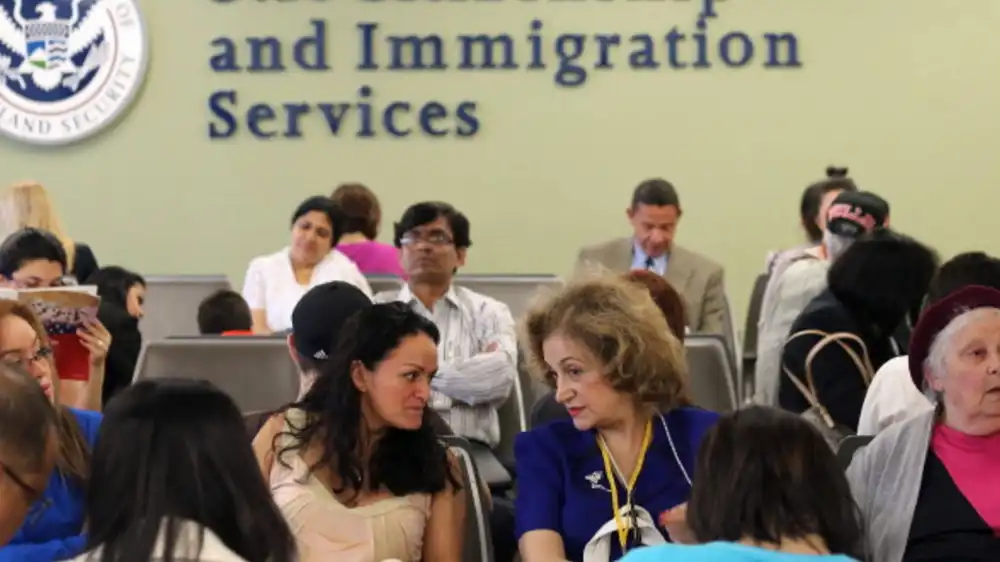
The United States is facing a growing backlog in its legal immigration system, with approximately 7.5 million applications pending before U.S. Citizenship and Immigration Services (USCIS) as applicants encounter longer processing times and increased scrutiny.
The backlog affects millions of people pursuing immigration benefits through established legal procedures, including applications for U.S. citizenship, permanent residency and employment authorization.
The increase comes as the Trump administration has placed greater emphasis on security screening, fraud detection and more extensive vetting of applicants across the immigration system.
According to data reported by Axios, the number of pending legal immigration cases has increased by roughly 2 million over the past two years, leaving millions of applicants waiting for decisions on their immigration status.
Citizenship Applicants Face Longer Waits
Naturalization applications are among the categories affected by longer processing times.
USCIS historical processing data show that the national median processing time for most N-400 naturalization applications was approximately 5 months in fiscal year 2024.
For fiscal year 2026 through May 31, the median had increased to 6.9 months, according to USCIS data.
Other analyses of more recent case data indicate that average waits experienced by citizenship applicants can be considerably longer, with Axios reporting that average processing times had risen from around five months in June 2024 to approximately 10 months by June 2026.
The distinction is important because USCIS' official historical statistics report median processing times, while other analyses may use different measurements of the time applicants are currently spending in the system.
Increased Vetting Under the Trump Administration
The administration says increased screening and vetting are among the reasons for slower processing.
USCIS has emphasized stronger identity verification, background checks, national security screening and fraud detection as part of its approach to immigration benefit applications.
The agency has publicly highlighted cases in which enhanced identity checks uncovered criminal histories or other information that officials said had not previously been identified.
Supporters of the administration's approach argue that immigration benefits should undergo rigorous review to ensure applicants are eligible and do not pose public safety or national security concerns.
Critics, however, argue that the additional scrutiny and policy changes are slowing legal immigration channels and creating uncertainty for people who have followed the government's established application procedures.
Green Cards and Work Permits Also Affected
The backlog extends beyond citizenship applications.
Millions of pending cases involve people seeking permanent residency, employment authorization and other immigration benefits administered by USCIS.
Processing delays can have significant consequences for applicants whose ability to work, travel, maintain documentation or make long-term plans may depend on a decision from the agency.
For some applicants, a pending case can mean months of uncertainty while USCIS conducts additional reviews or waits for required documentation.
Immigration attorneys and advocacy organizations have raised concerns that prolonged delays can leave otherwise eligible applicants in vulnerable situations despite having entered or remained in the immigration system through established legal channels.
Legal Immigration Becomes Part of Broader Enforcement Debate
The growing USCIS backlog is unfolding alongside the Trump administration's broader immigration enforcement campaign.
While much of the public attention has focused on arrests, detention and deportation operations carried out by Immigration and Customs Enforcement (ICE), developments at USCIS show that the administration's immigration agenda is also affecting people seeking benefits through legal immigration procedures.
This distinction is significant.
USCIS primarily administers immigration benefits, including naturalization, green cards, employment authorization and humanitarian programs, while ICE is principally responsible for immigration enforcement inside the United States.
The growing backlog therefore illustrates how changes in federal immigration policy are being felt beyond the country's detention and deportation system.
Pending Status Can Create Additional Uncertainty
Long processing times can be particularly consequential for applicants whose existing immigration status or documentation is approaching expiration.
Immigration attorneys cited in recent reporting have warned that administrative delays may leave some applicants facing greater uncertainty even when they have complied with legal filing requirements.
The issue has become increasingly controversial as the administration simultaneously expands immigration enforcement and increases scrutiny within the legal immigration system.
Critics argue that applicants should not face adverse consequences simply because the government has not yet completed processing their cases.
Administration officials, meanwhile, maintain that thorough screening is necessary to protect the integrity of the immigration system and ensure that benefits are granted only to eligible applicants.
USCIS Backlog Continues to Draw Attention
USCIS has struggled with large pending caseloads under multiple administrations, and immigration backlogs are not a new phenomenon in the United States.
However, the latest increase is drawing particular attention because it coincides with significant changes in federal immigration policy and a renewed emphasis on vetting and enforcement.
Official USCIS statistics show that processing trends vary substantially depending on the type of application. Some categories have experienced significant increases in processing times, while others have remained relatively stable or improved.
That means the approximately 7.5 million pending cases should not be interpreted as 7.5 million people facing identical delays or undergoing the same type of review. The figure covers numerous categories of immigration applications and petitions handled by USCIS.
Nevertheless, the scale of the pending caseload highlights the growing pressure on the country's legal immigration system.
For millions of applicants seeking citizenship, permanent residency, work authorization or other immigration benefits, the combination of longer waits and heightened scrutiny is creating a more uncertain path through the U.S. immigration process.
As the Trump administration continues to emphasize security screening and stricter enforcement, the handling of legal immigration applications is likely to remain a major part of the broader national debate over U.S. immigration policy.