In the United States, intelligence of Israeli origin that allegedly prompted Donald Trump to change planes during his visit to Ankara is under debate. The warning, which referred to an assassination threat against Trump, was assessed by some US intelligence analysts as having low credibility.
Trump flew from Ankara to the UK on a different plane
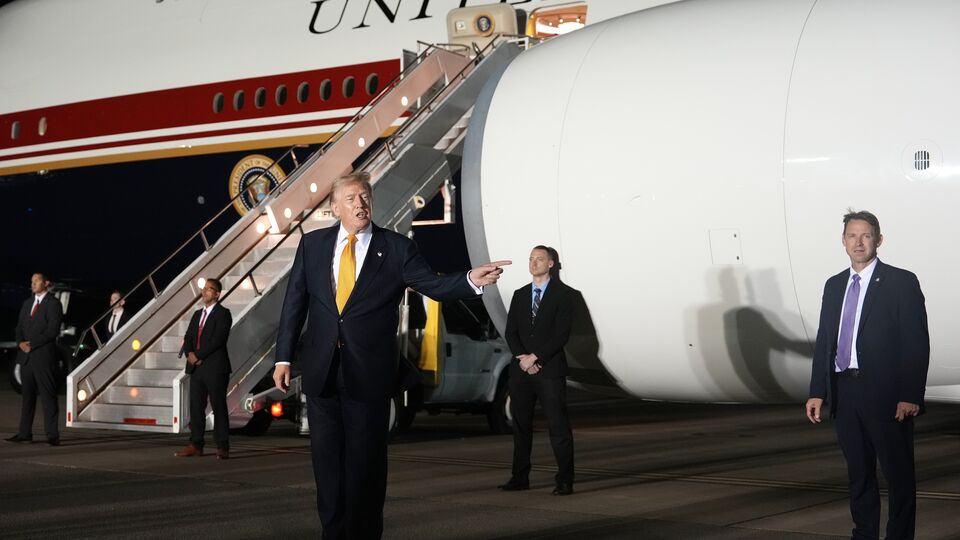
Trump arrived in Ankara on a Boeing 747-8 aircraft gifted by Qatar. Following concerns about its security systems, he transferred to the aircraft known as the former Air Force One.
Trump later allegedly left that aircraft secretly, was taken to another part of the airport in a catering truck and boarded a US Air Force C-32A transport aircraft to travel to the UK. These unusual security measures were linked to an intelligence warning that Iran was planning to assassinate Trump.
Source of the warning and CIA assessment
The intelligence warning came from Israeli sources and was conveyed to the CIA. CIA analysts characterized the information not as an intelligence product prepared by the United States, but as a low-confidence assessment originating in Israel.
At the center of the debate is criticism that unverified foreign intelligence could pull the United States into unnecessary conflicts. Concerns were also raised that information from external sources could influence Washington’s foreign policy and security decisions.
Former official and senator question the intelligence
Joe Kent, former head of the US National Counterterrorism Center, described the plane change as an example of how Washington could be steered. Kent, who was said to have resigned in response to military escalation against Iran, said that when decisions to go to war are based on information from an ally or partner intelligence service, that information may be intended both to inform and to influence.
Democratic Senator Chris Van Hollen, who represents Maryland, questioned whether the credibility of the intelligence provided by Israel had been independently tested. Van Hollen said he had no doubt that Iran wanted Trump eliminated, but that the narrative conveyed appeared detached from reality.
Debate over confidence in Israeli intelligence
Danny Citrinowicz, who served in command positions in Israeli Military Intelligence for 25 years, warned that the controversy could damage confidence in intelligence over the long term. Citrinowicz said the belief that Israeli intelligence is prepared to advance specific policy objectives rather than provide objective assessments from the field could make decision-makers in Washington skeptical even of important warnings.
Abdelhalim Abdelrahman, a Palestinian American political analyst, argued that integrating Israeli and US intelligence structures would create serious problems. Abdelrahman said foreign actors could portray risk levels as higher than they actually are in line with their own interests.
Congress advances intelligence-sharing and defense technology measures
While this debate continues, the US Congress is advancing measures that would provide a legal framework for intelligence-sharing with Israel. Section 622 of the Senate Select Committee on Intelligence’s fiscal year 2027 intelligence authorization bill calls for adding a new Section 1115 to the National Security Act of 1947.
The measure seeks to require the expansion and strengthening of intelligence-sharing with the Israeli government through the director of national intelligence and the secretary of defense. Terrorism, cybersecurity threats, missile defense and unmanned aerial systems are among the areas covered.
One provision of the bill limits the suspension or reduction of support unless the president identifies a specific and identifiable national security concern. Counterintelligence risk is cited as an example of such a national security concern.
The House of Representatives has also passed an annual defense policy bill worth approximately $1.15 trillion. Section 219 of the bill calls for establishing an initiative to integrate Israeli defense technologies into US military programs and accelerate joint military technology research through 2030.